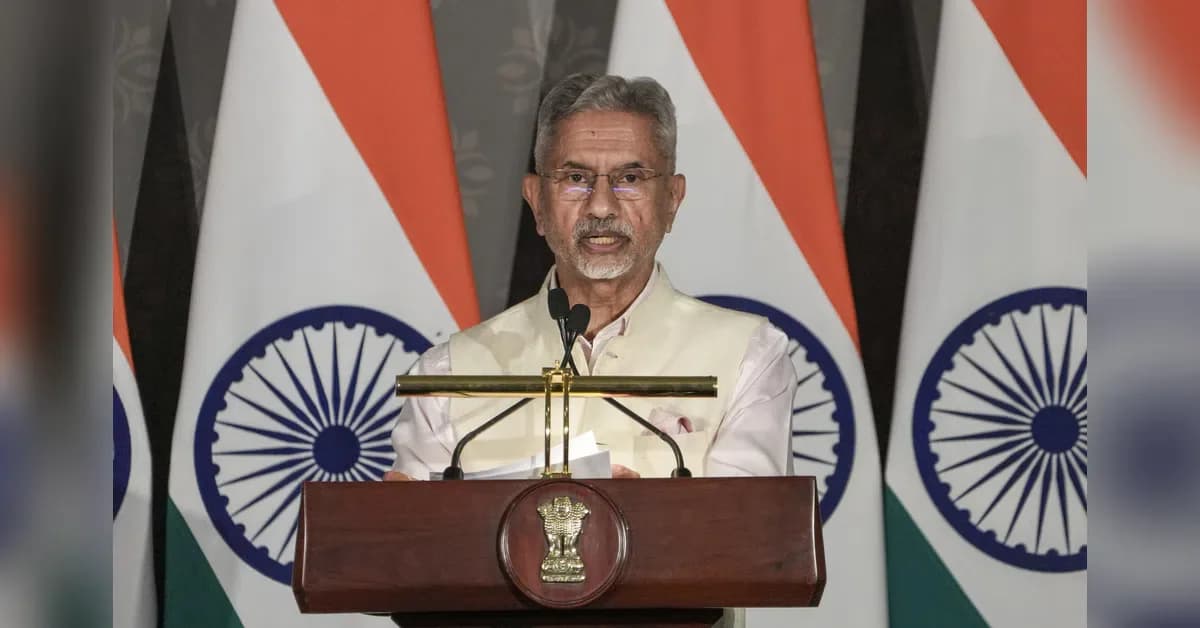
The US, Japan, India and Australia launched a maritime surveillance initiative for the Indo-Pacific region on May 26, as their foreign ministers gathered in New Delhi for a high-profile summit aimed at countering growing threats to commerce. According to reports from Business Standard, the meeting comes as Iran discusses establishing a permanent tolling system that would formalize its control over maritime traffic through the Strait of Hormuz, a vital route for global energy supplies. Iran effectively closed the strait in response to US-Israeli airstrikes that triggered the war in late February, with the conflict now dragging on for nearly three months. This meeting represents the third in a series since September 2024, with diplomats emphasizing concrete actions in response to growing geopolitical concerns and aims to transform the Quad from a mere forum to a decisive action group.
Australian Foreign Minister Penny Wong said the region faces 'acute economic stress' and told reporters after the Quad ministers' meeting that she was opposed to any 'tolling proposition.' As reported by Business Standard, the four nations also announced plans to partner with Fiji on port infrastructure, with US Secretary of State Marco Rubio calling it an 'exciting' initiative. According to Devdiscourse, Indian Foreign Minister S Jaishankar highlighted the importance of addressing supply chain resilience and connectivity choke points among Australia, India, Japan, and the U.S. The focus on manufacturing and resource concentration was central to discussions aimed at strengthening critical infrastructure. Rubio announced plans on energy and critical minerals partnerships within the bloc, without sharing details. According to Bloomberg, Rubio specifically stated they would be partnering on issues of port infrastructure, particularly in response to insufficient port capacity in the Pacific Islands.
The Quad grouping's leaders have not met since 2024, raising fears that it has lost some of its earlier traction. As reported by Al Jazeera, no leaders' summit was held in 2025, with Trump never attending and Japan's Prime Minister Sanae Takaichi also absent. According to analyst Umi Ariga from the Japan Institute for International Affairs, 'The grouping has been essentially leaderless at the top level for over a year.' The alliance suffers from a structural problem with no formal treaty, no permanent secretariat and no binding mutual defence commitments. The grouping received only a single passing mention in Trump's National Security Strategy unveiled in late 2025, highlighting its diminished strategic importance. The Quad has pursued low-risk initiatives such as vaccines, critical technologies, supply chains, and maritime domain awareness, which analysts describe as 'useful at the margins, but they cannot conceal the absence of collective political will'.
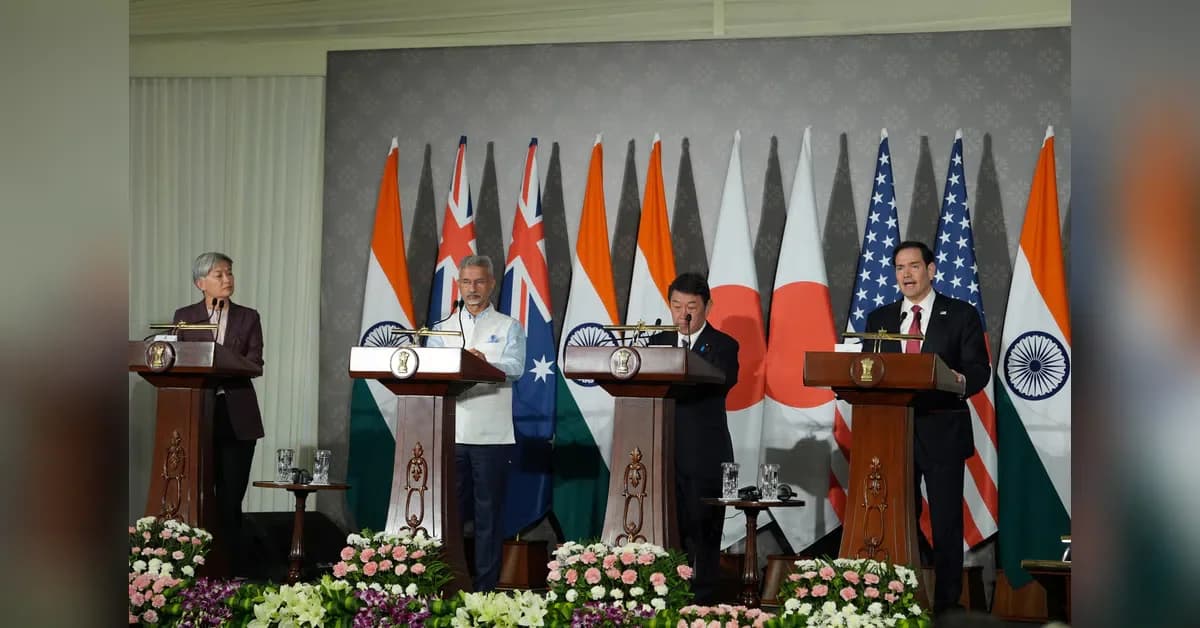
The meeting follows talks last week between Trump and Chinese President Xi Jinping to stabilize ties, even as Beijing continues to pressure Taiwan and assert its territorial claims throughout the region. India's External Affairs Minister Subrahmanyam Jaishankar described May 26's meeting as 'substantive and productive,' saying the leaders' discussions focused on ensuring 'safe and unimpeded' maritime commerce. As reported by Al Jazeera, analyst Einar Tangen noted that 'Rubio's trip reveals Washington's underlying anxiety. If the Quad was fully confident and strategically aligned, reassurance would not be necessary.' Beijing interpreted the Trump-Xi summit as a diplomatic asymmetry that made Washington's scramble to reassure partners all the more transparent. With global tensions rising, especially concerning the U.S. and Iran's negotiations over the Strait of Hormuz, the Quad leaders reiterated the significance of a free and open Indo-Pacific.
For India, hosting the gathering underscores its effort to deepen strategic ties with Western partners through the Quad while maintaining its role in BRICS, which New Delhi will host in September at a summit likely to include Xi and Putin. The grouping gained prominence during Trump's first term as part of a tougher US stance on China, though his preference for bilateral deal-making raised questions about Washington's commitment to allies and defense partners in Asia. Following recent tensions between Trump and Indian Prime Minister Narendra Modi in 2025, including Trump raising tariffs on Indian goods to 50 per cent due to purchases of Russian oil, Rubio has been visiting India over the past few days to bolster the relationship. The gathering also comes as India has traditionally adopted a non-aligned stance, positioning itself as a bridge between rival global powers. However, analysts warn that 'China increasingly doubts whether the four countries share the same long-term strategic vision or level of commitment,' with Beijing viewing the Quad as a containment structure where each member is quietly calculating whether they are participating in a durable strategic coalition or merely serving as bargaining chips in Washington's larger negotiations with Beijing.