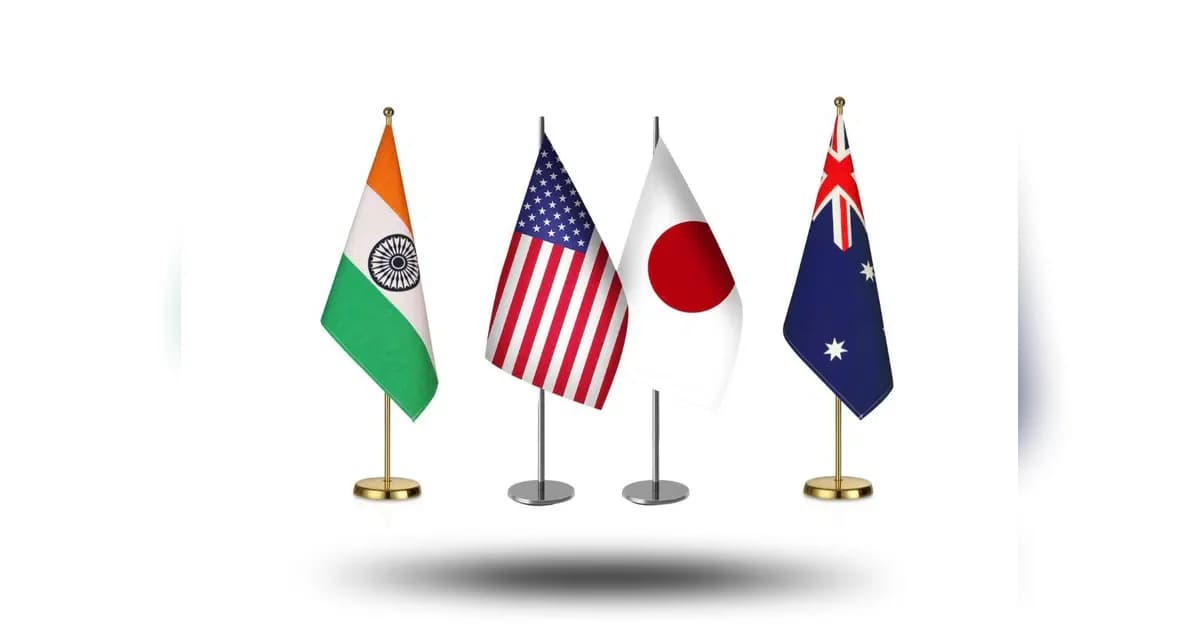
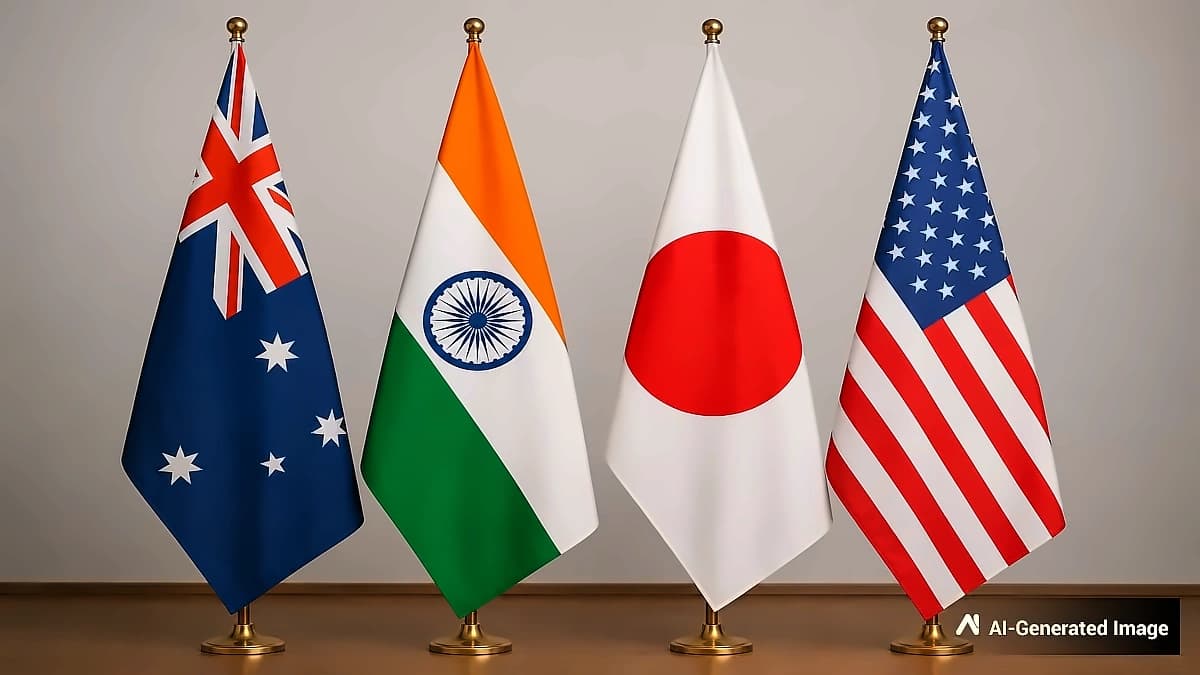
Foreign ministers from the US, Japan, India, and Australia are meeting in New Delhi as the Quad grouping seeks to revive momentum after a high-profile clash between President Donald Trump and Indian leader Narendra Modi. According to reports from Business Standard and the Japanese Foreign Ministry, the four nations are expected to focus on maritime security, supply chains, critical technologies, and Indo-Pacific coordination, with the ministers expected to exchange views on advancing Quad cooperation and discuss recent developments in the Indo-Pacific region. India's Ministry of External Affairs confirmed that the ministers will exchange views on advancing Quad cooperation and discuss recent developments in the Indo-Pacific region.
The Quad, formed to counter China's growing influence in the Asia-Pacific region, has been beset by tension after Trump last year raised tariffs on Indian goods to 50% due to purchases of Russian oil, which was subsequently lowered after talks. As reported by Business Standard, Secretary of State Marco Rubio has been visiting India over the past few days in a bid to bolster the relationship, which has suffered after Trump claimed to have brokered a ceasefire between India and Pakistan last year — an assertion Modi rejected. The meeting comes 10 days after Trump paid a friendly state visit to China and spoke glowingly of the two powers working together as a "G2" — a concept that US allies concerned about Beijing's rise fear could shut them out.
US Secretary of State Marco Rubio, paying his first visit to India, said he hoped to lay the groundwork for a Quad summit involving Trump. According to India Today, Rubio stated that "We want to make sure we do the work necessary and position it so, when they do meet, they'll have very specific deliverables and things that actually they can announce." The Quad could cooperate on securing the supply of critical minerals, a rare area where the Trump administration has turned to traditional diplomacy with allies, alarmed at China's dominance in resources critical to high-end technology sectors. Rubio also emphasized collaboration on maritime security, with Japan particularly concerned about China's assertiveness in staking claims at sea.
Japanese Foreign Minister Toshimitsu Motegi held bilateral meetings with India on Monday before the full Quad meeting, noting the "increasingly severe" global security situation. Motegi told Indian counterpart Subrahmanyam Jaishankar that "The world is faced with the most significant structural change in the post-World War II era, driven by a shift in the balance of power and the intensification of conflict and confrontation." The meeting comes as Japan and India are heavily affected by the spike in oil prices after Iran exerted control over the strategic Strait of Hormuz in response to a US-Israeli war launched on February 28. No US ally other than Israel has robustly supported the decision to attack Iran, with Trump questioning the reliability of US partners whom he had not consulted beforehand.
Ahead of the talks, Australian Foreign Minister Penny Wong described the Quad partnership as 'vital' for maritime security, critical mineral supply chains, infrastructure development, and disaster relief. According to Business Standard, Pramit Pal Chaudhuri, South Asia practice head at Eurasia Group, stated that one should not expect major announcements from the Quad meeting. The grouping gained prominence during Trump's first term as part of a tougher US stance on China, though his preference for bilateral deal-making raised questions about Washington's commitment to allies and defense partners in Asia. Meera Shankar, India's former ambassador to the US, stated that it is important for the US to sustain and maintain regional mechanisms and institutions to ensure that further strategic drift in the region is avoided.