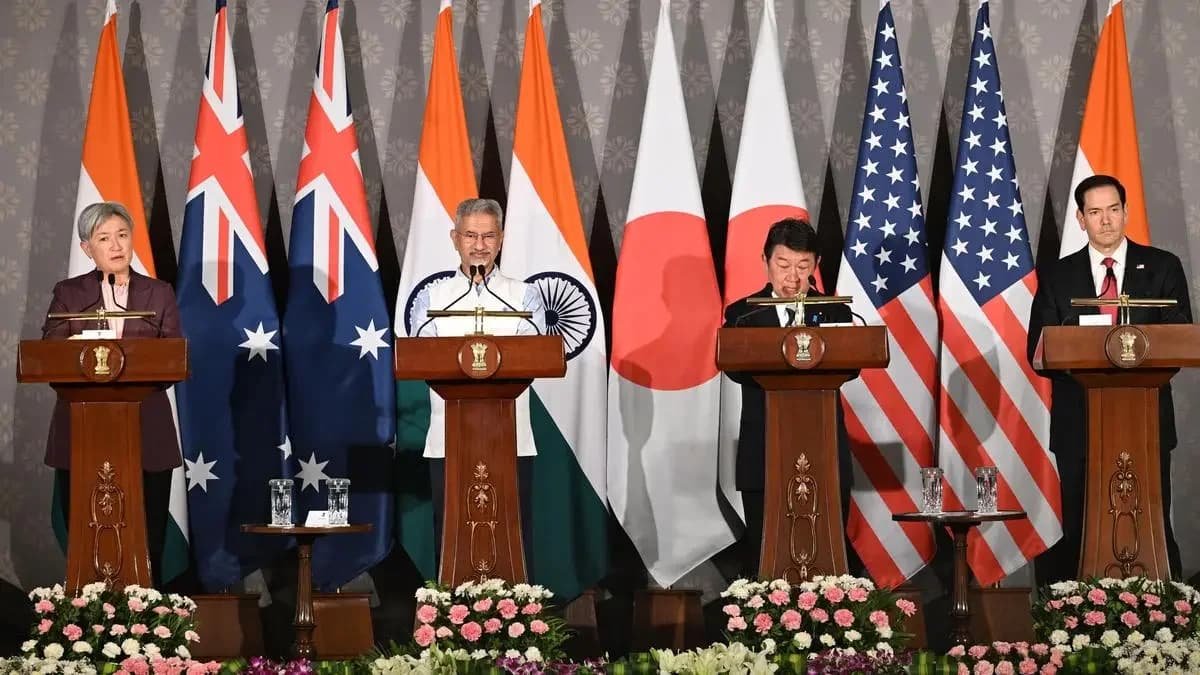
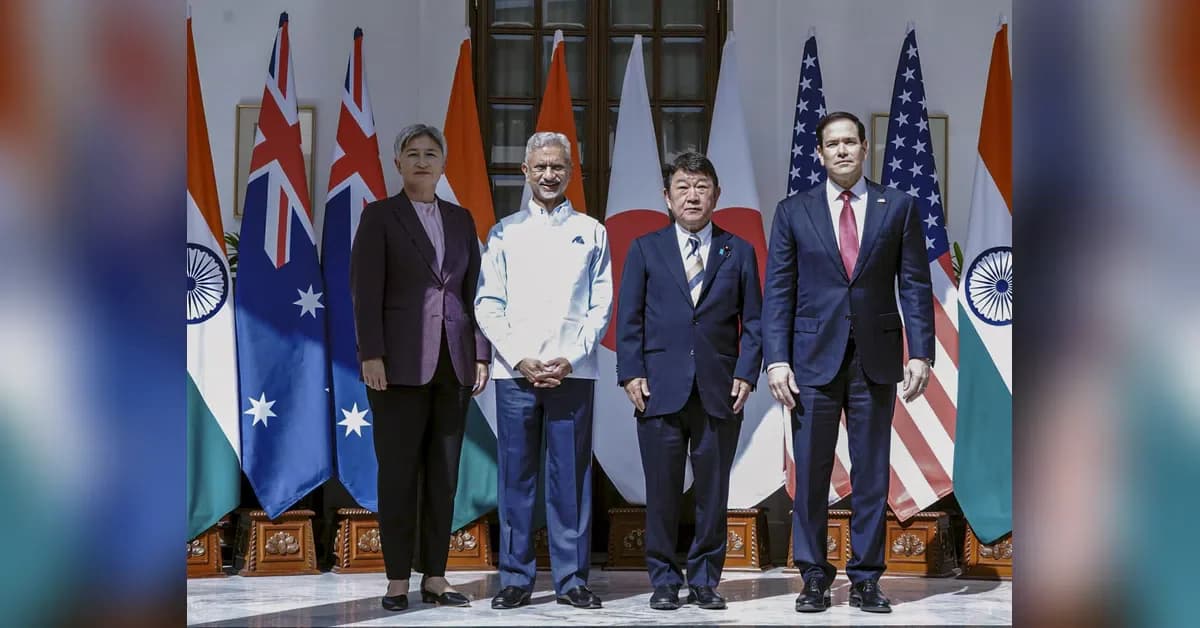
The Quad nations have officially launched the Quad Critical Minerals Initiative Framework during their latest meeting in New Delhi, marking a significant escalation in their efforts to reduce dependence on Chinese rare earth elements. According to South China Morning Post, the initiative aims to secure supply chains, mining, processing and recycling to reduce global reliance on Chinese rare earth elements, which China controls over 60% of global mining and 85% of processing capacity. The framework will be backed by up to US$20 billion in government and private sector support, using export credit agencies, development finance institutions and public funding tools such as guarantees, loans and subsidies. Indian Foreign Minister Subrahmanyam Jaishankar and US Secretary of State Marco Rubio signed a separate bilateral critical minerals framework, with Rubio noting that "vibrant innovation economies cannot afford to leave the foundational materials of these industries vulnerable to single-source monopolies." The initiative has now expanded to coordinate investment, extraction, processing, refining, and recycling of strategic minerals across Quad members and other trusted partners, with Australia's substantial reserves of lithium, cobalt, nickel, and other critical minerals positioned as central to this agenda.
The Quad nations have announced a new Indo-Pacific energy security initiative during their latest meeting in New Delhi, marking a significant shift from symbolic diplomatic cooperation to concrete operational frameworks. According to The Economic Times, this initiative includes a strategic crude reserve and emergency oil response system designed to ensure energy stability and security for the region. The framework notably emphasised vulnerabilities in developing and small island states in the Indo-Pacific, and called for coordinated support to strengthen regional energy security. It also announced plans for a Quad Fuel Security Forum to deepen cooperation on energy markets and crisis response. The statement highlighted new threats to shipping routes and how Indo-Pacific economies are reliant on maintaining consistency of delivery, with Australia having a longstanding vulnerability being heavily dependent on imported refined fuel and having limited strategic reserves. The framework warns that disruptions in oil, gas, petrochemicals and related goods "fall heavily on the Indo-Pacific region," with the statement treating energy security not simply as a domestic economic issue, but a collective strategic challenge requiring coordination between partners.
The foreign ministers wrapped up their meeting in just over an hour without announcing a leaders' summit, with the joint statement merely stating that partners "look forward to the convening of the Quad Leaders' Summit" without specifying when or where it would take place. As reported by South China Morning Post, India was essentially unable to host a leaders' summit after Trump declined to travel without a US-India trade deal, and Australia is set to take over as chair next. International affairs expert Brahma Chellaney observed that "without the political weight of a leaders' summit, the Quad risks losing its strategic coherence and punch." However, US Secretary of State Marco Rubio sought to dispel doubts about the alliance's momentum, stating that "We are deeply committed to this partnership. It is a linchpin and a cornerstone of our global strategy." He noted that the alliance represents nearly 2 billion people and about a third of global GDP, adding that the four nations want the Quad to be "a forum of action," rather than just another platform for discussion.
The meeting has resulted in new frameworks for energy security and critical minerals, along with measures to enhance maritime surveillance and port infrastructure. As reported by The Economic Times, Quad members will also cooperate on two maritime initiatives involving surveillance capabilities and real-time information for commercial sea traffic. The debut of the Indo-Pacific Maritime Surveillance Collaboration was announced alongside an expansion of existing maritime domain awareness programmes, aimed at creating a "Common Operating Picture" for regional waters. Building on the Ports of the Future Partnership, the Quad committed to backing critical port infrastructure projects across key Indo-Pacific shipping corridors, including a newly announced pilot port infrastructure project in Fiji. Australian Foreign Minister Penny Wong noted that the Quad must "provide real choices, particularly as strategic circumstances in our region are deteriorating." The group now frames its role as collectively managing vulnerabilities in maritime surveillance, cybersecurity, critical minerals, telecommunications, artificial intelligence, energy supplies, disaster response, and infrastructure resilience across the Indo-Pacific.
The urgency surrounding the talks has increased sharply due to the ongoing tensions involving Iran and the continued disruption of shipping movement through the Strait of Hormuz. According to The Economic Times, the closure of the crucial maritime route has unsettled oil and gas markets globally, raising concerns among energy-importing economies including India and Japan. The meeting took place against the backdrop of rising energy market volatility driven by US tensions with Iran and surging global oil prices. The joint statement warned that disruptions in oil, gas, petrochemicals and related goods "fall heavily on the Indo-Pacific region," with the framework notably emphasising vulnerabilities in developing and small island states in the Indo-Pacific. For Australia, this represents a particular challenge as the country has made sea lines of communication central to its national defense strategy, centering itself as a maritime nation concerned with fragile supply lines and maritime choke points.