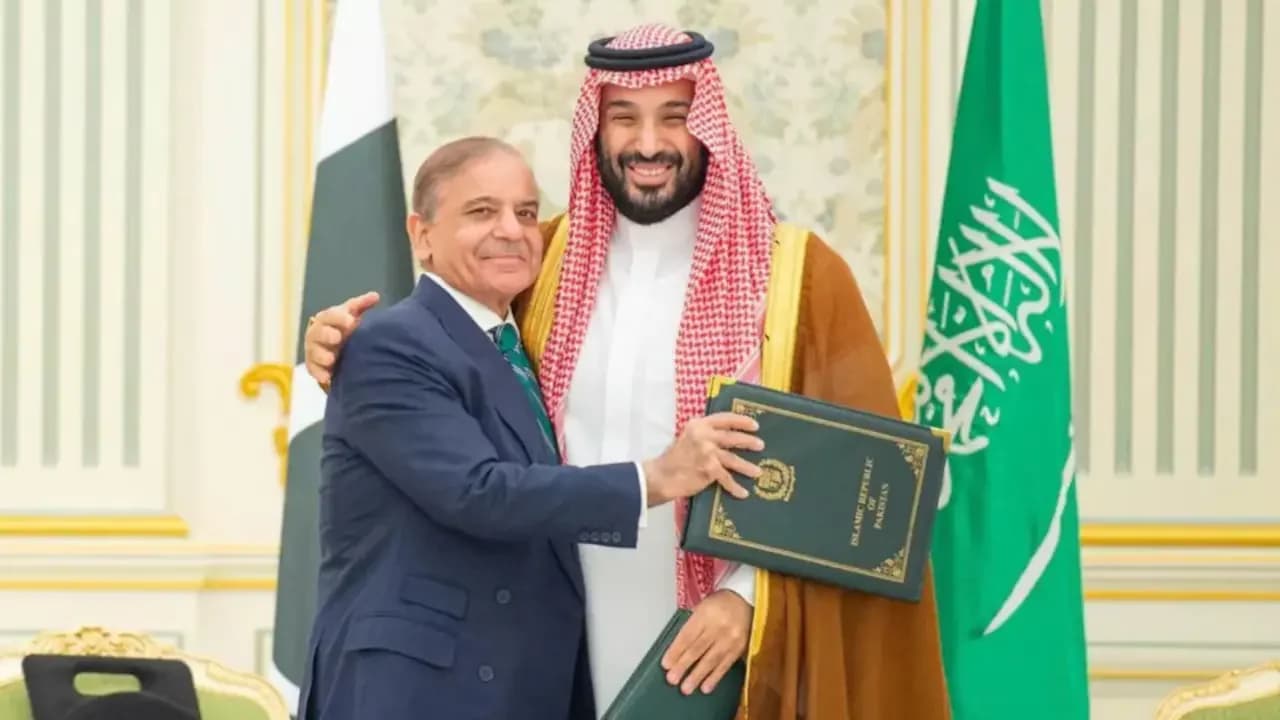
Pakistan has reaffirmed its unwavering commitment to implement all bilateral agreements with Saudi Arabia, including the Strategic Mutual Defense Agreement (SMDA), following recent Houthi missile attacks on the kingdom. According to Arab News, Pakistani Foreign Office spokesman Tahir Andrabi confirmed that Islamabad remains fully committed to support the sovereignty and territorial integrity of Saudi Arabia during a weekly press briefing in Islamabad. The statement came after Pakistan Prime Minister Shehbaz Sharif condemned the Houthi ballistic missile attacks on Saudi Arabia, warning that the assault risked further destabilizing an already fragile Middle East. The SMDA, signed in September last year, effectively treats an armed attack against one nation as an attack against both countries and serves as the cornerstone of their strategic relationship.
The Gulf region faces increased short-to-near-term risks as the U.S.–Iran conflict intensifies, with Oman and Saudi Arabia continuing to face the lowest risks while Kuwait and Bahrain face the most acute risks. According to Global Guardian's July Risk Barometer, the U.S. launched strikes on over 80 targets across southern Iran and around the Strait of Hormuz on 08 July in response to Iranian attacks on commercial ships. Iran retaliated by targeting U.S. military sites in Kuwait and Bahrain, and expanding strikes on U.S. assets to Jordan, Qatar, and Oman. The situation has moved away from a conflict-management approach back towards managed escalation between the U.S. and Iran, with Global Guardian now recommending against non-essential travel to Gulf Cooperation Council countries for the next two to three weeks. The U.S. reinstated a naval blockade on Iranian ports on 14 July, while Iran declared the Strait closed on 11 July and threatened to attack the UAE's Fujairah pipeline and Saudi Arabia's East-West pipeline if the blockade continues.
Pakistan faces a critical diplomatic and military conundrum as its dual role as a regional mediator and defense ally to Riyadh comes under direct threat. According to Arab News, Pakistani officials have conveyed to Iran at the highest level that attacks on Saudi Arabia are attacks on Pakistan, establishing what they describe as their 'red line'. The escalation makes Pakistan's potential future position as a mediator between the US and Iran more difficult to maintain, with officials acknowledging growing frustration but refusing to abandon mediation efforts. The current situation is particularly concerning as growing worries that Houthi involvement would be more likely to drag Pakistan into the fight than earlier Iranian missile strikes are the primary source of Pakistan's dissatisfaction. However, Pakistan has maintained its role as a mediator, with the mediation trio of Pakistan, Qatar, and Oman still holding separate talks with both sides despite the increased kinetic actions. The 'new normal' consisting of managed escalation between the U.S. and Iran is unsustainable, with the U.S. having until September to temporarily resolve the situation ahead of the November midterms.
Pakistan's military personnel are particularly vulnerable due to their positioning close to the Saudi border with Yemen, which increases their direct exposure to potential conflict. As reported by Reuters, growing concerns that Houthi escalation would disrupt Red Sea shipping routes are the primary source of Pakistan's dissatisfaction. The country is particularly concerned about potential disruption to shipping in the Red Sea, a vital commerce route that Pakistan and many other nations rely on for energy supplies and international trade. The latest developments show that a potential blockade poses a risk of considerable disruption to the global energy market and would affect Saudi oil exports significantly. Despite current tensions, Pakistan has maintained its role as a mediator, helping mediate an interim agreement in the conflict between Washington and Tehran last month. The war risk premiums for shipping are now surging to between 2%–6% of a vessel's value, with the U.S. Navy issuing route guidance and escorting commercial ships through Omani waters since early May.
Pakistan has maintained its position regarding frozen diplomatic relations with Afghanistan due to security concerns, with Foreign Office spokesman Tahir Andrabi confirming that ice has not broken and will not break until Afghanistan renounces support of terrorism in Pakistan. According to Arab News, Pakistan has tightened movement across its borders with Afghanistan since last October, following a deterioration in bilateral relations due to a surge in militancy in Pakistan. Despite this, Pakistan continues to facilitate United Nations-led humanitarian convoys for Afghanistan, with approximately 45 aid trucks already processed through Pakistani land routes. However, Pakistan has suspended all bilateral and transit trade with Afghanistan due to prevailing security concerns. The spokesman emphasized that the Afghan Taliban regime must renounce terrorism against Pakistan, give verifiable written assurances that its territory will not be used to foment, engineer, sponsor and execute terrorist attacks against Pakistan. The situation has become more complex as Iran has directed Houthi militias to get ready to obstruct the Red Sea oil passage should the United States carry out strikes on Iranian power facilities.