President Donald Trump has declared the ceasefire all but dead, indicating he wants nothing to do with Iran while describing its leaders as 'scum'. The Trump administration conducted the heaviest strikes since the MOU's signing within Iran, largely focusing on the southern coast straddling the Strait of Hormuz. Between July 8-9, U.S. strikes on Iran targeted military and civilian infrastructure, triggering Iranian retaliation against American bases in Bahrain, Kuwait, Qatar and Jordan. The exchanges continued throughout the week, leaving the state of talks between the two countries in serious question. The Trump administration also withdrew the sanctions waiver that the Treasury Department released on June 22, which allowed Iran to sell oil on the open market as part of the MOU. Ryan Costello from the National Iranian American Council (NIAC) warns that a familiar pattern is repeating itself, noting that Washington has sought to set up a rival southern route along Oman's coast, while Iran has insisted that traffic flow according to the northern route it established along its coast.
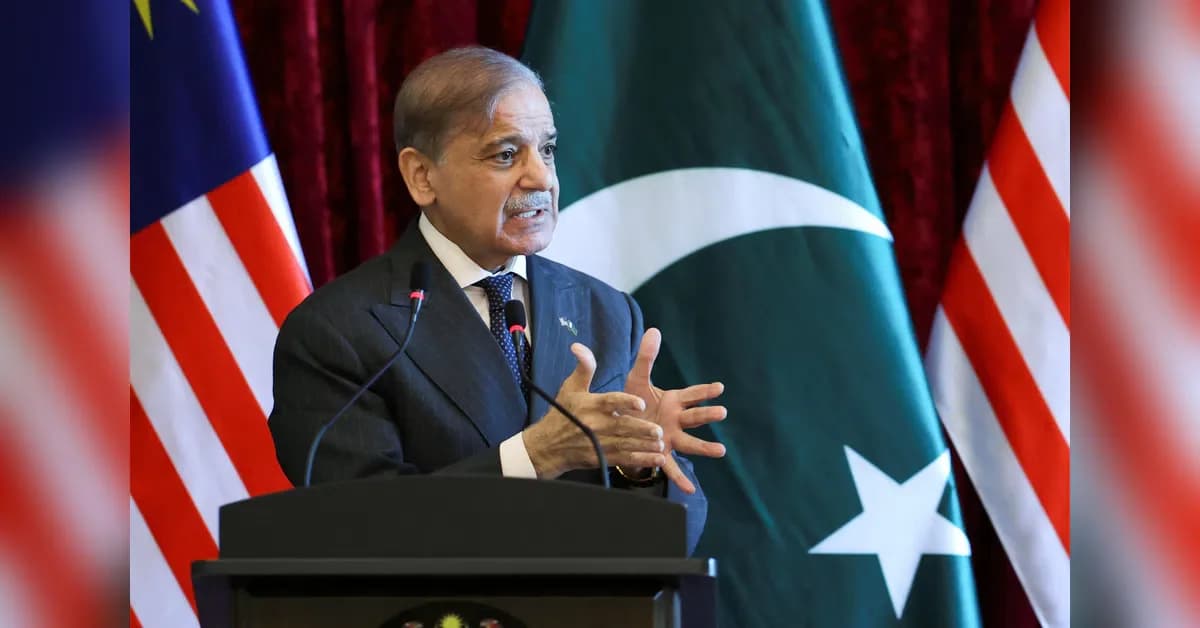
Prime Minister Shehbaz Sharif held separate talks with leaders of Iran and Qatar on Friday night to revive stalled US-Iran negotiations following recent regional escalation. According to reports from Business Standard, the talks were conducted as efforts intensified to mend the broken peace bridge between the warring sides after recent attacks on rival targets. The discussions came amid escalating regional tensions and urgent need to restore stability in the Middle East. Qatar's foreign ministry confirmed that in a call with Egyptian Foreign Minister Badr Abdelatty, Qatari Prime Minister and Foreign Minister Sheikh Mohammed bin Abdulrahman Al Thani stressed 'the need for all parties to commit to dialogue and diplomacy' and to implement the US-Iran memorandum. However, the diplomatic efforts face significant challenges as Trump declared on Friday that the ceasefire between Iran and the United States was over, posting on Truth Social: 'The Islamic Republic of Iran has asked us to continue ''talks.'' We have agreed to do so, but the United States has stated to them, in no uncertain terms, that the Cease Fire is OVER!'
In his conversation with Iranian President Masoud Pezeshkian, Sharif expressed 'deep concern over the recent escalation in tensions in the region' and underscored the urgent need to 'restore regional peace and stability'. As reported by Business Standard, he urged parties to 'exercise restraint and refrain from any action that could jeopardise the hard-earned peace gains achieved over the past few months'. Sharif stressed the importance of upholding commitments under the Islamabad Memorandum of Understanding (MoU), describing it as an enduring framework for promoting mutual understanding, respect and shared prosperity in the region and beyond. Reaffirming Pakistan's steadfast commitment to regional peace, Sharif assured Pezeshkian of Islamabad's readiness to continue playing an 'honest and sincere role' in facilitating dialogue and supporting all efforts aimed at preserving peace and stability. President Pezeshkian thanked the Prime Minister, Deputy Prime Minister and Foreign Minister Ishaq Dar, Field Marshal Asim Munir, and other senior Pakistani leaders for attending the funeral ceremony of the late Supreme Leader Ayatollah Ali Khamenei, and reaffirmed Iran's commitment to peace and appreciated Pakistan's constructive support. However, Iran's chief negotiator Mohammad Bagher Ghalibaf struck a defiant tone, telling ISNA news agency: 'Ending the war is a priority for the countries of the world, but everyone must know that this confrontation will never end with Iran's surrender.' Ghalibaf emphasized that 'Iranians are fully prepared to defend themselves'.
In a separate telephone conversation with Emir of Qatar Sheikh Tamim bin Hamad Al Thani, Sharif reiterated his 'deep concern over the recent escalation in tensions in the region' and conveyed Pakistan's solidarity and support with the people of Qatar on recent attacks. According to Business Standard, he stressed that all parties should 'exercise restraint and refrain from any actions that could undermine peace in the region'. Sharif conveyed Pakistan's sincere gratitude to the Qatari ruler for consistent support in peace efforts that culminated in the Islamabad MoU and first round of high-level technical talks at Burgenstock. The Qatari delegation was in Tehran to 'try to reinforce Qatar's role as a mediator following events on Tuesday', when Doha condemned Tehran for what it called an 'unacceptable assault' on one of its LNG tankers in the Strait of Hormuz. Iran denied the accusation, but Qatar's foreign ministry confirmed that in a call with Egyptian Foreign Minister Badr Abdelatty, Qatari leaders stressed 'the need for all parties to commit to dialogue and diplomacy' and to implement the US-Iran memorandum. The escalation began when the US and Israel launched a massive wave of surprise attacks on Iran on February 28, killing much of Tehran's senior leadership, including supreme leader Ali Khamenei.
The discussions resulted in both leaders agreeing upon sustained diplomatic engagement and dialogue, and adherence to commitments made by all parties under the peace memorandum. As reported by Business Standard, the US and Iran signed the MoU on June 18, aimed at restoring peace in West Asia, followed by technical-level talks in Switzerland on June 21, with Pakistan and Qatar serving as mediators. Qatar's foreign ministry confirmed that in a call with Egyptian Foreign Minister Badr Abdelatty, Qatari leaders stressed 'the need for all parties to commit to dialogue and diplomacy' and to implement the US-Iran memorandum. However, the diplomatic process faces significant obstacles as US and Iranian delegations have held one round of direct talks in Switzerland since the signature of their memorandum of understanding, as well as indirect negotiations in Qatar, but there has been no sign of diplomatic progress since. The war also spilled over into Lebanon after Hezbollah launched rockets at Israel, prompting it to invade, while Jordan said it shot down missiles in its airspace. Despite the challenges, the wider war was subsequently halted by a ceasefire agreement on April 8, though there have been sporadic outbursts of violence ever since, most sparked by disagreements over the Strait of Hormuz, which Tehran insists it must control and has expressed a desire to charge transiting fees for.
The Strait of Hormuz has emerged as the key stumbling block to the ceasefire, as Iran continues to assert control over parts of the waterway and went on to fire ships earlier this week. In response, the US launched days of military strikes on Iranian targets. Senior US officials said Washington expects Tehran to issue a public statement in the coming days that the Strait of Hormuz is open and commercial vessels attempting to transit the waterway won't be attacked. Without safe passage assured in the strait, where traffic has once again slowed to a crawl, a US official said nuclear talks can't begin. Commercial shipping traffic through the Strait of Hormuz remains severely depressed, with at least 15 commercial vessels transiting the Strait of Hormuz in the past 24 hours, according to MarineTraffic data. Before the war, roughly 110 vessels passed through the Strait each day on average. The US military strategy has been to deliberately strike and then pause to avoid escalation and to let diplomacy work, a US official told CNN. The officials declined to specify the consequences for Iran if it does not issue such a public declaration, but warned the US could take further action. Recent remarks from Vice President JD Vance indicate what Washington may have envisioned all along: a pause to calm energy markets and refill stockpiles, rather than a genuine effort to end the war. As he stated on The Michael Knowles Show, 'What the president has told us to do is use this MOU to sort of refill the world's oil economy, to refill some stocks, and then to see where the hand is.'