Nepalese Prime Minister Balendra 'Balen' Shah is set to lead Nepal's delegation to the 81st session of the United Nations General Assembly in New York, marking his first foreign trip since taking office in March 2026. As reported by The Times of India, this visit was originally planned as a modest affair led by Foreign Minister Khanal but was elevated to a prime ministerial trip only after the scale of the Bhote Koshi disaster made a personal appeal from Nepal's head of government politically and diplomatically necessary. Shah is expected to use his address to press wealthier nations for climate compensation, arguing that countries responsible for the bulk of historical emissions bear responsibility for the glacial and flood-related disasters increasingly battering the Himalayan region. The visit represents the most immediate test of whether these adjustments amount to genuine course correction, offering Shah a chance to demonstrate in front of international audiences that his government is capable of engaging seriously when stakes are high.
Indian officials report significant concerns about limited access to Prime Minister Shah, with the PM initially declining customary one-on-one courtesy calls that Indian ambassadors have held with every Nepali prime minister for decades. According to The Times of India, Shah chose instead to meet all 17 resident envoys together in a single group session in April, with the intention to signal that Nepal treats all partners as equals rather than granting India the informal first call it has traditionally enjoyed. The effect from New Delhi's perspective was closer to a snub, with friction mounting further in May when a planned visit by the Indian Foreign Secretary was postponed after Shah indicated he did not wish to see him. It was not until August, nearly five months into his term, that Shah finally sat down separately with the Indian ambassador, by then the damage to the relationship's normal rhythm had already been done. Indian officials also point to what they describe as a shift in who actually has the prime minister's ear, with traditional bureaucratic channels that have long managed the India file appearing to have less direct access than before.
Nepal's Finance Minister Swarnim Wagle, an economist and former UNDP official, has made his first visit abroad to Delhi to discuss reconstruction plans with the Indian government. In an exclusive interview with The Hindu, Wagle emphasized that the new Balen Shah government wants a 'reset' with India, seeking cooperation and revision of old trade and connectivity projects. The government is particularly focused on pushing for long-delayed overflight rights for Nepal airports and managing difficult issues such as the border dispute in a 'constructive' manner. Wagle noted that the new government wants to move away from the old era of jingoism, equating Nepali nationalism with anti-Indianism, and is intensifying efforts to support reconstruction after the August 26 flash floods that caused significant damage to Nepal's energy infrastructure. The Darma Valley region, located within the trilateral dynamics of India, Nepal and China, adds complexity to these border disputes as it lies adjacent to the Kalapani, Lipulekh and Limpiyadhura areas where territorial claims overlap.
The August 26 flash floods caused significant damage to Nepal's energy infrastructure, with Finance Minister Wagle flagging the impact during his recent visit to New Delhi. According to Business Standard, the floods destroyed a 300-megawatt operational hydroelectric plant and swept away an under-construction 500-plus MW plant, resulting in a cumulative loss of 800 MW - nearly 20% of Nepal's 4,200 MW installed hydroelectric capacity. The Nepal government has estimated it would need $5 billion to recover from the damage, which includes 31 bridges, 70 km of walkway roads, around 8,000 buildings, and thousands displaced. The floods affected significant foreign investments, particularly South Korean investment, and Wagle noted that the new government aims to finish existing projects with India that were conceived decades back. The Kali River's source dispute remains unresolved, with Nepal maintaining since 1998 that the true source is at Limpiyadhura village, while India claims it is located farther east near Kalapani village, creating ongoing territorial tensions in the region.
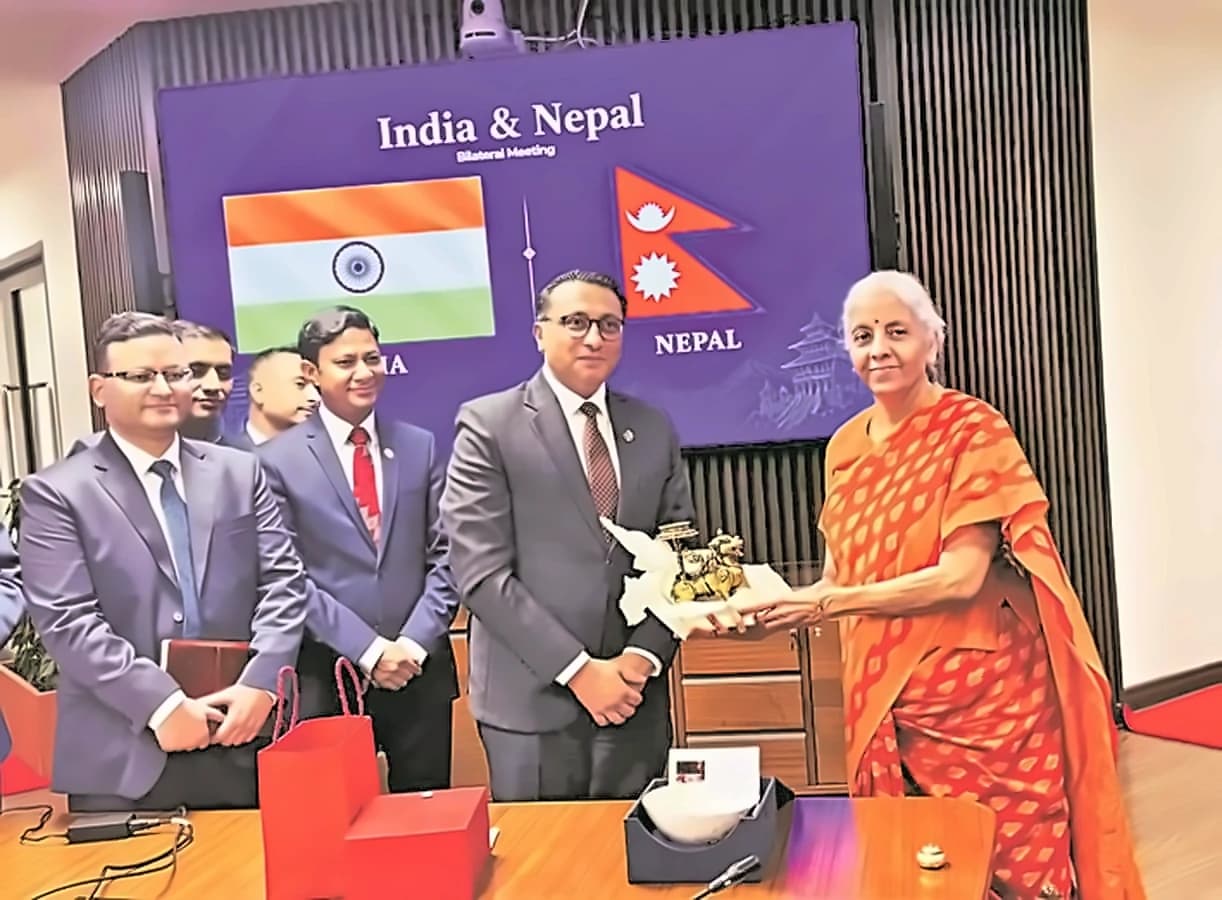
Wagle acknowledged India's assistance following the recent floods and thanked India for its pledge to ensure 650 MW of electricity supply to Nepal. As reported by Business Standard, Nepal seeks India's assistance and investments in achieving its target of 28,000-35,000 MW of clean energy by 2035, mostly hydropower. The government's decision to prioritise domestic governance ahead of foreign engagement left ambassadorial posts vacant for months, giving career diplomats less political top cover to manage day-to-day friction with foreign missions. What happens after New York will likely matter more than the speech itself, with filling long vacant ambassadorial posts and restoring routine bilateral access being crucial for repairing diplomatic relationships. Wagle will soon travel to meetings of the Asian Infrastructure Investment Bank (AIIB), International Monetary Fund (IMF), and the World Bank to seek support for the estimated $5 billion recovery project. The Vibrant Villages Programme and the contest with China's Xiaokang model add another layer of complexity to these energy security discussions, as China has largely remained an interested but non-committal third party to the border disputes.
India remains Nepal's largest partner in trade and investment, with bilateral goods trade worth $9.38 billion in 2025-26 (FY26), representing more than 60% of Nepal's total external goods trade. According to Business Standard, India is also Nepal's biggest export destination, receiving more than 80% of Nepal's goods exports in FY26. The power trade agreement signed in 2014 envisaged export of 10,000 MW of power by Nepal to India, with Nepal exporting about 1,100 MW of electricity to India in 2025 and sending power to Bangladesh through the Indian grid. Finance Minister Wagle has intensified efforts to support reconstruction, making his first visit abroad to Delhi to discuss plans with the government and will soon travel to meetings of the Asian Infrastructure Investment Bank (AIIB), International Monetary Fund (IMF), and the World Bank to seek support for the estimated $5 billion recovery project. The Kalapani, Lipulekh and Limpiyadhura disputes continue to complicate these trade relations, with Nepal's new government declaring interest in resolving the dispute while moving away from bilateral agreements that China has maintained.