Nepal's Ministry of Foreign Affairs has clarified that Prime Minister Balendra Shah's recent remarks in Parliament regarding Nepal-India border issues were specifically related to 'Cross-Border Occupation' and encroachment of no-man's land. According to the Foreign Ministry, PM Shah's statement about land usage along the border - 'in some places, land currently used and occupied by Nepal may fall on the Indian side while land currently under India's use and occupation may lie on the Nepal's side' - was made in the context of technical findings by the Technical Committee. The Ministry emphasized that these issues are related to border management and cross-border occupation rather than territorial disputes.
Nepal has escalated tensions with both India and China by sending diplomatic notes in early May asking the two nations to refrain from allowing Indian pilgrims to visit the Kailash mountain in Tibet through the Lipulekh pass. According to reports from Business Standard, the new Nepalese government led by Prime Minister Balendra Shah made this request to both countries, creating a complex diplomatic situation involving all three nations. The Foreign Ministry statement clarified that Nepal's diplomatic note on the matter received a response from the Government of India through a diplomatic note as well, with both countries expressing their commitment to resolving border-related disputes through diplomatic channels and mutual dialogue.
The dispute centers around Nepal's 2020 constitutional amendment that included the Lipulekh, Kalapani and Limpiyadhura areas in the country's official political map. As reported by Business Standard, Nepal's Ministry of Foreign Affairs cited the colonial-era Treaty of Sugauli from 1816, which was between the British government in India and Gurkha chiefs, to support its sovereignty claims over the area. The Foreign Ministry statement noted that 'Nepal's current international boundary was demarcated and defined by the Treaty of Sugauli of 1816', while 'within the Nepal-India border, the areas of Susta and Limpiyadhura, Lipulekh and Kalapani remain to be demarcated'. The Lipulekh pass, located at 5,000 meters high in Uttarakhand, India, has been a traditional pilgrimage route since 1954 for the Kailash-Manasarovar Yatra.
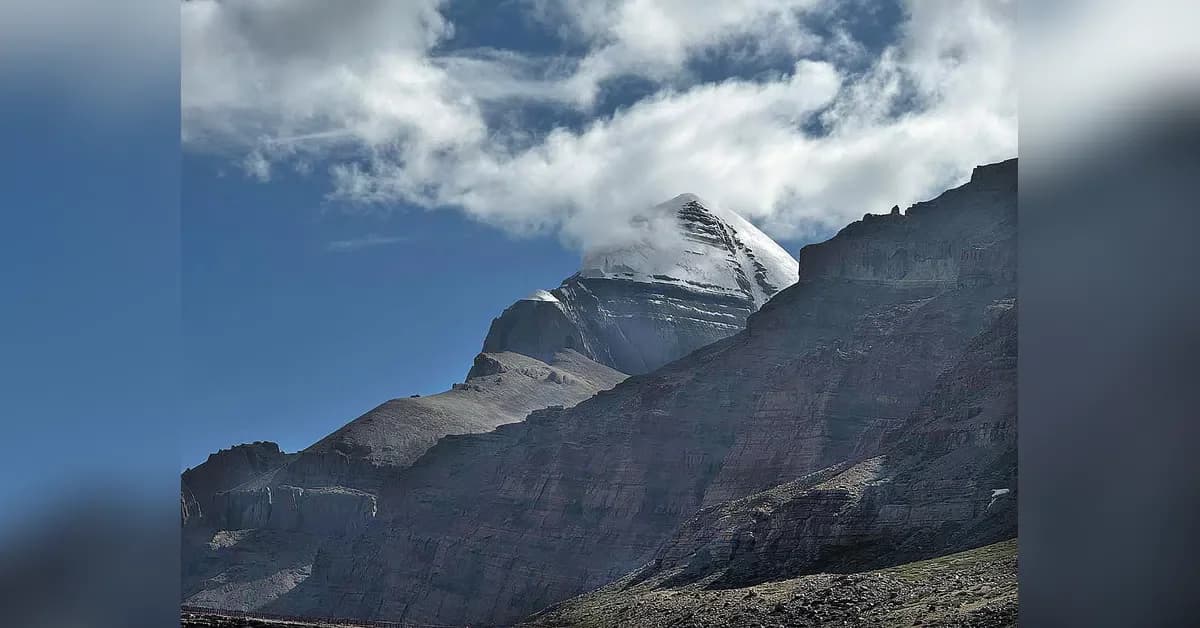
India's Ministry of External Affairs (MEA) responded on May 3 strongly rejecting Nepal's claims, stating that the Lipulekh Pass has been a long-standing route for the Kailash-Manasarovar Yatra since 1954. According to Business Standard, the MEA called Nepal's claims neither justified nor based on historical facts and evidence, describing such unilateral territorial claims as untenable. Former Indian ambassador to Nepal Ranjit Rae emphasized that the Nepalese claim is baseless, noting it was first raised only two years ago after 200 years of no dispute. The Foreign Ministry clarified that India has 'already clarified its official position on India's operation of the Kailash Mansarovar pilgrimage route through the Nepali territory of the Lipulekh area' on May 3.
The Foreign Ministry revealed that border-related mechanisms and technical teams from both countries are active in collecting details of cross-border occupation, encroachment of no-man's land, and construction and repair of border pillars in areas where mapping was done scientifically and systematically along the Nepal-India border. The Technical Committee's job, which had remained pending for a long time, is active along the border area at present and details are being collected jointly. The Ministry explained that 'the adoption of the Fixed Border Principle in delineating the Nepal-India border along river boundary areas has led to Cross-Border Occupation', where citizens of one country farm and reside on land that falls within the territory of the other. This technical approach aims to address the complex border management issues that have emerged from the centuries-old boundary demarcation.
The pilgrimage route has been a significant economic and cultural corridor for all three nations. According to Business Standard, China allows circumambulation of Kailash but bars treks, while India is open to constructive interaction with Nepal on all bilateral issues. The Lipulekh pass was reopened for border trade during Chinese Foreign Minister Wang Yi's India visit last year, though the ruling RSP in Nepal objected to these arrangements. With improving India-China relations, the pilgrimage is set to resume from June to August, with some travelers using Lipulekh and others the Nathu La Pass in Sikkim. The Foreign Ministry's latest statement emphasizes that 'it is evident that Nepal and India share a centuries-old, long, and open border' and that both nations are committed to resolving border-related disputes through diplomatic channels.