The upcoming July 7-8 Ankara summit faces mounting criticism over media access restrictions, with Turkish journalism groups reporting that several independent media outlets have been denied accreditation to cover the NATO meeting. According to the Associated Press, Turkish journalists from news organizations viewed as opposition-leaning or independent — including Halk TV, Sozcu TV, Cumhuriyet newspaper, T24 news website and ANKA news agency — have been excluded from covering the summit. The Turkish Journalists' Association and other media solidarity groups said the journalists were neither given a reason for the rejection nor offered the opportunity to appeal the decision. "Preventing certain media outlets from covering events of public importance undermines freedom of information and reporting," the association stated, calling on international organizations to act in line with democratic values they claim to uphold. NATO spokeswoman Allison Hart confirmed that for summits held outside of its Brussels headquarters, the alliance relies on the host country to assess and approve journalists from that country, though she emphasized the importance of media attendance at major events.
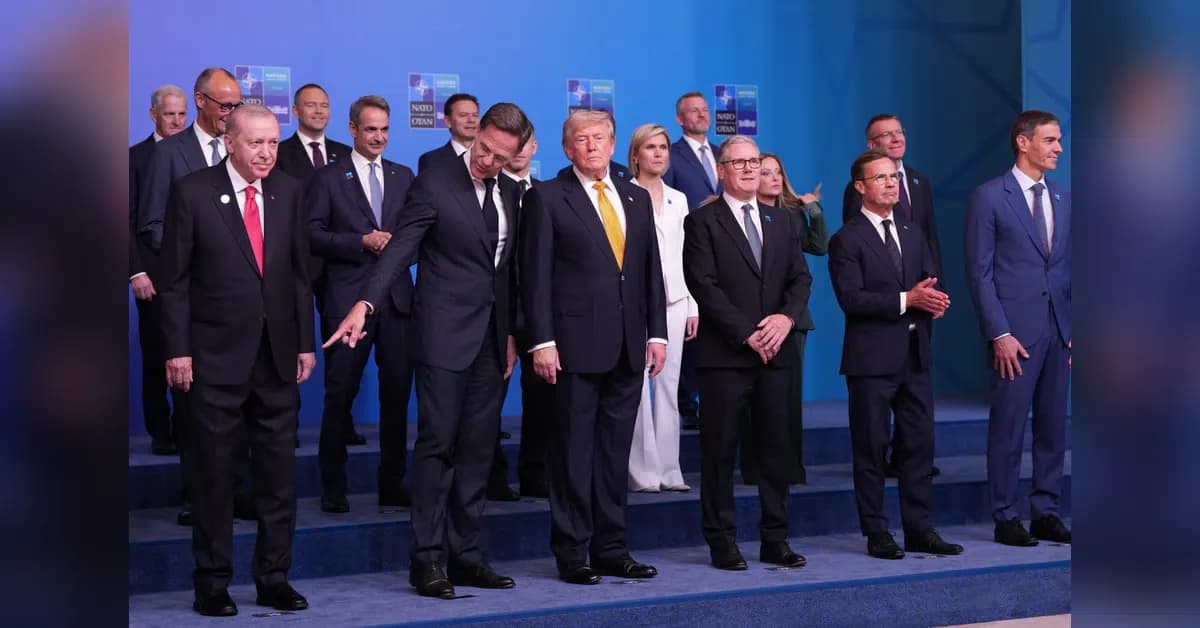
Nato's deputy commander has emphasized the critical importance of the upcoming Turkey summit to demonstrate alliance unity and defense commitments. Air Chief Marshal Sir John Stringer, Nato's deputy supreme allied commander in Europe, told The Associated Press that summits are "highly political events and they are a demonstration of any organisation's unity." Speaking ahead of the July 7-8 Ankara summit, Stringer acknowledged that the alliance is experiencing turbulence but stressed the importance of maintaining cohesion among the 32 member nations. According to reports from The Associated Press, Stringer described the current moment as one of "turbulence" but noted that such challenges are natural given decades of Nato expansion. "Are we in one of those moments at the moment? Yes, we are," Stringer said during an interview at a military conference in London where he spoke alongside other senior European military officials. At last year's summit, Nato Secretary General Mark Rutte kept Trump on board by telling him he would achieve "BIG" success at getting allies to spend more on defense, setting the stage for this year's summit to deliver on those commitments.
The summit comes amid significant uncertainty over US military presence in Europe, with US Defence Secretary Pete Hegseth announcing a surprise six-month review of American forces in Europe last week. As reported by The Associated Press, Hegseth criticized Nato allies for not allowing use of their bases to attack Iran while making the announcement. However, European nations have responded with unprecedented defense spending increases, with the notable exception of Spain, following Trump's long-standing urging for allies to take more responsibility for their own defense. Stringer highlighted that European nations are investing to generate a "really credible force," citing examples of countries quadrupling production of 155 mm artillery shells and ramping up production capabilities not seen in decades. Maj. Gen. Indrek Sirel from Estonia's armed forces emphasized that Europe as a whole has "a lot to do" to be credible against Russia, with allies needing to boost their own militaries while also helping Ukraine degrade Russia's fighting power. Maj. Gen. Jonny Lindfors, Sweden's army chief, said a good outcome from the summit would be "a common picture of how to realign when it comes to deterrence and defense," adding that he would like at least an outline of how defense burdens should shift.
The summit faces additional challenges from within Nato, with British Defense Secretary John Healey resigning earlier this month along with another minister over military spending concerns. According to The Associated Press, the government ministers quit over what they described as military spending plans that fail to keep Britain safe. The UK had committed to meeting the 3.5% of GDP defense spending target by 2035 agreed at last year's Nato summit, but the proposed defense investment plan would see spending rise to only 2.68% of GDP in 2030. New Defense Secretary Dan Jarvis has committed to keeping Britain's Nato commitments, with the government planning to publish the spending plan by the summit. Brig. Gen. Jyri Raitasalo of Finland warned that if NATO members don't step up and translate promises into action, the "credibility" of the alliance is at stake, emphasizing that the meeting must go beyond traditional communiques and demonstrate deterrence through concrete action. At last year's summit, members agreed to spend 3.5% of their gross domestic product on core defense, with the UK being "as beholden to that as anybody else," as Stringer noted.
The summit is taking place amid significant security concerns and human rights controversies in Turkey. Earlier this week, security forces detained more than 200 people suspected of links to extremist groups, according to the Ankara chief prosecutor's office, though opposition parties and media reports indicate that politicians, academics, journalists, LGBTQ activists, and lawyers were among those detained. Human Rights Watch criticized the detentions, with Benjamin Ward, the group's deputy director for Europe and Central Asia, stating that "the misuse of terrorism laws to conduct mass arrests and silence people in the run-up to a NATO summit flies in the face of the founding values of the alliance." The Turkish government's Communications Directorate insisted that those detained "were assessed to have been involved in activities connected to various terrorist organizations." Turkey is implementing wide-ranging precautions in the lead-up to the summit, with the authorities maintaining heightened security measures during this critical diplomatic event.

The summit's success will be measured by its ability to translate defense promises into concrete action plans while addressing fundamental democratic values. Brig. Gen. Jyri Raitasalo of Finland emphasized that the meeting must go beyond traditional communiques, roadmaps and action plans and demonstrate deterrence through deeds, warning that if Nato members don't step up and translate promises into action, the "credibility" of the alliance is at stake. According to The Associated Press, Nato expects nations to have a "credible path" to the 3.5% defense spending target by the summit, with the UK being "as beholden to that as anybody else." Maj. Gen. Jonny Lindfors noted that "if you change your mind, or change your plan, every week or every month or even every year, you will not get very good results," highlighting the importance of long-term military planning over sudden policy changes. The Trump administration says that troop reductions in Europe have long been planned and coordinated with allies, but Sirel said it's still not clear how U.S. forces will be positioned in the Baltic states, while the media access restrictions raise broader questions about democratic values during alliance meetings.