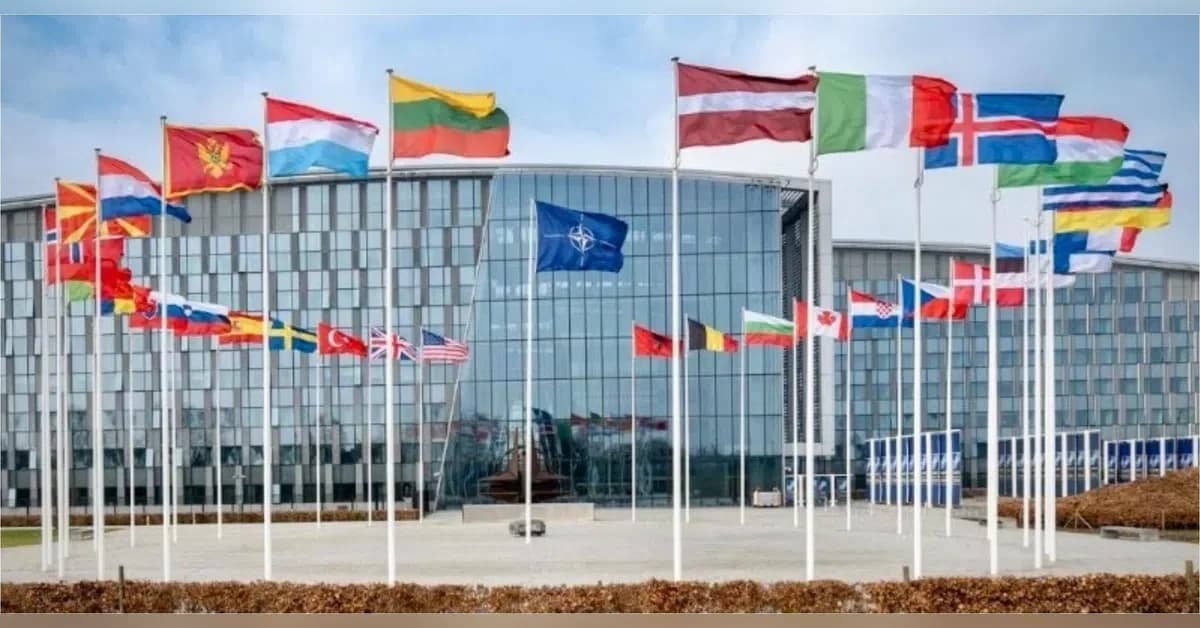
The NATO summit in Ankara delivered significant defense commitments despite ongoing tensions with US President Donald Trump. According to reports from Business Standard, the alliance announced $50 billion in new procurement of equipment from European and US manufacturers, including early warning systems from Sweden's Saab, surveillance aircraft from Northrop Grumman, and military-transport vehicle fleets from Airbus. The summit also pledged $70 billion in military equipment, assistance and training for Ukraine, a non-NATO member, in its war against Russia. However, only five NATO members are projected to meet the alliance's goal of 3.5% of GDP on core defense spending, up from the previous 2% target. Trump endorsed the summit declaration reaffirming NATO's Article 5 mutual defense commitment and approved a license allowing Ukraine to manufacture Patriot missile interceptors, moves viewed by European leaders as important signals that Washington remains committed to the alliance despite months of strained relations.
Despite the summit's defense commitments, Trump's erratic behavior continued to overshadow alliance unity. As reported by Business Standard, Trump reiterated US designs on the Danish territory of Greenland and ordered an immediate halt to trade with Spain over defense spending and the war in West Asia. The US President hailed the summit as a "tremendous success" that yielded "a lot of unity," but his remarks on Spain, Greenland and Iran exposed deep alliance tensions. Trump chose the summit to end the truce and announce the launch of dozens of strikes on Iran on July 8 in apparent retaliation for Iranian strikes on ships in the Strait of Hormuz. However, the atmosphere improved significantly by the end of the meeting, with Trump describing the summit as one filled with "love" and easing fears that the gathering could end in open confrontation. According to Al Jazeera, Trump told reporters: "I'm not happy with NATO because of what they did with Greenland, and I'm not happy with NATO because of the fact that they didn't want to help us with the number one state sponsor of terror, that's Iran."
The alliance's defense commitments are concentrated among countries vulnerable to Russian aggression, with Lithuania, Estonia, Latvia, Poland and Greece spending the most on defense. According to Business Standard, the Big Three — Germany, the United Kingdom, and France — will continue to spend slightly over the historic 2% target. The US is estimated to be spending 3.17% of GDP on defense and shares with Germany the largest proportion of NATO's direct funding at roughly 14% each. Ahead of the summit, NATO officials highlighted large increases in military spending by European members and Canada, presenting the figures as evidence that Trump's pressure has produced tangible results. European governments are preparing for continued volatility in transatlantic relations, with officials noting that Trump's approach toward NATO has often shifted rapidly, creating uncertainty over US security commitments. As reported by Al Jazeera, European leaders showcased their surging defense spending at the summit as they looked to convince Trump they are making good on a pledge to ramp up budgets and take more responsibility for their own security.
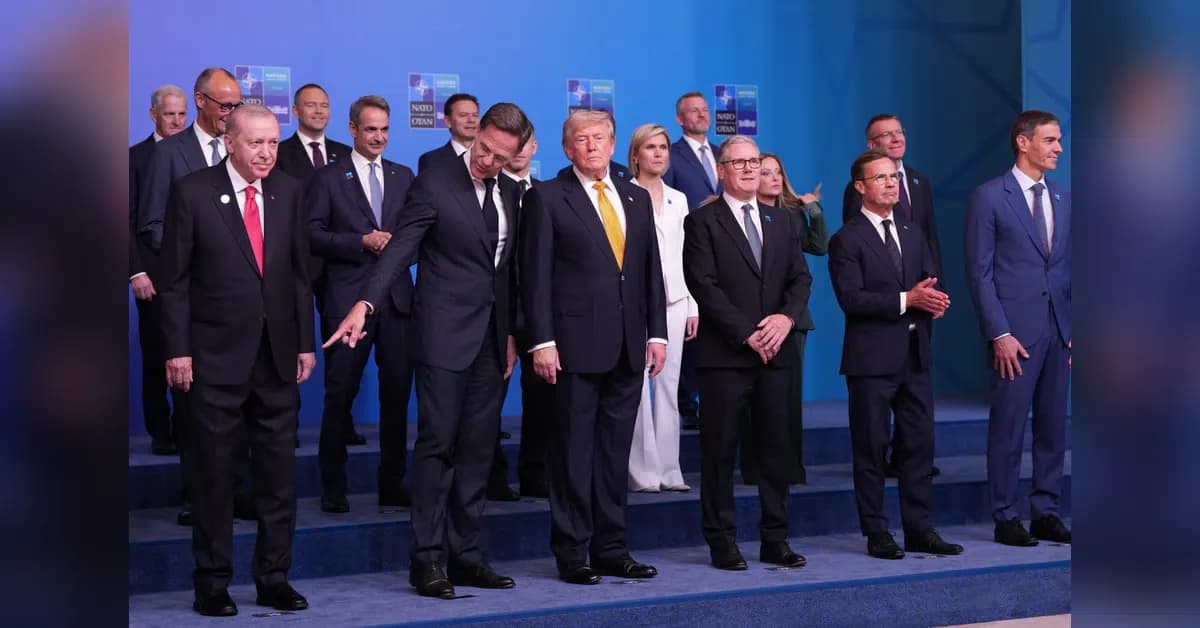
The summit was overshadowed by regional tensions, with Spain closing its airspace to US military aircraft for operations against Iran and Italy denying US permission to use a Sicilian airbase for West Asian deployment. As reported by Business Standard, the attacks have increased uncertainty for the global economy, leading to higher prices of crude oil and sharp cuts in stock prices. The Ankara summit ended with mixed messages, exemplified by the fact that no mention of the next summit location or date was included in the final declaration. Plans for a NATO leaders' meeting in Albania next year have reportedly been put on hold as alliance members reassess the format of future gatherings. Several officials suggested NATO may reduce the frequency of high-profile leaders' summits to avoid repeated political confrontations, with some diplomats believing limiting opportunities for public disputes could help preserve alliance unity while allowing practical cooperation to continue behind the scenes.