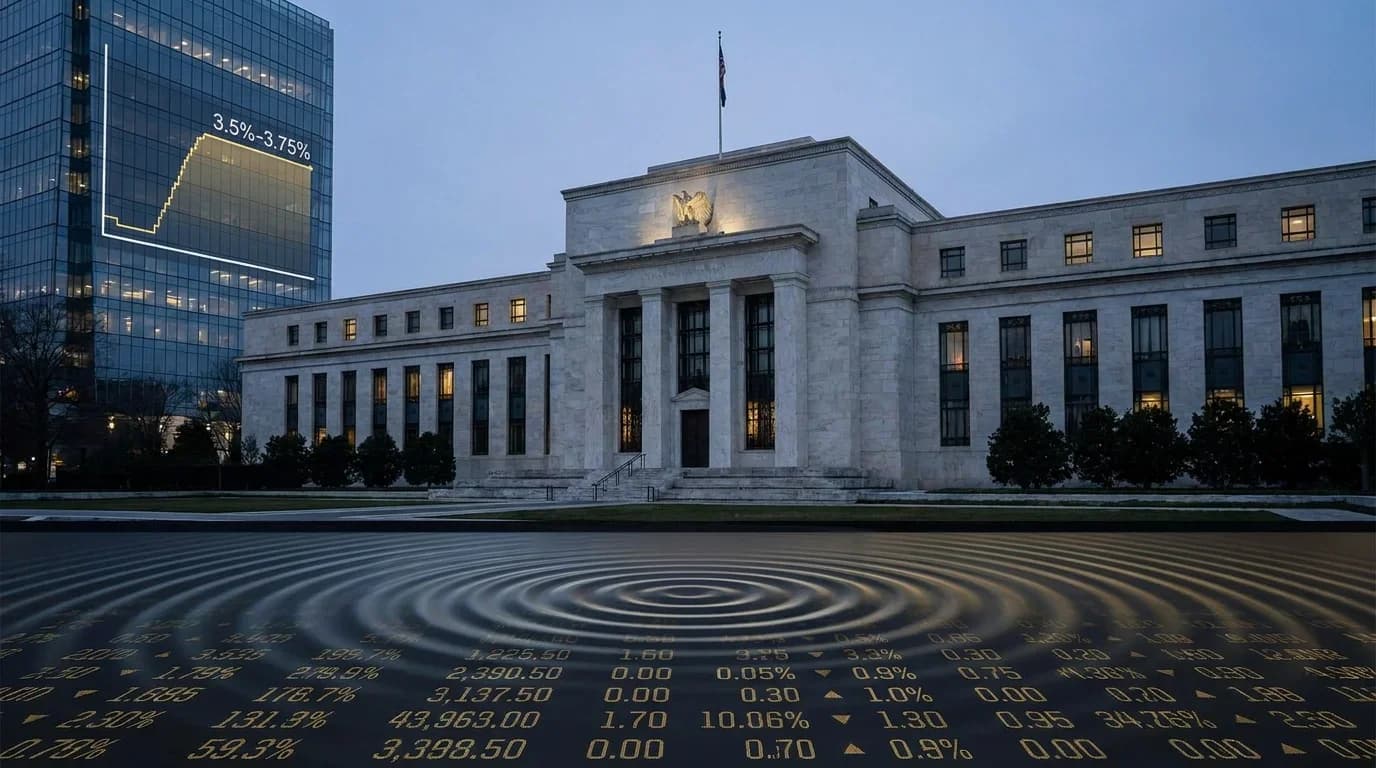
The Federal Reserve maintained its benchmark interest rate at 3.5%-3.75% in Chairman Kevin Warsh's first meeting, signaling a hawkish tilt while rejecting forward guidance. According to Business Standard, the central bank is responding to persistent inflation concerns and strong employment data. The Fed has shifted course from cutting rates to preparing for rate hikes, as higher energy costs and rising inflation have created pressure on the economy. Around half of the committee thought that an interest-rate hike this year might be needed, with the Fed's stronger signal for an eventual rate hike prompting a jump in bond yields on Wednesday but easing on Thursday. The 10-year Treasury yield fell to 4.45% from 4.49% late Wednesday, while the 2-year Treasury yield dropped to 4.18% from 4.20%, reflecting market expectations of future rate adjustments.
The Federal Reserve's updated dot plot painted a more hawkish picture of the future policy path, with policymakers split between maintaining current rates and implementing additional tightening. As reported by Business Standard, the median projection points toward a 25-basis-point rate increase before year-end, surprising investors who had anticipated a more neutral outlook under the new chairman. The updated projections revealed that many officials still see inflation risks as significant enough to justify keeping policy restrictive for longer. Throughout the press conference, Warsh repeatedly stressed the Fed's commitment to achieving and maintaining price stability, with his remarks suggesting that inflation remains the central concern for policymakers despite recent progress. Markets interpreted the comments as notably hawkish, leading 2-Year Treasury yields to move higher as traders adjusted expectations for future interest rate decisions.
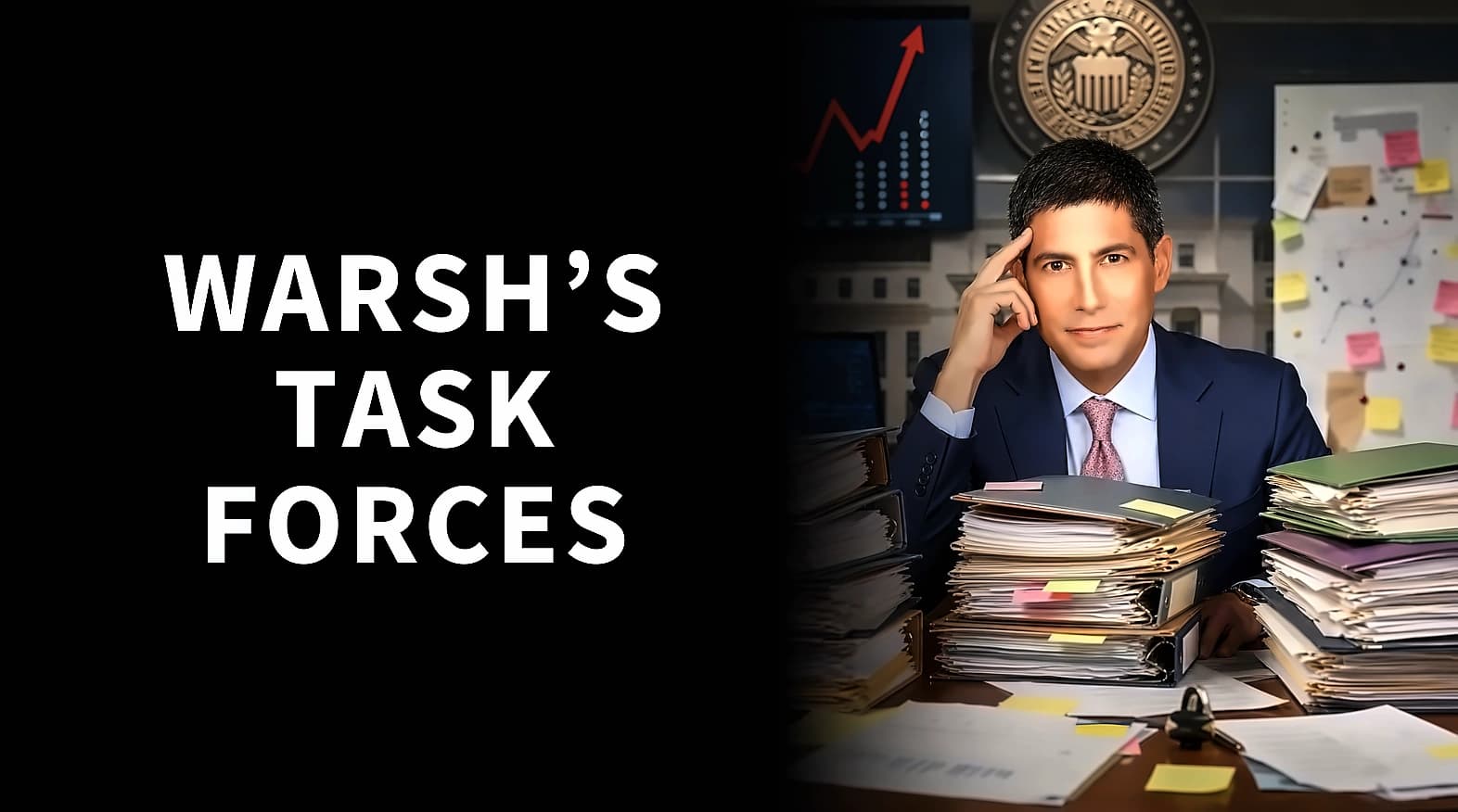
One of the most significant announcements from the meeting was the creation of five internal task forces designed to review key aspects of Federal Reserve operations. According to Business Standard, these reviews will focus on economic data collection and analysis, productivity and labor market trends, artificial intelligence and emerging technologies, and inflation framework evaluation. The initiative signals that Warsh's leadership may extend beyond monetary policy and into broader institutional reform. The messaging indicates that the Fed remains willing to keep policy restrictive if inflation pressures persist, with the central bank maintaining its commitment to achieving and maintaining price stability.
U.S. markets staged a strong recovery on Thursday, with the S&P 500 rising 80.48 points (1.1%) to 7,500.58 and the Nasdaq composite surging 496.28 points (1.9%) to 26,517.93. According to reports from Business Standard, the Nasdaq's performance was particularly impressive, with technology stocks leading the broader market recovery. The Dow Jones Industrial Average also gained 72.15 points (0.1%) to 51,564.70, though it lagged behind the other major indices. Every major index notched weekly gains, marking a significant turnaround from Wednesday's decline. As reported by Reuters, the market's reversal was powered by sharp gains for big technology companies, with technology stocks having some of the biggest gains and the most influence on the broader market's rise.
Oil prices experienced volatility following the U.S.-Iran agreement to end their war and reopen the Strait of Hormuz to oil tanker traffic. According to Business Standard, Brent crude settled 0.4% higher at $79.85 per barrel, while U.S. benchmark crude fell 0.2% to $75.85 per barrel. The deal waives sanctions against Iran and allows it to sell oil freely, opening up the Strait of Hormuz where a fifth of the world's oil supply is shipped. As reported by Reuters, energy companies lost ground with Exxon Mobil falling 2.1% and Chevron falling 2.2%. While prices remain above the pre-war levels of roughly $70 per barrel, they are well below the $100-plus prices seen in recent weeks. Adam Turnquist, chief technical strategist for LPL Financial, noted that while investors are welcoming the agreement as a constructive step for geopolitical risk, uncertainty remains elevated around potential flare-ups and the path forward for Iran's nuclear program.