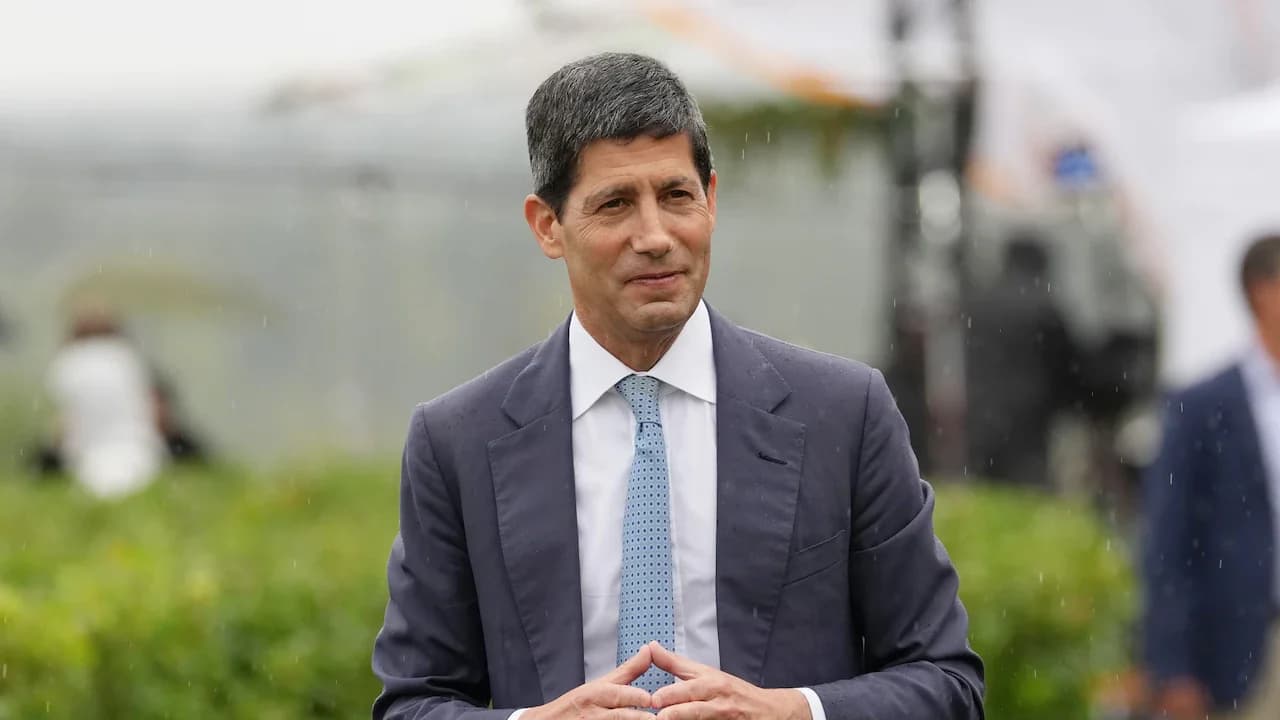
Kevin Warsh chaired his first Federal Open Market Committee meeting on June 16, and the Fed held interest rates steady at 3.5% to 3.75%, exactly as markets expected. However, recent developments suggest Warsh may be signaling a potential policy shift that could benefit cryptocurrency markets. According to CoinDesk analysis, Warsh could break from market expectations and strike a dovish tone, citing recent oil prices and AI-driven disinflation to lay the groundwork for rate cuts the administration wants. This represents a significant departure from the 66% hike probability that had been priced in before the meeting, with Fed funds futures currently pricing in an 80% chance of a 25 basis-point increase by December. The dot plot removal of rate cut projections from Warsh's debut meeting had initially signaled the end of the easing cycle, but recent signals suggest potential for a more nuanced approach. Traders are now fully anticipating a quarter-point interest rate hike from the Federal Reserve by September, driven by renewed inflation worries fueled by a surge in oil prices. Swaps tied to policy-meeting dates imply 25 basis points of hikes, up from 23 basis points on Thursday and eight basis points earlier in the week, according to The Economic Times.
Markets have increasingly priced in a Federal Reserve rate hike ahead of this week's FOMC meeting, with prediction markets assigning a 66% probability of tighter policy before July 2027. According to Kalshi prediction market data, this represents a significant shift from previous expectations as inflation pressures persist and energy costs continue to rise following tensions between the United States and Iran. The US Federal Reserve's June 16-17 policy meeting is widely expected to end with no change in the benchmark interest rate, which currently stands in the 3.50%-3.75% range. However, futures markets show a dramatic change in expectations, with CME FedWatch data now pricing in a 66% probability of a rate hike by December 2026, compared with just 24% a month ago. Investors are now focusing on the Federal Open Market Committee meeting scheduled for June 17, where CME FedWatch data shows a 99.6% probability that officials will maintain benchmark rates unchanged. Investors are pricing in tighter policy from the Fed after new Chair Kevin Warsh said the central bank won't tolerate high inflation at his first meeting this week, sending yields higher on Wednesday, as reported by The Economic Times.
Warsh appears to have followed through on his commitment to a leaner Fed, one that offers less forward guidance than markets grew accustomed to under Jerome Powell. Most Wall Street analysts, including economists at Goldman Sachs and Bank of America, expected him to withhold his dot entirely, making him the first Fed chair in 14 years not to participate in the SEP. His debut press conference gave the first real read on what a leaner Fed looks like: tighter messaging, inflation-first framing, and no commitment to when cuts might return. The formal end of the easing cycle carries weight beyond this single meeting, as markets had spent the first half of 2026 pricing in cheaper money ahead, and that assumption is now gone. Raymond James analysts had anticipated that at least three voting members would project a hike before December, and the final dot plot confirmed the shift. However, recent signals suggest Warsh may be questioning the Fed's approach of overcommunicating with markets, which could signal a shift toward significantly reduced forward guidance. Investors hadn't expected Warsh to strike such a hawkish tone, as US President Donald Trump elevated him to the central bank post after repeatedly lashing out at his predecessor, Jerome Powell, for not slashing borrowing costs enough, according to The Economic Times.
A recent Bank of America fund manager survey reveals a notable change in investor expectations, with nearly 40% of respondents now expecting at least one rate hike within the next 12 months, up from 16% a month earlier. At the same time, only 28% anticipate rate cuts, indicating a significant shift in market sentiment. CNBC's latest Fed Survey of 32 economists, strategists, and fund managers found that none expect the Federal Reserve to change rates at this week's meeting or at any point through 2027. However, 88% expect the Fed to remove language suggesting its next move would likely be a rate cut, signaling policymakers are no longer leaning toward easing monetary policy. The uncertainty surrounding the policy outlook has prompted bond investors to become increasingly cautious, with Reuters reporting that portfolio managers have shifted towards shorter-duration and higher-quality debt instruments as they wait for clearer guidance from the new Fed leadership. Recent developments suggest Warsh may be signaling a potential shift toward dovish policy, which could provide support for risk assets including cryptocurrencies. "We're now at a point where it wouldn't take much to tip the balance in favor of a hike," said Matthew Ryan, head of market strategy at Ebury, pointing to the rhetoric at this week's Fed decision, as reported by The Economic Times.
Recent economic data has reinforced concerns about persistent inflation pressures, with U.S. consumer prices rising 0.5% in May from the previous month, while annual inflation accelerated to 4.2% from 3.8% in April. Rising energy costs have contributed significantly to the inflation outlook, as oil prices climbed by around 4% from a three-month low on Thursday as doubts linger around the recently signed peace deal between the US and Iran. Brent crude steadied after topping $80 a barrel earlier in the session, according to The Economic Times. Despite these pressures, CNBC's survey found little support for immediate rate hikes, with respondents expecting the federal funds rate to remain close to its current 3.62% level through 2027. However, the recent US-Iran peace framework has eased concerns about energy prices and could help moderate inflation pressures, though policymakers are likely to remain cautious until there is greater clarity on inflation trends. George Catrambone from DWS notes that growth concerns for the second half of the year remain in place and the Iran war does not improve the growth outlook even if it affects inflation.
The 66% hike probability is one of the sharpest reversals in market pricing this year, with the prospect of higher interest rates creating headwinds for the cryptocurrency market. Treasury yields already reflect the change, with the 10-year benchmark near 4.47% and the 30-year approaching 4.97%. For crypto, higher borrowing costs are a headwind as Bitcoin and the broader market track global liquidity expectations closely. The prospect of a hike extending into late 2026 tightens liquidity conditions further, with the ECB moving in parallel toward tightening adding another layer of pressure on risk assets globally. However, recent developments suggest Warsh may be signaling a potential shift toward dovish policy, which could provide support for risk assets including cryptocurrencies. Implied volatility indexes tied to bitcoin and ether are hovering at two-week lows, having reversed the early-month spike, indicating expectations for continued calm in the market. The 10-year Treasury yield has pulled back to 4.43% from recent highs above 4.55%, marking a pause in the sharp rise since the Iran war began in late February and offering support to risk assets. "Multiple references to the Fed missing its inflation target for five years running, all support the narrative that higher rates may not be too far away," noted Matthew Ryan from Ebury, as reported by The Economic Times.