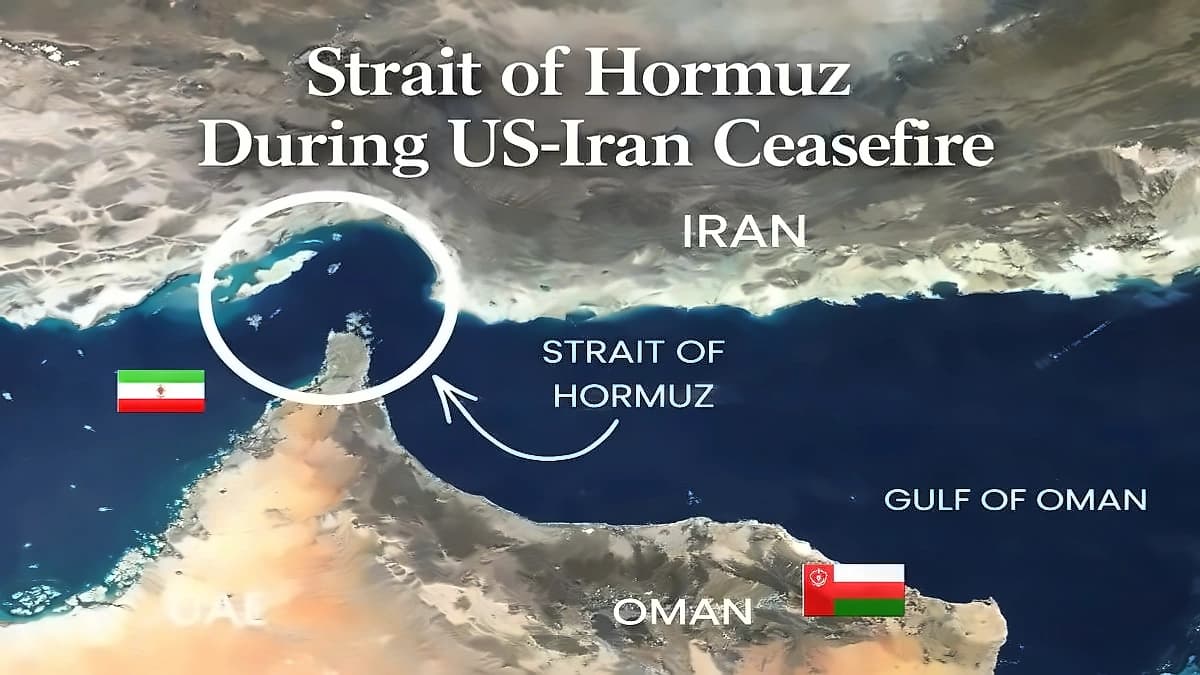
Oil prices have experienced a dramatic 16% plunge to $95 per barrel for WTI crude, while Brent crude futures dropped 14% to $93.8 per barrel following the announcement of a ceasefire between the U.S. and Iran. According to CNN, this represents a significant decline from the $120+ per barrel levels seen earlier in the week, though prices remain well above the $67 level settled on February 27 before the war began. The sharp price movements reflect significant uncertainty surrounding the ceasefire's effectiveness, particularly regarding the reopening of the Strait of Hormuz, which normally handles about 20% of the world's oil supply. As reported by CNN, Trump agreed to the ceasefire less than two hours before his 8 p.m. ET deadline to destroy a "whole civilization," stating that the agreement hinged on the reopening of the strait, with Trump posting on Truth Social that "We received a 10 point proposal from Iran, and believe it is a workable basis on which to negotiate."
The Strait of Hormuz represents a critical chokepoint for global oil flows, with about 20% of the world's oil flows passing through this strategic waterway. According to The Center Square, Mark Cancian, senior adviser for the Center for Strategic and International Studies' Defense and Security Department, outlined the multiple conditions required for full strait operations: the ceasefire holding on both sides, Iranians allowing unrestricted passage, main shipping channels being swept of mines, and cessation of tolls. However, hundreds of millions of barrels of oil have been taken off the market due to the war, with Amena Bakr from Kpler estimating it could take as long as five months to restore capacity. The war in the Middle East – and the effective closure of the crucial Strait of Hormuz – has caused the biggest oil supply shock on record, choking off roughly 12 million to 15 million barrels of crude oil a day, as reported by CNN. As of Tuesday, 187 tankers laden with 172 million barrels of seaborne crude and refined oil products remained inside the Gulf, according to Kpler, a global trade intelligence firm, with Karl Schamotta of Corpay Currency Research noting that "Iran's ruling regime has (arguably) solidified its political control, and has demonstrated its capacity for bringing global oil and gas markets to their knees."
Global stock markets continued their relief rally following the ceasefire announcement, with the S&P 500 soaring 2.5%, while the tech-heavy Nasdaq Composite vaulted 2.8% and the Dow Jones Industrial Average jumped 2.8%, or over 1,300 points. According to CNN, South Korea's Kospi led gains in Asia, closing 6.87% higher, while Japan's Nikkei and Hong Kong's Hang Seng gained 5.39% and 3.09% respectively. In Europe, Germany's Dax jumped 4.6% in morning trade, with indexes in Paris and London also posting healthy increases. US futures pointed to a sharply stronger open, building on the momentum from Wednesday's session where Europe's main indices won between three and five percent and the UK's benchmark index rose as high as 10,655.92, trading 2.4% higher at 10,603. The S&P 500 notched its fifth consecutive positive session last night, with the index now on track to record a six-day winning streak if it can hold on to pre-market gains. Across global stock markets, most sectors saw sizable gains, with mining groups, banks and airlines among the biggest winners, gaining more than 10% in some cases, though energy majors slumped despite Wednesday's hefty falls to oil and gas prices, remaining far above their levels on the eve of the Mideast war at the end of February.
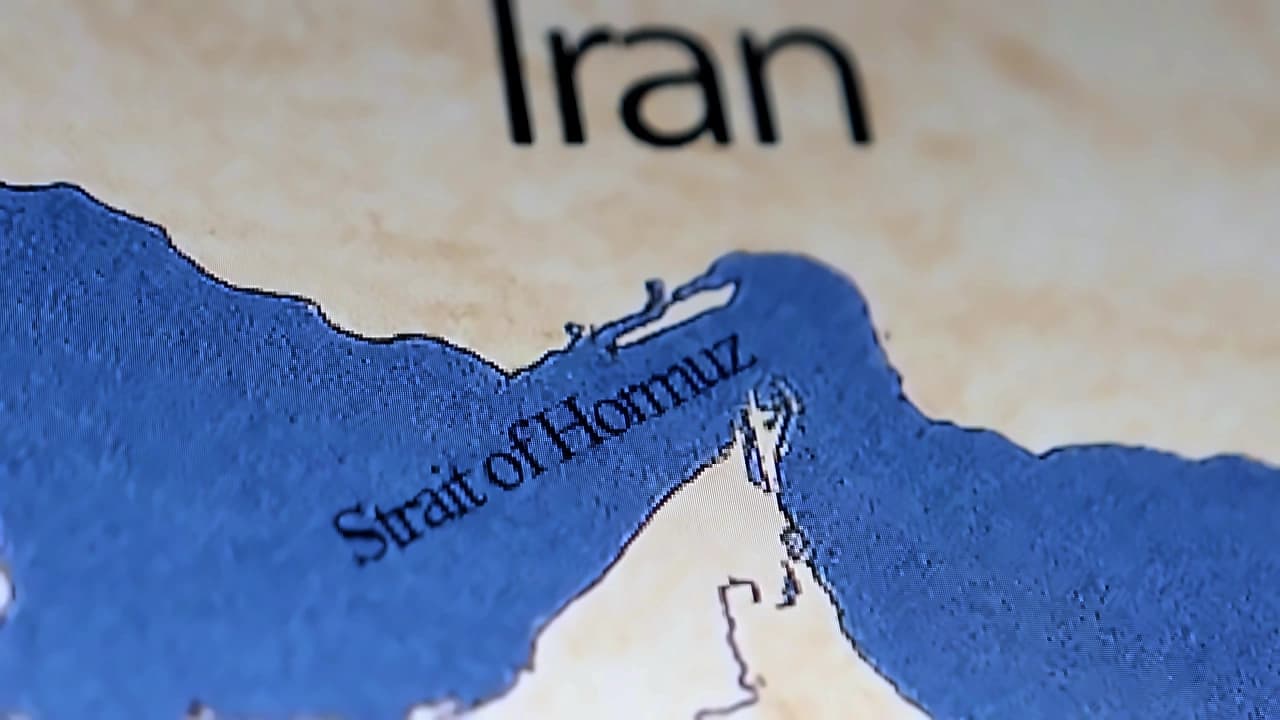
The ceasefire agreement between the U.S. and Iran is unlikely to resolve the deep supply disruption triggered by the five-week war, with Wood Mackenzie analysis revealing that oil and gas production in the Middle East faces a "months-long" process toward normalization. As reported by Wood Mackenzie, throughout the war's first five weeks, the effective closure of the Strait of Hormuz by Iran has filled onshore storage tanks and forced producers throughout the Middle East to shut in, or halt, roughly 11 million barrels per day. Before any of that production can be restarted, oil tankers need confidence that they can safely and reliably begin transiting the strait, with Alan Gelder, SVP Refining, Chemicals and Oil Markets at Wood Mackenzie emphasizing that "A 'workable system' of transit and shipowner confidence in the security of the transiting vessels is essential." Even if shipping bottlenecks are cleared, which could take weeks, producers could face timelines of six to nine months to restart production at the wellhead. Repairs to refineries may also impede the progress toward normalization, with repairs at QatarEnergy's Ras Laffan LNG export terminal likely to take roughly four months — something the company likely wouldn't undertake without confidence in legitimate stability. Maersk has issued a cautious statement, saying the two-week ceasefire does not yet provide full maritime certainty, with the shipping giant taking a cautious approach and not making any changes to specific services.
Market volatility intensified when Israel struck numerous Hezbollah targets in Lebanon Wednesday morning, prompting reports that Iran had closed the strait in response. According to The Center Square, the administration and Israel have said the ceasefire did not include Israel and Hezbollah fighting in Lebanon, while Pakistan and Iran have said publicly that it did. The pause, not peace scenario creates ongoing uncertainty for markets that had anticipated a more complete resolution to Middle East tensions. As reported by AFP, Matthew Ryan, head of market strategy at Ebury, said "We expect volatility to remain high in the coming days, as investors scrutinise both details out of the negotiations and vessel traffic data." The reason why energy infrastructure across the Gulf has been targeted means that "I don't think we're going to (quickly) go back to the levels we were at before the war," according to market analysts, with the ceasefire deal allowing the flow of commodities through the Strait of Hormuz but not necessarily returning markets to pre-conflict levels. Even if the ceasefire has now been agreed, I would say that the conflict in the Middle East is still severely disrupting shipping, but also supply chains.