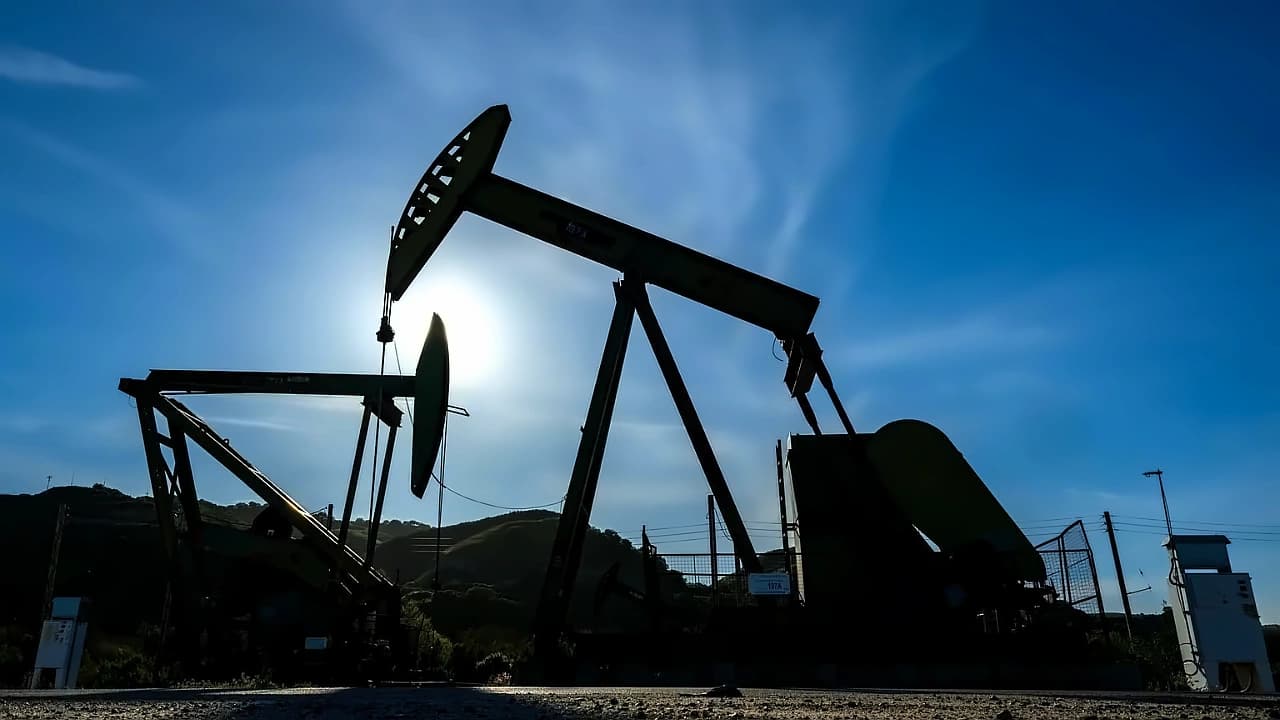
Global crude oil prices settled around 3% lower on Thursday as investors responded positively to hopes for an end to the U.S.-Iran conflict following the Israel-Lebanon ceasefire agreement. Brent futures settled down $2.78, or 2.84%, at $95.03 per barrel, while US West Texas Intermediate (WTI) crude settled down $2.98, or 3.1%, at $93.04 per barrel. The retreat came just a day after both benchmarks had surged close to 2%, with the previous rally fuelled by sharp flare-ups including Iranian attacks on Kuwait and US military strikes close to the Strait of Hormuz. As per Reuters, the latest developments have moved oil prices lower as markets weigh the fragile nature of the truce and ongoing diplomatic efforts. "Once again, the market is giving full credit to hopes of a resolution here and the worries about supplies are just not registering with the market," said John Kilduff, partner at Again Capital, noting that the latest Israel-Lebanon peace deal is pulling the rug out from under any bullish thesis.
Despite diplomatic signals suggesting progress in talks, the situation on the ground remains volatile. Iranian drones struck Kuwait International Airport following a fresh round of strikes between the United States and Iran, causing significant material damage and forcing authorities to suspend air traffic operations. The Kuwaiti military confirmed that several people were injured in the attack, with the strike causing significant material damage to airport infrastructure. This attack illustrates how quickly the situation can shift, even as world leaders push for a negotiated exit from the conflict. The ongoing hostilities between the U.S. and Iran, together with the continued diplomatic stalemate, suggest any downside in the greenback could be limited, as per Investing.com India.
The Republican-controlled House of Representatives passed a resolution on Wednesday seeking to limit President Donald Trump's authority to carry on military operations against Iran, though the measure would still require Senate approval and a two-thirds majority in both chambers to overcome an almost certain presidential veto. Despite this legislative pushback, Trump said he expected meaningful progress in talks with Tehran to emerge as early as this weekend, according to a Bloomberg report. Iranian Foreign Minister Abbas Araqchi confirmed that communication channels with Washington remained open, saying both sides were still reviewing proposals that had been exchanged, though he cautioned that discussions had not yet produced any concrete results. While President Trump continues to suggest progress in negotiations with Iran, messaging from Tehran has been considerably less optimistic, highlighting the significant gap between the two sides, as noted by Investing.com India.
The conditional ceasefire agreement between Israel and Lebanon has raised hopes of broader de-escalation in the Middle East and renewed focus on negotiations involving Iran. The ceasefire agreement is contingent on a complete halt to hostilities by Iran-backed Hezbollah, according to a joint statement from Israel, Lebanon and the US. The development is being viewed as a potential step toward reducing tensions that have complicated talks between Washington and Tehran. Iran's foreign minister was quoted by the semi-official Tasnim news agency as saying that no tangible progress had been achieved in the talks and warning that Tehran could target objectives inside Israel if attacks on Beirut continue. US President Donald Trump meanwhile said the strait could reopen "immediately" once Iran signs a memorandum of understanding to cease armed hostilities and remaining issues, including sea mines, are addressed. As per Reuters, shipping traffic in the Strait of Hormuz remains at a near standstill, however, some ship re-positioning shows them moving closer to the Persian Gulf, which could be a sign of an expected opening sooner than later.
The tensions in West Asia pulled global equity markets into the red, with major Asian indices falling sharply on Thursday, with Japan's Nikkei, Hong Kong's Hang Seng, South Korea's KOSPI and Indonesia's Jakarta Composite each shedding as much as 3%. US markets had also closed lower overnight, with the S&P 500 ending 0.74% lower and the Nasdaq falling 0.9%. Indian benchmark indices Sensex and Nifty also opened lower, each declining around 0.5%, with selling pressure concentrated in IT, realty, pharma and healthcare stocks. The signals from both capitals suggest neither side has walked away from the table, with the coming days being critical as Trump has indicated talks with Iran could yield results over the weekend. U.S. crude inventories fell by 8 million barrels to 433.7 million barrels in the week ending May 29, according to EIA data, which was significantly larger than expectations for a 4 million barrel draw, as reported by Investing.com India.