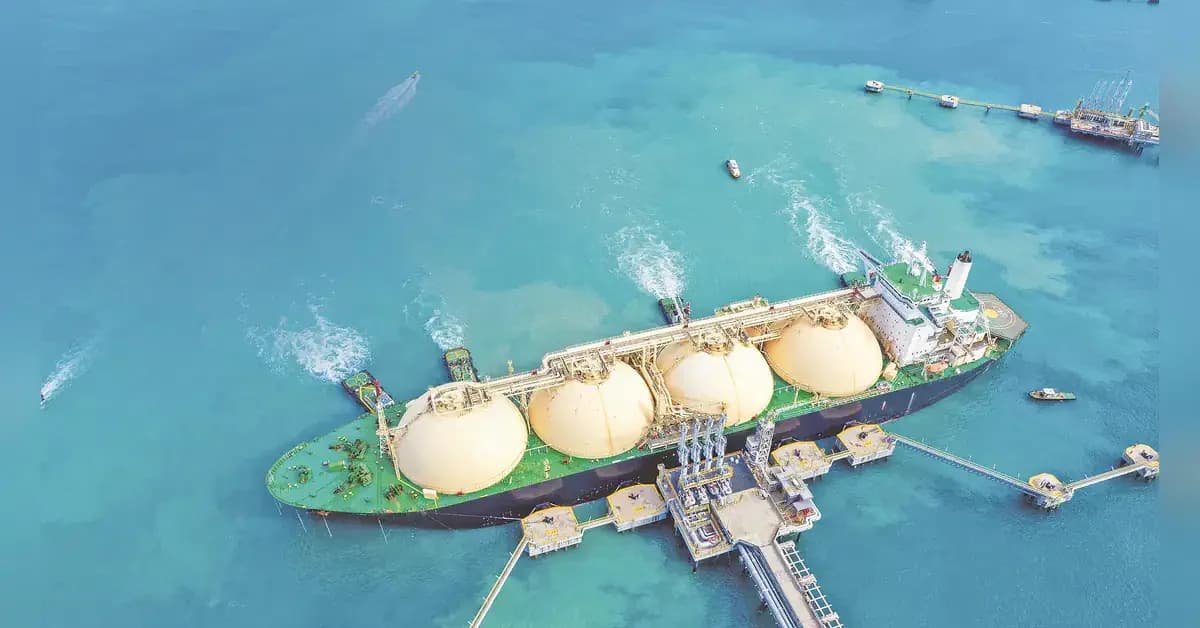
US President Donald Trump confirmed on Friday that Iran launched at least four one-way attack drones at ships passing through the Strait of Hormuz, marking a significant escalation despite recent diplomatic agreements. According to Business Standard, Trump stated on Truth Social that one of the drones struck the upper deck of a cargo ship, causing damage but allowing the vessel to proceed. Trump described the attacks as a 'foolish violation' of their ceasefire agreement, emphasizing the contradiction between Iran's actions and the recent diplomatic progress. The latest incident follows Thursday's drone strike on a Singapore-flagged commercial vessel, which damaged the ship's bridge after hitting its starboard side off the coast of Dahit, Oman. Two US officials told Reuters that Iran fired on the cargo ship as it attempted to pass through the strait, with Iranian authorities saying the security of vessels passing outside designated Hormuz routes is not guaranteed. Iranian authorities reasserted their right to control shipping through the Strait of Hormuz and warned Gulf states against siding with the US on Friday, further complicating the diplomatic landscape.
Oil prices have fallen sharply as shipping through the Strait of Hormuz continues its recovery trajectory. Brent crude futures settled at $71.99 a barrel, down $3.27, or 4.34%, while US West Texas Intermediate finished at $69.23 a barrel, down $2.69 or 3.74%. According to Business Standard, since the market closed last Thursday, the Brent benchmark fell 10.86%, while WTI fell 9.62% for the week. The decline came despite both benchmark contracts gaining more than 2% in the previous trading session after a cargo vessel was struck by an unknown projectile near Oman. "There is a growing sense that oil is going to keep moving through the Strait of Hormuz," said Phil Flynn, senior analyst with Price Futures Group. "The predominant view, it appears, remains one of imminent oversupply," said PVM analyst Tamas Varga. "We're going to get a flood of oil," Flynn added, with expectations of a "huge flood of products" as previously stranded vessels move through the waterway.
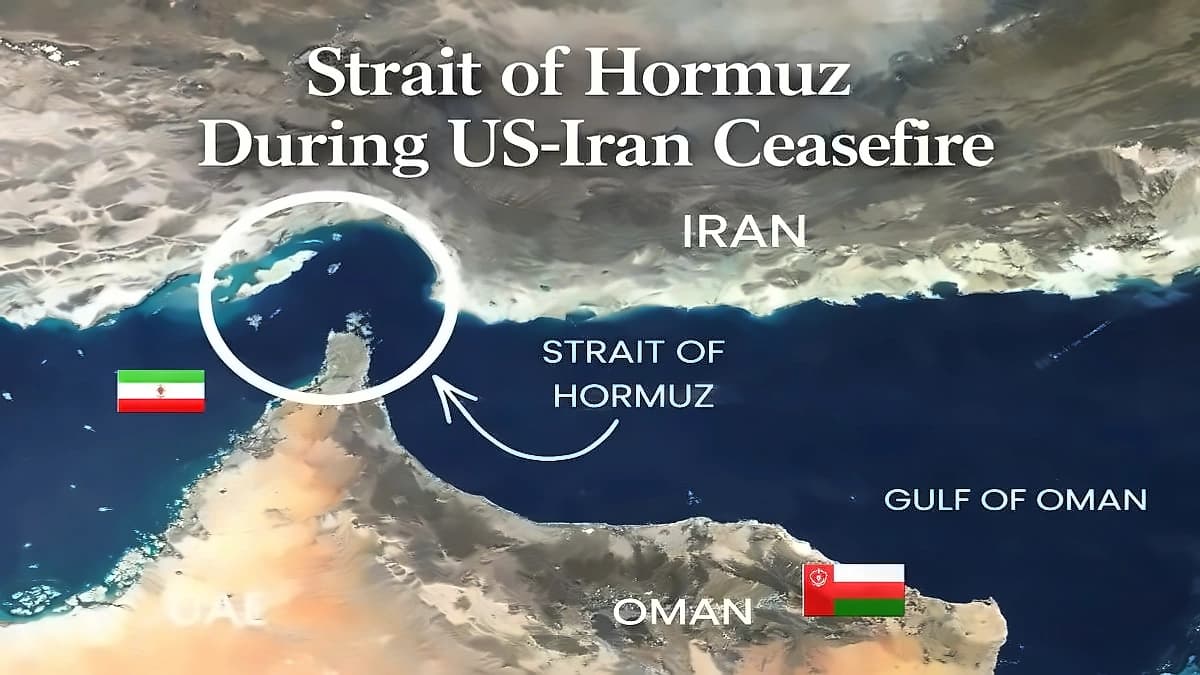
Following the drone strike, the United Nations' International Maritime Organization temporarily suspended its evacuation plan for vessels stranded in the Persian Gulf, as reported by CBS News. IMO Secretary-General Arsenio Dominguez said the suspension was necessary 'in order to reconfirm that the necessary safety guarantees continue to be in place.' According to the IMO, the vessel had already passed through the Strait of Hormuz before it was struck and 'did not transit under IMO's evacuation framework.' Dominguez emphasized that "I have always reiterated that the safety of the seafarers remains paramount," and stated that "therefore, to ensure a coordinated approach and navigational safety, the evacuation plan will be paused until further clarity is obtained." The suspension comes just days after the IMO launched its comprehensive evacuation scheme enabling hundreds of ships with 11,000 seafarers stranded in the Persian Gulf to sail through the strait.
A major milestone in the Hormuz recovery came as Saudi Aramco resumed oil loading on Friday at its Ras Tanura terminal in the Gulf after a near four-month halt. According to LSEG shipping data, two Very Large Crude Carriers were seen loading crude at the terminal, while another waited nearby, with each VLCC capable of loading 2 million barrels of oil. As per ING analysts, "Much of the increase reflects previously stranded vessels leaving the Persian Gulf. Vessel flows into the Gulf remain much more modest. It suggests that once stranded vessels have moved out, we could see a pullback in flows." "There is a general selloff as the market reacts to the increased flows exiting the Strait of Hormuz and China not yet picking up crude demand," said June Goh, senior oil market analyst at Sparta Commodities. West Asian crude has been trading since mid-month in a bearish contango structure that signals oversupply, and the global Brent benchmark flipped over on Wednesday. In early April, Dated Brent topped $140 to hit the highest level on record, but has now roughly halved in value and is close to the same level it was at when the war began.
Despite the latest security incidents, ship traffic had already begun recovering significantly under the U.S.-Iran agreement. According to data from analytics firm Kpler, 70 vessels transited the Strait of Hormuz on Tuesday, compared with six a week earlier, with part of the increase reflecting a "post-deal release of delayed traffic." Under the memorandum of understanding signed last week, Iran is expected to arrange toll-free safe passage through the Strait of Hormuz 'using its best efforts' for 60 days. Data on Thursday showed that crude shipments through the strait rose this week to their highest since the US-Israeli conflict with Iran began at the end of February. However, overall traffic is far below the pre-war daily average of around 125 ships a day. Improved tanker movement through the Strait of Hormuz has helped ease fears surrounding crude supplies, with shipments reaching their highest level this week since the February US-Israel conflict with Iran following a ceasefire that enabled the route to reopen, though the latest drone strikes have raised fresh concerns about the security framework that underpins this recovery.