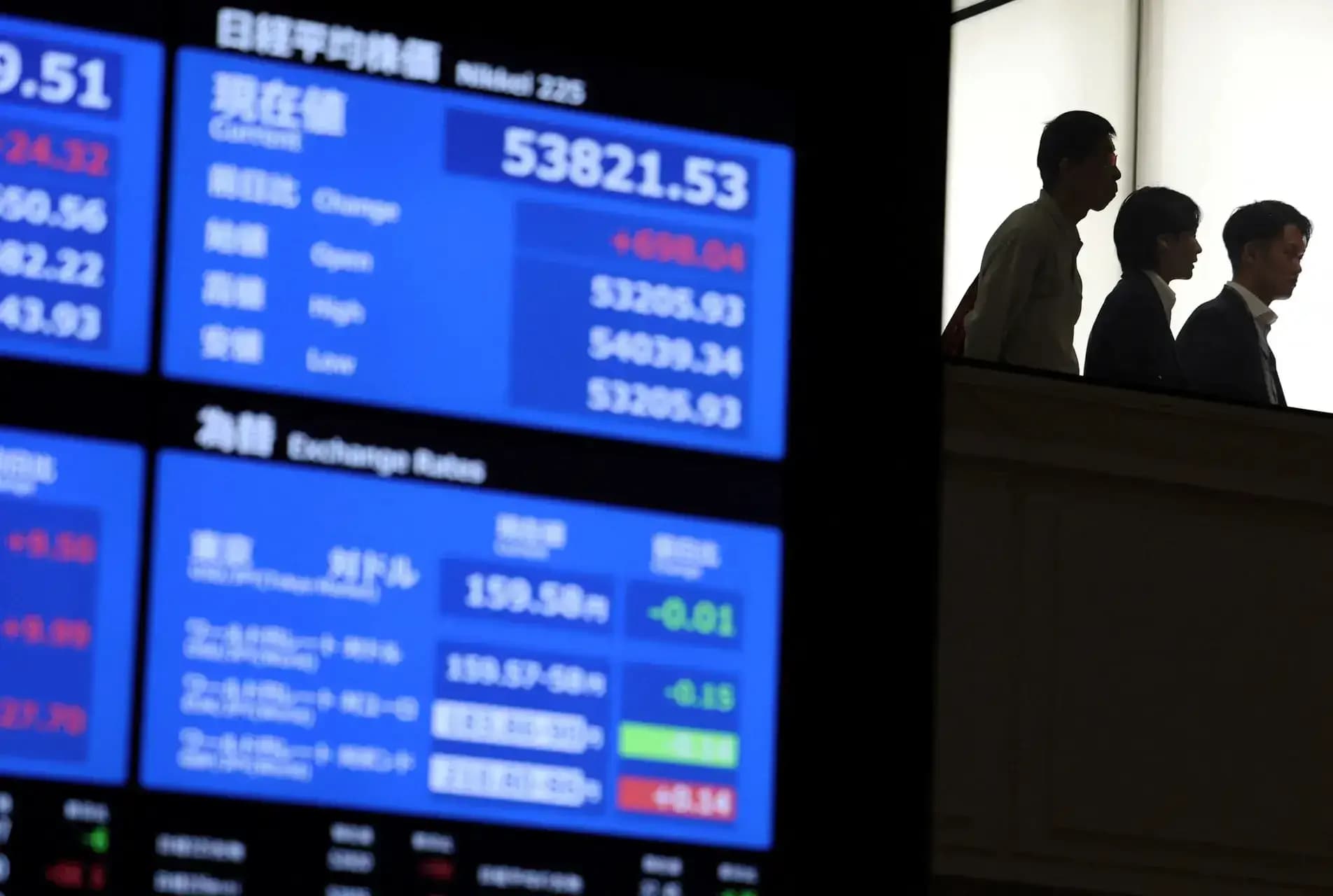
Japan's Nikkei 225 Index surged 5.7% on Thursday, catapulting the index above the psychological 62,000 level in its first trading session this week, according to reports from Business Insider. The benchmark index hit a record high as investors piled back into tech stocks and gained optimism that tensions in the Middle East could cool following reports of progress toward a potential peace deal with Iran. The rally was fueled by gains in tech stocks and semiconductor supply chain companies, with Renesas Electronics and Ibiden among the top performers as investors continued piling into companies tied to the artificial intelligence boom.
The surge comes after a blistering run in global markets while Japan was effectively offline from Monday through Wednesday, as reported by Business Insider. Global stock rallies swept into Japan after long public holidays, with the S&P 500 and Nasdaq both climbing to fresh record highs this week. The NASDAQ closed at a new all-time high, adding an impressive 1.2% while the S&P 500 tacked on 0.6%, according to latest reports. The Dow slipped 0.1% while the small-cap Russell 2000 ended unchanged. On Wednesday, the Dow Jones Industrial Average retreated 0.1% after strong earnings from Cisco Systems and following a key meeting between U.S. and China, but rebounded strongly on Thursday, popping 372 points, or 0.8% to retake the 50,000 level. The S&P 500 climbed 0.7% while the Nasdaq Composite gained 0.8%, with both indices scoring fresh all-time intraday highs. "It seems equity investors are still looking to put money to work and are jumping on positive-sounding news from the Gulf," wrote analysts at ING. They added that the market reaction looks "a little overblown" but noted the broader market mood remains firmly risk-on as investors continue betting that the AI-driven tech rally has further room to run.
The tech-heavy NASDAQ is up over 28% over the same period, with semiconductors remaining at the forefront of the rally since the end of March. This has been spectacular, with triple-digit percentage gains for certain corporations. Micron Technologies is up around 150%, while AMD and Intel have added 127% and 200%, respectively, as reported by The Economic Times. After last night's close, Cisco Systems surged 12% after the company reported stronger-than-expected third-quarter results, along with upbeat forward guidance, while announcing plans to cut around 4,000 jobs. Nvidia advanced more than 4% after Reuters reported that the U.S. has cleared about 10 Chinese firms to purchase Nvidia's H200 chip, though no deliveries have been made yet. Cisco has soared 46% in the past two months, while Amazon and Nvidia have gained 28% and 30%, respectively. Despite some evidence of mild profit-taking across semiconductor stocks, the sector continues to benefit from optimism about the AI buildout's endurance.

Japan's 10-year bond yield has surged to a 29-year high at 2.63%, creating significant pressure on the Japanese economy, according to latest market data. This dramatic increase in yields reflects mounting inflationary pressures from the Middle East crisis, as Japan imports 90% of its oil and faces potential energy shock from Iran war developments. The surge in bond yields is forcing the Bank of Japan to consider rate hikes to combat inflation, with Bank of Japan board member Kazuyuki Masu calling for an early hike of interest rates to rein in prices. As Japanese yields become more competitive, capital could rotate out of risk assets, potentially impacting the current market rally.
The shift in sentiment has also rippled through currency markets, with the Japanese yen surging to a 10-week high, trading near 155 per dollar on Wednesday, according to Business Insider. The yen has stayed roughly 7% weaker against the dollar over the past year, but recent sharp moves have reignited speculation about intervention from Japanese authorities. Tokyo has not publicly confirmed any action, though Japanese officials have repeatedly warned against speculative moves in the currency market in recent months. Analysts at MUFG noted that "The Japanese authorities are more at the mercy of unpredictable factors than in the past."