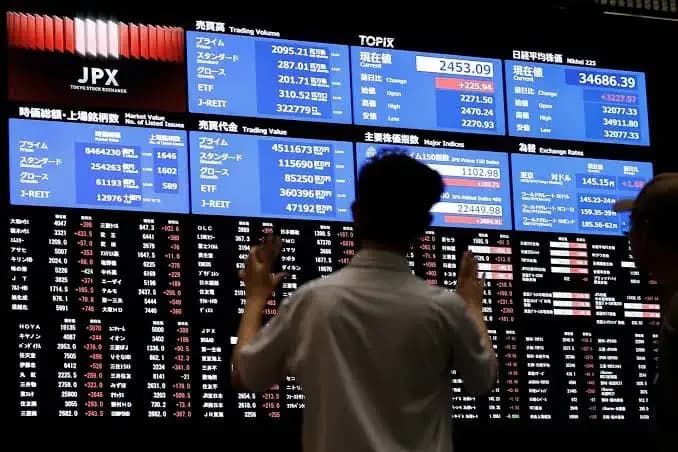
Global equity markets experienced significant declines as MSCI's gauge of stocks across the globe fell 1.53% to 1,099.00, with the pan-European STOXX 600 index finishing down 1.48%. According to Reuters, the selloff came as investor euphoria over technology stocks gave way to inflation fears, with markets paying attention to what bond markets and economic data were telling them. MSCI's broadest index of Asia-Pacific shares outside Japan fell 2.3% and was set for a weekly loss of 1.8%, while Japan's Nikkei 225 slid 1.8% after data showed wholesale inflation accelerated to 4.9% in April, the fastest pace in three years. The decline reflects growing concerns about the impact of Middle East tensions on global economies, particularly given the continued closure of the Strait of Hormuz and stalled US-Iran talks. In South Korea, the Kospi index topped 8,000 points for the first time and then crashed, falling by over 5% after a steep run higher in recent months, though it remains up 77.8% year to date.
On Wall Street, the Dow Jones Industrial Average fell 530 points, or 1%, to 49,526.17, the S&P 500 dropped 1.2% to 7,408.50 after surging to all-time closing highs on Thursday, and the Nasdaq Composite fell 1.5% as the tech-heavy index slipped into negative territory for the week. As reported by Reuters, the S&P 500 logged its seventh straight weekly gain, its longest winning streak since late 2023, but the Nasdaq fell on the week, with the tech-heavy index being dragged down by a 4% decline in Nvidia (NVDA) shares. "There's a realization that the market had gotten way ahead of itself. It wasn't paying enough attention to what the bond market and economic data was telling it. It was caught up in this momentum AI trade," said Kenny Polcari, chief market strategist at Slatestone Wealth. "The market is finally paying attention to what the bond market and the economic data is telling it. Inflation remains sticky and is potentially going to move higher in the months ahead."
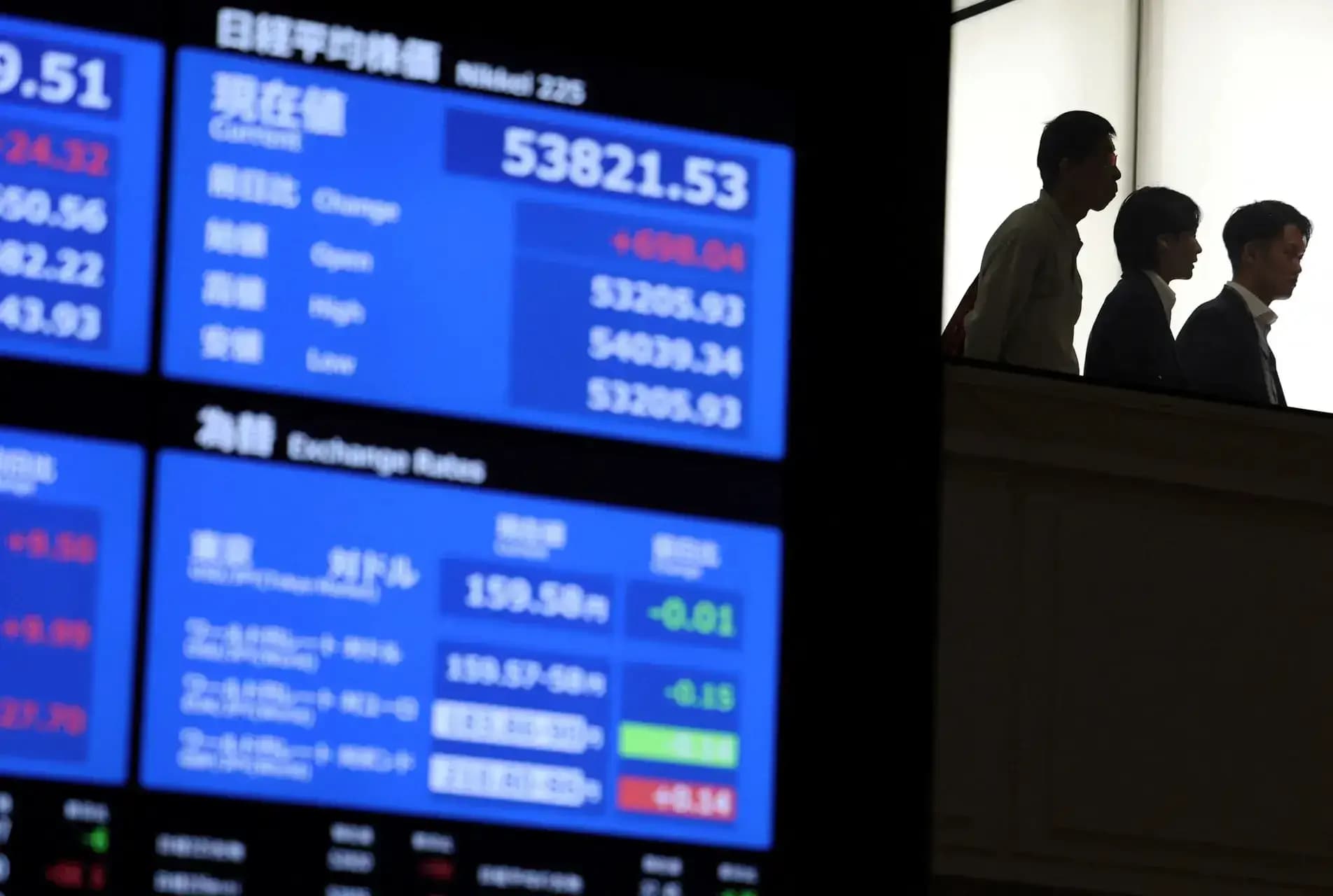
Japan's wholesale inflation accelerated to its fastest pace in nearly three years in April, with the corporate goods price index (CGPI) climbing 4.9% year-on-year. According to reports from The Economic Times, this increase was significantly above market expectations of a 3% rise and marked the strongest annual gain since May 2023. The sharp acceleration has intensified expectations that the Bank of Japan may raise interest rates as early as June, with markets now pricing in roughly a 70% probability of a rate hike during the BOJ's June 15-16 policy meeting. At home, stronger-than-expected producer inflation increased expectations that the Bank of Japan could come under pressure to raise interest rates further. Bank views are clustered but slightly skewed higher, with Nomura at about 1.5%, Mizuho at about 1.7% and MUFG at about 1.8% for Japan's May CPI, though upside risks are building after the sharp PPI rise to 4.9% from 2.9%. The inflation surge has been driven largely by the sharp rise in import costs following disruptions to oil supplies from the Middle East, with the effective closure of the Strait of Hormuz intensifying supply concerns for Japan, which remains heavily dependent on imported crude oil and energy products.
The inflation surge has been driven largely by the sharp rise in import costs following disruptions to oil supplies from the Middle East. As reported by The Economic Times, the effective closure of the Strait of Hormuz has intensified supply concerns for Japan, which remains heavily dependent on imported crude oil and energy products. Data showed petroleum and coal product prices rose 5.3% in April from a year earlier, reflecting increased costs for crude oil and jet fuel. Chemical goods prices surged 9.2%, the fastest rise since September 2022, while naphtha prices jumped 79.4%. The continued closure of the Strait of Hormuz and stalled US-Iran talks have kept oil prices elevated, creating sustained pressure on Japan's energy-intensive industries. Brent crude rose toward $107 a barrel, with futures up around 5% this week, while West Texas Intermediate was near $102. A US naval blockade of Iran's ports remains in place, while the waters in the region continue to be treacherous for mariners. A commercial vessel was seized by unauthorized personnel at the entrance to the strait and taken into Iranian waters, with concerns that the strait will remain blocked and lead to sustained high inflation.
Bond markets reacted strongly to the inflation data, with Japan's benchmark 10-year government bond yield rising to 2.665%, its highest level in 29 years. In the United States, U.S. Treasury yields climbed to their highest levels in a year as elevated oil prices added to fears that ongoing energy disruptions in the Middle East could add to inflation. According to Reuters, the yield on benchmark U.S. 10-year notes rose 13.8 basis points to 4.597%, while the 30-year bond yield rose 10.9 basis points to 5.122%. The 2-year note yield, which typically moves in step with interest rate expectations for the Federal Reserve, rose 8.7 basis points to 4.079%. A senior policymaker at the BOJ recently argued that interest rates should be raised 'at the earliest stage possible' as higher fuel and import prices continue to feed through the economy. The 30-year Treasury yield ended the day at its highest closing price since 2007, while the 10-year yield climbed to its highest level in a year. The 5% zone for the long bond represents a danger zone that has tightened financial conditions in the past, with concerns about rising inflation and hawkish Federal Reserve policy appearing to drive the bond market move.
The dollar rose for its fifth consecutive day, placing it on track for its biggest weekly gain in two months as inflationary pressures drove bets for a Federal Reserve rate hike this year. According to Reuters, traders were betting on a roughly 38.8% chance of a 25 basis point rate hike by year-end compared with a less than 14% probability a week ago. The incoming Fed Chair Kevin Warsh, nominated by Trump, faces market pressure to clarify his monetary policy stance. As Kenny Polcari, chief market strategist at Slatestone Wealth, noted, "The market is going to test Kevin Warsh. They're going to press him to see what he really stands for." The dollar's strength reflects growing confidence in U.S. monetary policy tightening amid persistent inflation concerns. The US dollar index climbed to 99, its highest level in over a month, while gold prices fell 2.7% to $4,555 a troy ounce and silver dropped 8% to $78 an ounce. The hotter-than-expected PPI report, alongside signs of broader inflation pressures beyond energy alone, strengthens the case for Fed hawks and reinforces the Fed's ability to focus more heavily on inflation risks rather than labour market weakness.