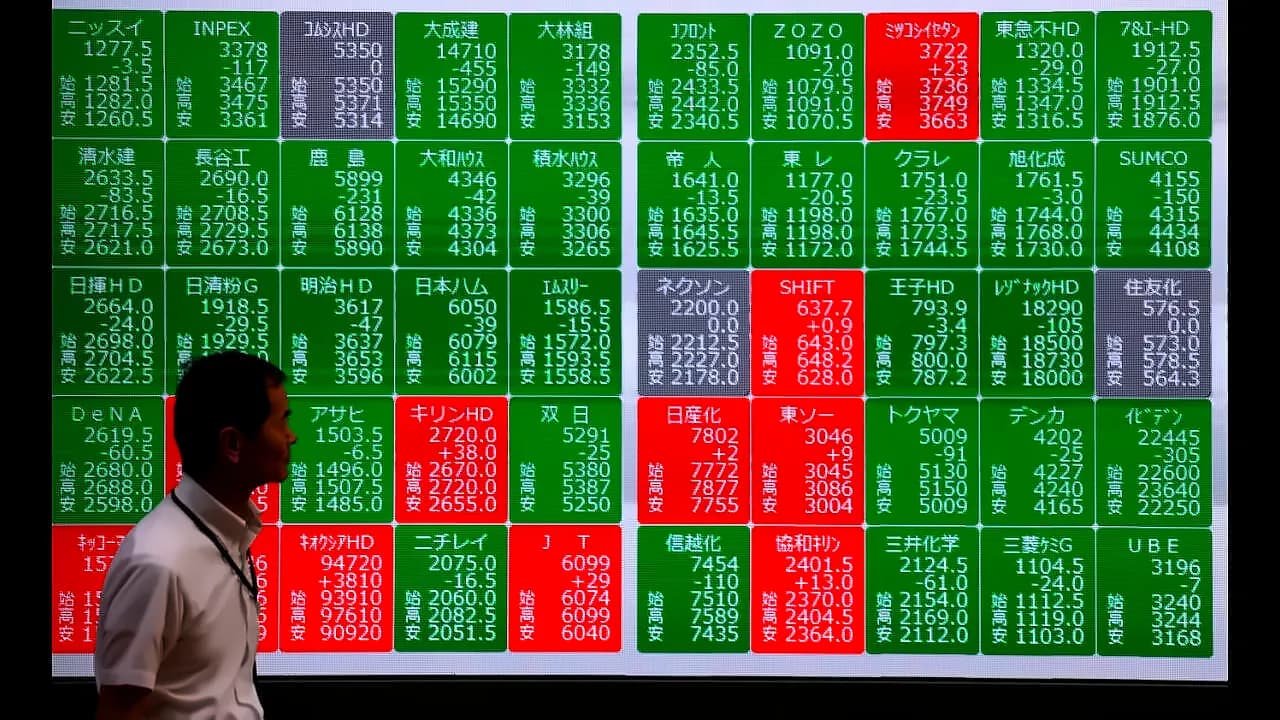
Japan's Nikkei 225 fell 1.61% to 62,979.17 in early trading on Monday, dragged lower by technology and semiconductor stocks as concerns over the pace and risks of artificial intelligence development weighed on sentiment. According to The Economic Times, technology and AI-related stocks were among the biggest losers, with SoftBank Group tumbling 11.73%, Resonac Holdings falling 8.95%, and Taiyo Yuden dropping 7.85%. The decline came after OpenAI Chief Executive Sam Altman said the company would not go public in 2026, citing concerns over the safety risks associated with rapidly advancing artificial intelligence, while Anthropic Chief Executive Dario Amodei called over the weekend for AI companies to adopt a more deliberate approach to development. The comments weighed particularly heavily on Japanese technology and semiconductor stocks, which have been among the major beneficiaries of the global AI investment boom.

Despite the Nikkei's decline, market breadth remained positive with 160 stocks advancing compared with 64 decliners, as reported by The Economic Times. The broader Topix index gained 0.40% to 4,044.29, highlighting the sharp divergence between technology-heavy stocks and other parts of the Japanese market. NEC gained 6.26%, making it the index's biggest percentage gainer, while Nomura Research Institute rose 6.08% and Recruit Holdings advanced 5.87%. The contrasting performance demonstrates how investors are reassessing the outlook for AI spending while preparing for major monetary policy decisions. The heavy exposure to technology companies amplified the impact of losses in the sector during the latest decline.
Expectations of a Bank of Japan rate hike next week continue to influence market sentiment, with board member Kazuyuki Masu indicating that the central bank will continue tightening policy as inflation moves closer to its 2% target, according to Business Standard. The two-year JGB yield dropped 1 basis point to 1.835%, while the five-year yield fell 1.5 basis points to 2.22%, as a stronger yen reduced expectations of aggressive Bank of Japan rate hikes. The yen also strengthened to its highest level in nearly seven months, which while supporting import costs, could hurt earnings for Japan's export-focused companies. Investors also remained cautious ahead of the US CPI report, with Thursday's stronger-than-expected producer price data raising expectations that the Federal Reserve could raise interest rates next week. Markets are also bracing for key central bank decisions this week, with investors expecting potential rate hikes from both the U.S. Federal Reserve and the Bank of Japan as inflationary pressures remain elevated.
Geopolitical concerns added to the cautious mood, with Oman saying a meeting between Iran and Gulf states on managing traffic through the Strait of Hormuz had been postponed following new Houthi strikes on Saudi Arabia and reports of an attack on a vessel, as reported by The Economic Times. The developments in the Middle East have created additional uncertainty for markets, particularly given the region's importance to global energy flows. Despite these challenges, inflation and interest-rate concerns remained as key factors influencing market sentiment, with rising oil prices amid growing tensions in the Middle East increasing concerns over inflation. Higher rates and a stronger yen could put additional pressure on Japanese equities, creating a challenging environment for the country's export-dependent economy.