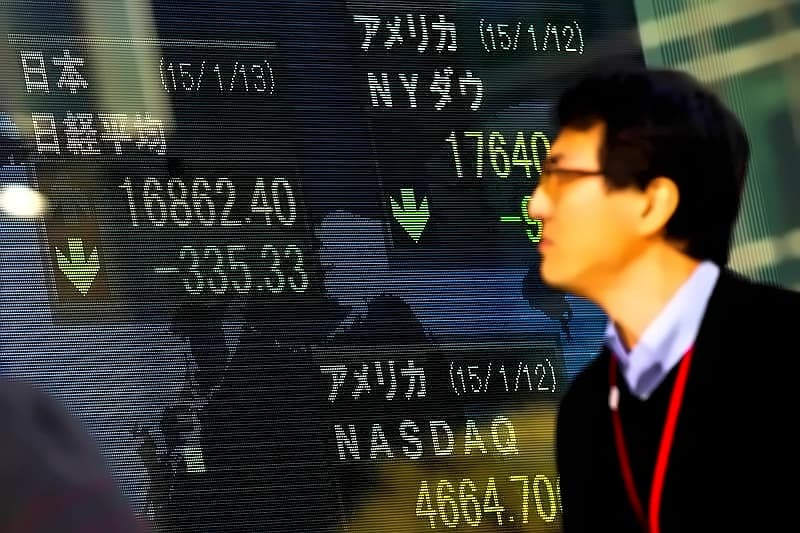
Japanese equities experienced a sharp reversal on Thursday, with the Nikkei 225 Index falling 2.47% to close at 68,732, snapping a three-day winning streak as investors reacted to significant declines in major AI-related stocks. SoftBank Group Corp. plunged 12.5%, contributing heavily to the market's decline as the company faces pressure from its substantial investments in OpenAI, the maker of ChatGPT. According to The New York Times, OpenAI is reportedly considering delaying its initial public offering from the second half of this year to next year, which would give the company more time to raise additional capital for data centers and provide early investors like SoftBank with opportunities to cash out their holdings. The market decline reflects broader concerns about AI stock valuations and investor appetite for big technology investments following recent stumbles for SpaceX's stock and AI stocks broadly.
The latest decline was primarily driven by a technology-led selloff on Wall Street as investors questioned whether the recent artificial intelligence (AI)-driven rally had become overvalued. Chip and AI-related stocks recorded the biggest losses, with Kioxia Holdings falling 13.5%, Taiyo Yuden 10%, Tokyo Electron 7.4%, Advantest 10%, and Fujikura 7.9%. The broad-based technology sector decline reflects growing investor skepticism about whether surging AI-related capital spending and semiconductor valuations can continue to justify their rapid gains after this year's rally. Despite upbeat earnings guidance from Micron last week, analysts said investors are becoming more selective within the AI trade, rotating away from some of the market's biggest winners amid concerns over when massive AI investments will translate into stronger earnings growth.
On the domestic front, Japan's retail sales rose 1.9% in May, marking the third consecutive month of growth and exceeding all estimates in a Bloomberg survey of economists, as reported by Bloomberg. The significant increase was largely driven by strong wage gains and government subsidies to ease the cost of living. From a year earlier, sales rose 5.3%, compared with the consensus forecast of a 3% gain, as reported by Bloomberg. The figures are not adjusted for inflation. This strong retail performance indicates robust domestic consumption and suggests that the government's fiscal measures are effectively stimulating economic activity. The latest data from Investing.com shows that large-scale retail sales also exceeded forecasts, suggesting domestic consumption remained resilient despite global uncertainties. The strong retail performance aligns with broader risk-on market conditions where investors are optimistic about future economic growth prospects.
Among individual stocks, several companies posted strong gains, with Mitsubishi UFJ rising 1.8% and Mizuho Financial gaining 2%, helping to partially offset the technology sector losses. Toyota Motor advanced 2.5%, while other notable performers included Nintendo climbing 5.3% and Disco Corp adding 1.3%. The broad-based gains across financial and consumer sectors reflect the market's positive sentiment toward these sectors despite the overall technology decline. However, technology stocks remained under pressure after suffering major losses last week, as concerns over higher interest rates sparked a wave of profit-taking in the sector, with Investing.com noting that Nasdaq 100 Futures rose 0.9% while S&P 500 Futures added 0.6% in Asian trade. The current market performance reflects risk-on conditions where investors are willing to take on more risk in their investment decisions.
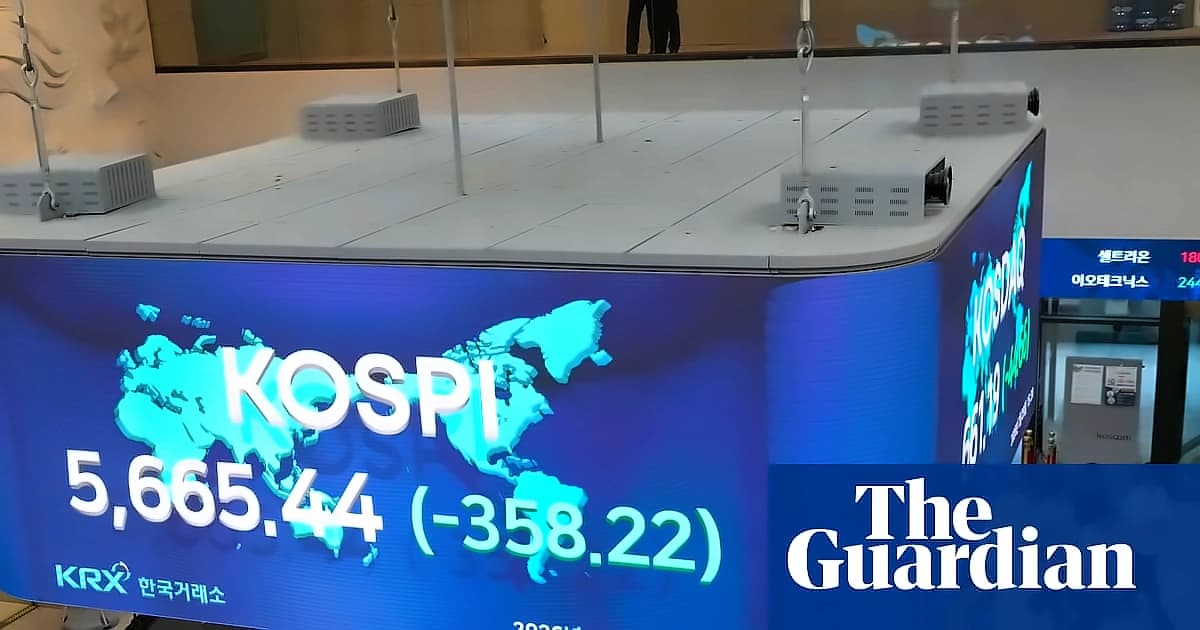
Asian markets traded mixed on Thursday as investors gauged geopolitical tensions in the Middle East and fresh regional trade frictions, while AI-related stocks diverged as investors continued to reassess lofty sector valuations. In South Korea, SK Hynix fell 8.4% and Samsung Electronics sank 5.3%, helping pull the Kospi down 5.8% and trimming its year-to-date gains to 99.6%. Hong Kong's Hang Seng rose about 1.9%, Australia's S&P/ASX 200 advanced nearly 0.7%, and Japan's Nikkei 225 added 0.3%, according to Investing.com. Mainland China's Shanghai Shenzhen CSI 300 gained about 0.4%, while the Shanghai Composite climbed 0.5%. Trade tensions remained in focus after China placed 20 Japanese entities on its export control list for dual-use items, with Beijing citing concerns over Tokyo's military ambitions. Indian equities were little changed, with the Nifty 50 and BSE Sensex 30 adding 0.2% as investors assessed easing Middle East tensions while awaiting key domestic economic data.