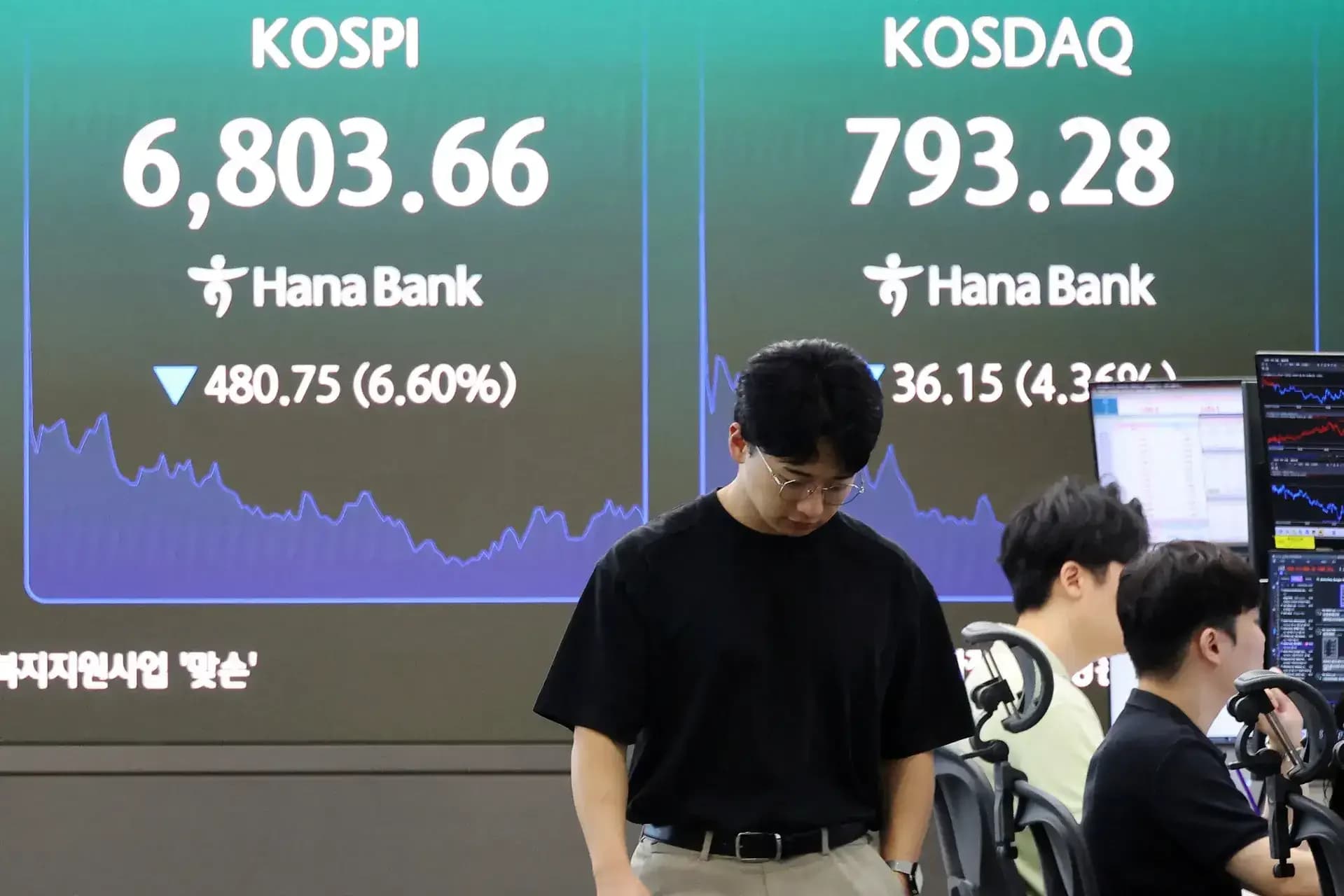
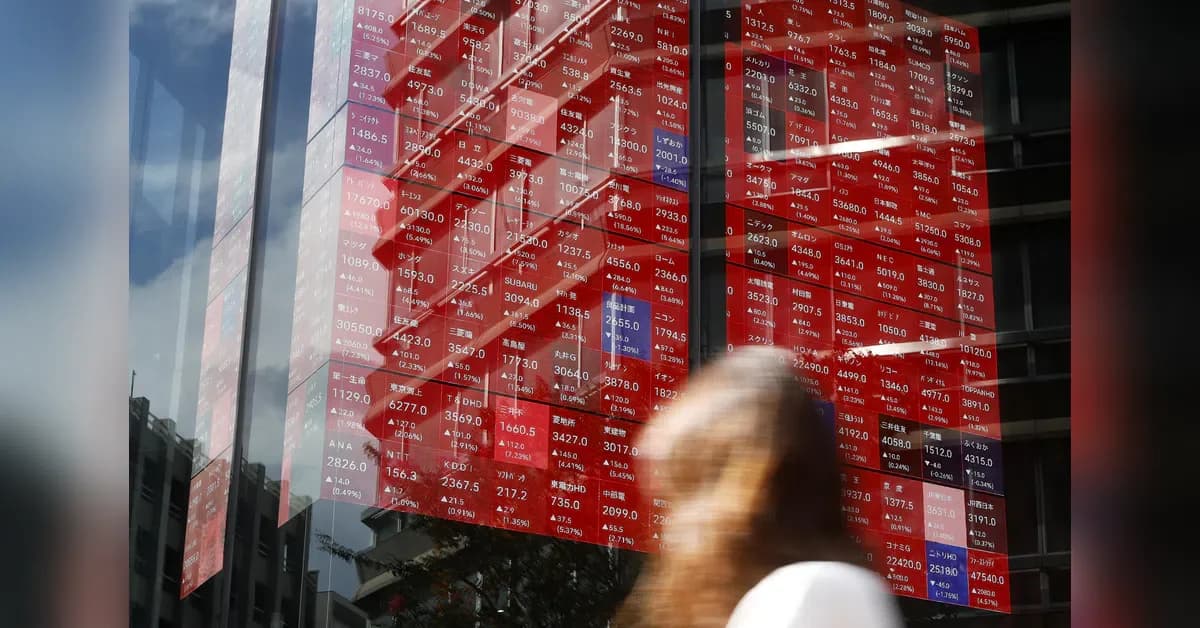
Asian markets experienced a significant decline on Wednesday as MSCI's gauge of Asia Pacific equities fell 1.8%, heading for its fourth loss in five days as investors rotated out of technology stocks and trimmed positions ahead of a key US inflation reading. South Korea's Kospi led regional losses, tumbling 0.2% to 7,720.75 as chipmakers retreated following a scorching advance that had propelled the benchmark to the top of global rankings this year. Hong Kong's Hang Seng edged 0.2% higher to 24,468.82 while Shanghai Composite declined 0.2% to 3,983.80, with equity-index futures for the tech-heavy Nasdaq 100 dropping 0.5% after a volatile session on Wall Street Tuesday. The decline reflects growing concerns over stretched tech stock valuations, escalating Middle East tensions and mounting expectations that the Federal Reserve will need to raise rates to combat faster inflation.
Wall Street experienced its first back-to-back drop in three weeks as artificial intelligence stocks faced heavy scrutiny following a dramatic sell-off. The S&P 500 dropped 1.6% to close at 7,266.99, returning to levels seen in early May, while the Dow Jones Industrial Average tumbled 953 points, or 1.9%, to 49,918.78. The Nasdaq composite led the market lower with a 2% slide to 25,169.50, with AI winners facing significant pressure after their meteoric rise. Nvidia, the chip company that's grown into a nearly $4.9 trillion behemoth because of the AI boom, was the heaviest weight on the S&P 500 after falling 3.7%. Super Micro Computer tumbled 28% after announcing plans to raise $7 billion in cash through share and convertible preferred stock sales, raising concerns about dilution for existing shareholders. The semiconductor gauge took an even harder hit, falling 3.6% as the market went after the hottest part of the book again: megacap tech, semiconductors, AI winners, and the stocks that have carried both performance and investor psychology for most of the year.
Oil prices experienced significant gains as Brent crude rose 1.8% to $93.10 per barrel on Wednesday following President Trump's warning that Iran would "pay the price" for stalled negotiations. US benchmark crude oil gained $1.50 to $91.53 per barrel as the war with Iran has been keeping the Strait of Hormuz effectively shut to oil tankers, preventing delivery of crude from the Persian Gulf to customers worldwide. Early Thursday, Brent crude oil was up $1.34 at $94.44 per barrel, with weakening stocks for companies with big fuel bills also pulling the market lower as United Airlines sank 6.2% and cruise-operator Carnival fell 6.3%. The price movement comes as high oil prices have sent inflation higher, with a report showing US consumer prices jumped in May at the highest speed in three years. Energy reportedly accounted for more than 60% of the monthly CPI increase, with petrol and diesel prices surging sharply since the Middle East conflict began, creating an inflation transmission line that bleeds into freight, airlines, groceries, chemicals, plastics, and eventually consumer psychology.
Investor focus remains on Wednesday's US inflation report, which may provide the clearest signal yet on whether new Fed Chair Kevin Warsh will keep rates higher for longer. As reported by Bloomberg, an upside surprise in US CPI tonight would arguably put new Fed Chair Warsh in a tough spot to argue that rate cuts are still on the table as recent FOMC member speeches have leaned more hawkish. Traders are betting the Federal Reserve will have to hike its main interest rate at least once this year, given price pressures and the strength of the US job market. The Treasury 10-year yield rose two basis points to 4.54% reflecting expectations of higher interest rates, while Japan's 10-year yield advanced one basis point to 2.690%. A stronger-than-expected jobs report on Friday increased bets that the Federal Reserve will hike interest rates this year, with traders now fully pricing in a 25-basis-point hike in December versus expectations of two rate cuts before the war. The Fed can look through a shock but struggles to look through a regime, making the current setup particularly challenging as oil keeps the Fed on guard.
The US dollar slipped to 160.44 Japanese yen from 160.56 yen while the euro rose to $1.1555 from $1.1537 as currency markets responded to the latest developments. Gold dropped 1.8% to trade below $4,200 an ounce on expectations that faster inflation will prompt the Federal Reserve to raise interest rates and weigh on non-interest-bearing assets. The commodity is about a fifth below where it was trading before the Iran war broke out at the end of February, with its recent decline through its 200-day moving average triggering additional selling as it's seen as an important level watched by institutional investors. Bitcoin fell over 1% to around $61,500, reflecting broader risk-off sentiment across digital assets.