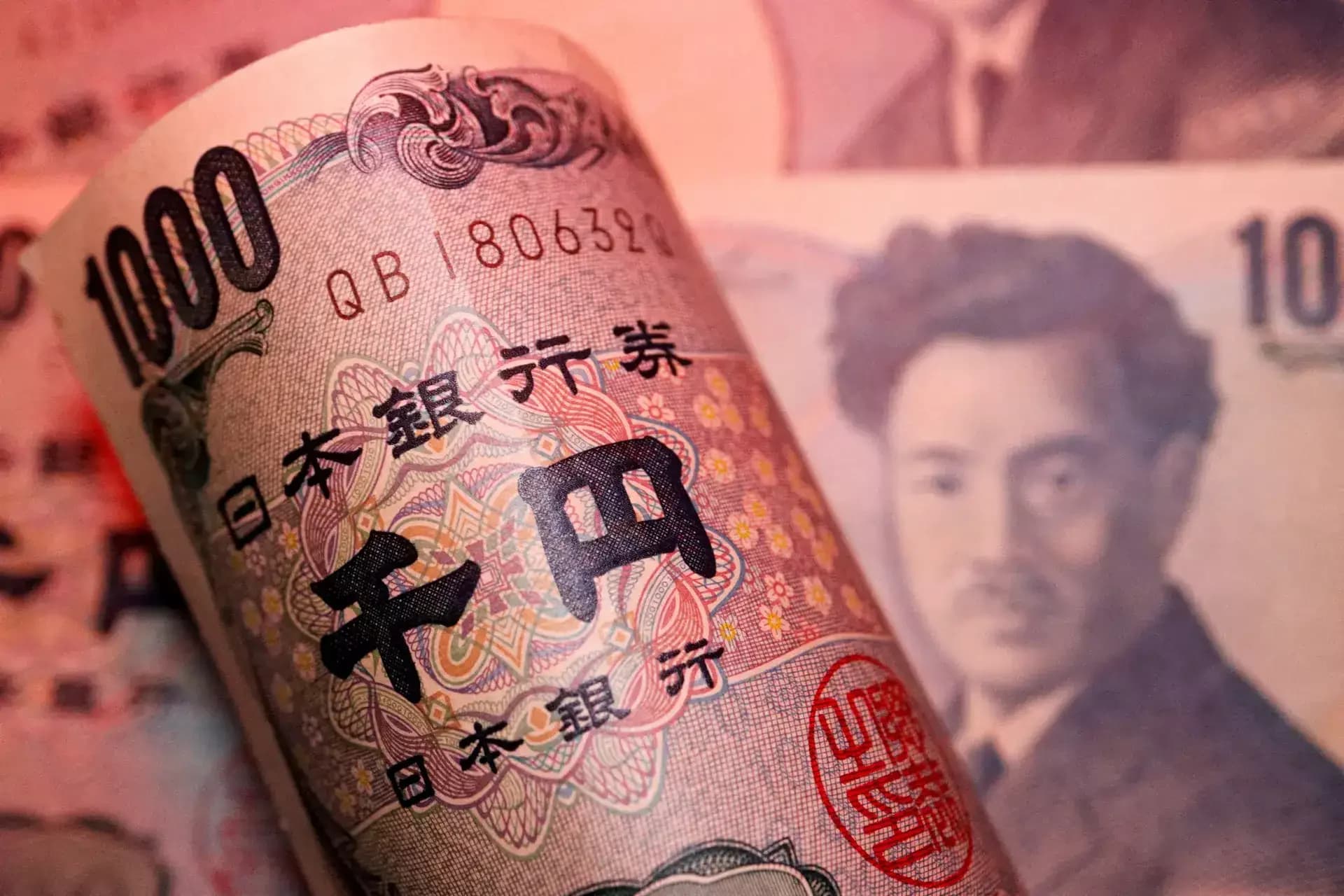
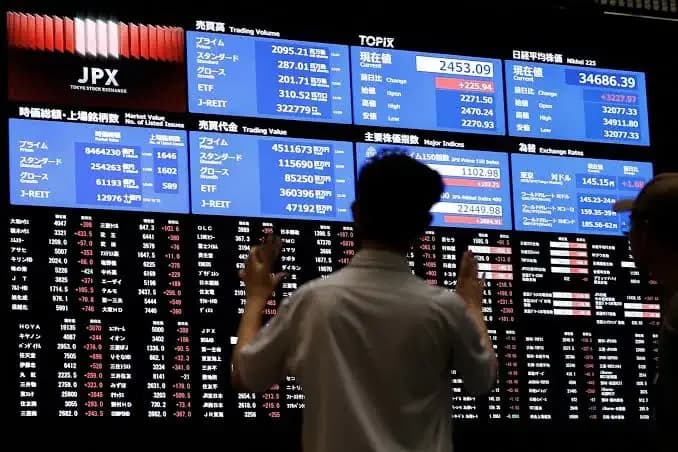
The Japanese yen has plummeted to its lowest level since 1986, hovering around 162 to the US dollar, leading to higher import costs and increasing the prospect that upward price pressures persist. This unprecedented weakness is creating significant ripple effects across Japanese financial markets, with Japanese government bond yields climbing to multi-decade highs as investors reassess the country's fiscal and monetary policy outlook. The yen's decline represents a fundamental challenge to Japan's economic stability, with experts warning that intervention is right around the corner if we don't see a quick correction, according to Andrew Hazlett, a foreign-exchange trader at Monex.
Japanese government bond yields climbed Wednesday, with longer-term rates nearing a month's peak amid the currency crisis. The 20-year JGB yield was up 1.5 basis points at 3.670% after touching 3.675%, its highest since late May. The 30-year yield climbed 0.5 basis points to 3.950%, while the 40-year yield fell 1 basis point to 3.795%. The yield movement reflects growing market concerns over fiscal policy and currency stability, with the yen's weakness significantly out of sync with Japan's fiscal fundamentals and relative bond yields, as noted by Cameron Systermans, head of multi-asset strategy for Asia at Mercer. While Japanese government bond yields rose to multi-decade highs in May in expectation that fiscal expansion would require greater government borrowing, they were relatively subdued in response to the latest announcement, despite the possibility that the stimulus could add to inflationary pressures.
The Japanese government has already intervened in currency markets, buying more than $73 billion to support its currency last month - the first such intervention since 2024. However, experts remain divided on the effectiveness of such measures, with Andrew Hazlett warning that intervention would be only a temporary fix if they do not address the interest-rate differential. The Bank of Japan has responded to the crisis by increasing rates to 1%, a 31-year high, in an attempt to fend off energy-driven inflation from the Middle East conflict. This represents a significant shift from the central bank's policy of keeping rates near zero from the 1990s until 2024, when it began gradually raising them. The balancing act for the BoJ is challenging, as raising interest rates might help lower inflation, but it also raises borrowing costs for the government and businesses. The Bank hiked rates to 1% earlier this month, the highest level since September 1995.
Japanese Prime Minister Sanae Takaichi unveiled the country's largest and longest-term investment plan to date, a 14-year 370 trillion yen ($2.3 trillion) plan that will channel both public and private investment across 17 key sectors, including more than $600 billion earmarked for AI and semiconductor related spend. The roadmap is the latest step in the prime minister's growth agenda, but questions remain over the financing, with exactly how costs will be divided between businesses and government still unclear. While long-term planning has notable benefits, such a timeframe makes it difficult to know how the roadmap will ultimately play out. A weakening yen and concerns over government spending are impacting market sentiment, with Noriatsu Tanji, chief bond strategist at Mizuho Securities, noting that uncertainty over whether a supplementary budget will be enacted is likely to linger until autumn.
Higher U.S. Treasury yields also contribute to the trend, as reported by The Economic Times. U.S. Treasury yields ticked up overnight, following a better-than-expected job openings report, marking the first in a string of reports on the labour market this week culminating with Thursday's government payrolls report. Noriatsu Tanji noted that higher U.S. yields yesterday are also likely to weigh on JGBs, suggesting investors should be mindful of the possibility that long-end yields will keep rising in the near term. Other data released last week reinforced the view of a resilient US economy, with first-quarter GDP growth revised higher to 2.1% annualized pace, up from the prior indication of 1.6%, and initial jobless claims falling to 215,000 for the week ended 20 June, fewer than expected and down 12,000 from the last reading. Markets continue to price a US rate hike in September, though expectations have lowered slightly, while the dollar, which had earlier climbed to its highest level since early 2025, paused its recent rally to weaken slightly towards the end of last week.