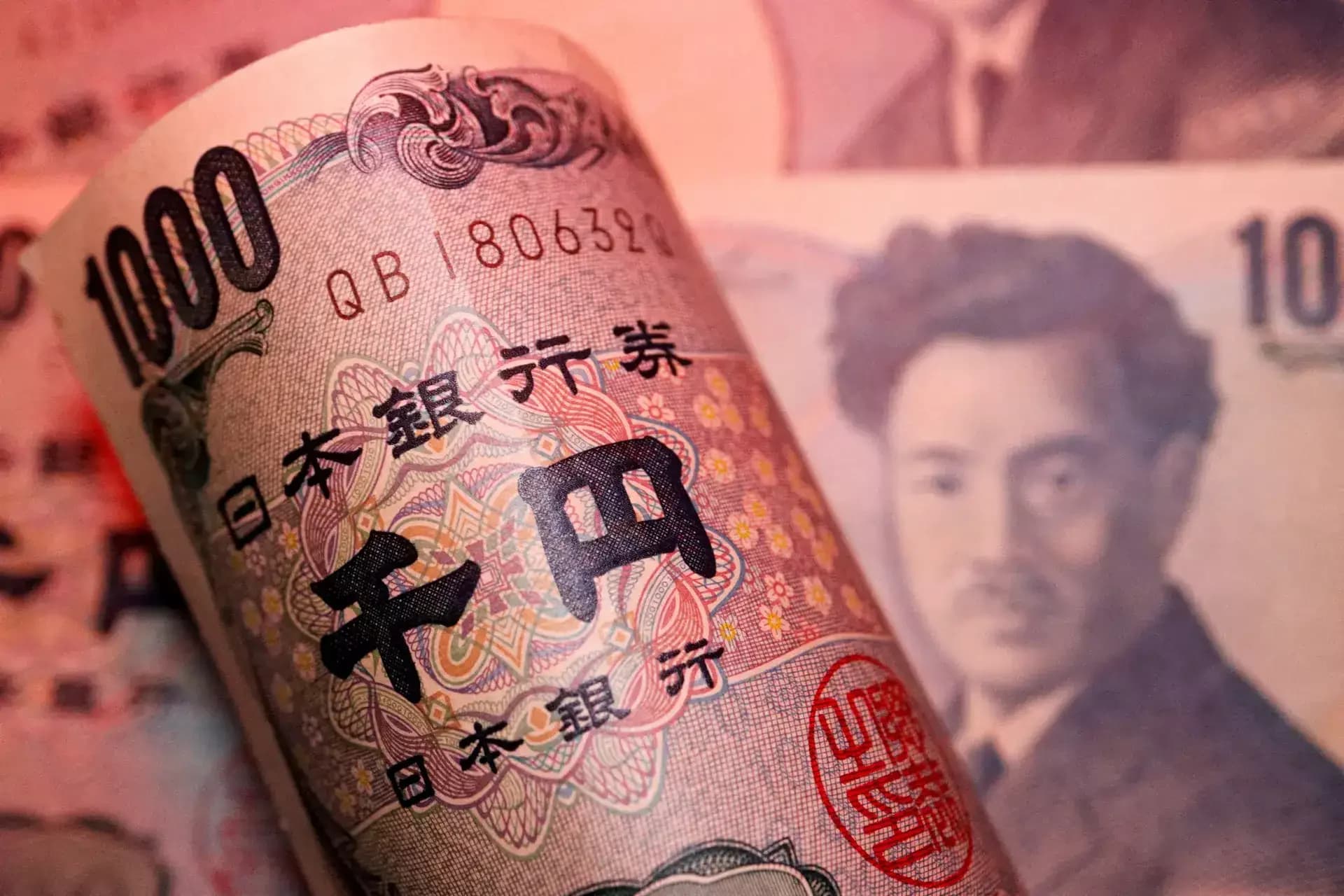
The US Treasury Department has called on the Bank of Japan to continue raising interest rates, saying further monetary policy normalisation would help contain inflation expectations and curb excessive volatility in the yen. According to Reuters, the Treasury's semi-annual currency report released in Washington on Thursday noted that the yen has remained weak despite a narrowing in U.S.-Japan interest rate differentials. The report emphasised that while global factors such as financial market volatility and higher oil prices have influenced the currency, excessive swings in the yen are undesirable. The Treasury stated that the yen had declined 51% between the end of 2011 and the end of April 2026, both in real effective terms and against the dollar, resulting in what it described as substantial undervaluation. The comments came as the Japanese currency fell to a 40-year low against the US dollar on Thursday, keeping investors alert to the possibility of intervention by Japanese authorities.
The Japanese yen has reached a 40-year low of 163.78 per dollar, marking the first time since December 1986 that the currency has traded above this level. According to Reuters, the yen was on course for its steepest weekly decline since May, capping a turbulent stretch that has sent the currency to new 40-year lows versus the dollar despite Japan's pledges to stabilise the currency. The USD/JPY pair was last seen trading at 163.78, down 0.4% as of 2:30 p.m. in New York, with the currency falling to 163.24 per dollar on Tuesday before recovering some ground in choppy trading. The decline was driven by rising oil prices and U.S. Treasury yields, which are supporting the dollar's safe-haven status amid ongoing Middle East tensions. As reported by Reuters, verbal efforts to support the yen have had muted results, with Japan's Finance Minister Satsuki Katayama once again reiterating on Friday the government's readiness to take action in the foreign exchange market. Some analysts believe that even intervention would only have a short-lived effect without coordinated steps such as a more aggressive path of rate hikes by the Bank of Japan.
Japan's inflation has shown signs of recovery, with the consumer price index rising 1.6% in June compared to the same month last year, marking the first increase in three months. According to Bloomberg, the Ministry of Internal Affairs and Communications reported that both the overall CPI and the measure excluding fresh food and energy increased by 1.7%. Energy costs, which continued to decline thanks to government subsidies but at a far slower rate than in the previous month, were the main cause of the acceleration. This inflation data supports the Bank of Japan's argument to continue raising interest rates, as policymakers are becoming increasingly concerned about upside inflation risks due to the yen's unrelenting decline. The escalating Middle East conflict has revived concerns about higher energy costs, with oil prices topping $100 a barrel this week for the first time in nearly two months, adding pressure on the yen and supporting the dollar's strength. However, recent developments show some moderation, with U.S. crude falling 3.47% to $88.99 a barrel and Brent dropping to $96.48 per barrel, down 4.12% on the day, retreating from the two-month high of $102 hit on Thursday.
The dollar has been rising in recent days as renewed strikes in the Iran war have caused a reversal in oil prices and again fanned inflation fears, in turn buoying expectations the U.S. Federal Reserve may hike interest rates. According to Reuters, the dollar index inched up 0.01% to 101.46 and was up about 0.7% for the week, on track for its biggest weekly gain in five weeks. Against the Japanese yen, the dollar weakened 0.02% to 163.81 but was up nearly 0.9% on the week, which would mark its strongest week against the currency since May 15. On Thursday, the dollar hit 163.98, its strongest against the yen since November 1986. The U.S. economy is seen as more insulated from energy price shocks compared with Europe and Japan, which has also supported the dollar. Expectations for a rate hike from the Federal Reserve at its meeting next week have increased to 35.8%, up from 12.8% a week ago, as cool U.S. inflation data for June briefly supported hopes the Fed could delay rate hikes, but the escalating Iran war has rekindled concerns about price pressures.
Market sentiment shifted significantly following reports that the Bank of Japan is open to moving interest rates earlier than its typical six-month timeline. According to Reuters, markets have completely priced out any chance of a rate hike from the BOJ at its policy meeting next week, with money markets adding to wagers on a BOJ rate increase by October after the bank upped rates to 1% in June. MUFG Bank strategist Lee Hardman said the report reinforces his view that the BOJ's next rate hike could come as soon as September, with markets currently seeing only a roughly 32% chance of a move that month. The euro slipped 0.06% to $1.1369, and was down nearly 0.6% on the week, a day after the European Central Bank left interest rates unchanged but kept the possibility of a September hike alive. Traders are pricing in a 70.8% chance of a rate hike in September, according to LSEG data. After maintaining ultra-loose monetary policy for years, the BOJ ended its decade-long stimulus programme in 2024 as inflation remained around its 2% target, with the central bank having since raised interest rates several times.
Despite significant intervention efforts, Japanese authorities have been unable to halt the currency's decline. As reported by Reuters, Japan engaged in record intervention in April and May after the dollar/yen rate crossed above 160, but the impact has worn off and officials have backed off on intervention threats in favour of ambush tactics designed to keep markets on edge. Finance Minister Satsuki Katayama has used her strongest language in weeks to warn of possible currency intervention, stating that rising oil prices, prospects of US rate hikes, and stimulatory fiscal and monetary policy conditions in Japan are fueling the currency trend. According to Bloomberg, authorities spent ¥11.73 trillion ($71.9 billion) intervening between April 28 and May 27, yet the yen remains at its weakest level in four decades. The Treasury's report noted that the U.S. Treasury would continue close consultations with Japan's Ministry of Finance on macroeconomic and foreign exchange matters, while warning that officials would respond to currency movements appropriately.