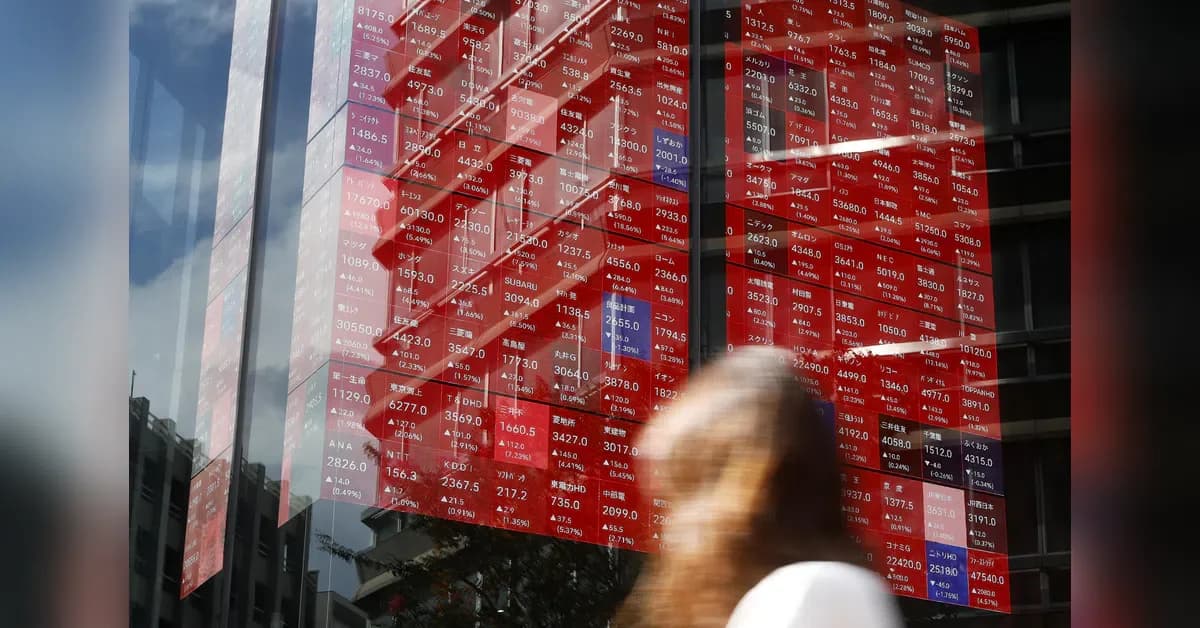
Global equity markets experienced significant selling pressure on Friday as MSCI's gauge of stocks across the globe fell 17.06 points, or 1.53%, to 1,099.00. According to Reuters, the pan-European STOXX 600 index finished down 1.48%, while MSCI's broadest index of Asia-Pacific shares outside Japan fell 2.5%. The decline marked a sharp reversal from earlier optimism, with investor euphoria over technology stocks giving way to inflation fears that saw Treasury yields spike to one-year highs and rising bets on a US rate hike this year. As noted by Reuters, the S&P 500 and the Nasdaq sold off after climbing to closing records on strength in artificial intelligence-related technology stocks in the previous two sessions. In the worst session for equities since March, the S&P 500 fell 1.2% as traders fled high-growth tech names that had powered the market's record-setting run.
Government bond markets experienced severe selling pressure as inflation fears mounted and U.S. President Donald Trump concluded his high stakes visit to China. By 10:56 a.m. in London, yields on a swathe of global sovereign bonds had jumped dramatically. The yield on the U.S. 10-year Treasury was almost 9 basis points higher at 4.544%, its highest level in almost a year. Japan's 30-year debt hit 4% for the first time, while in the UK, a political crisis lifted long-bond rates to a 28-year high. Money markets are currently pricing in a near-zero chance of any rate cuts this year, and a 50% chance of a hike in December. According to CNBC, a bond market spooked by fears of accelerating inflation will be an early test for incoming Fed Chair Kevin Warsh, who must keep expectations in check as central banks navigate the global energy shock.
Friday's losses were especially severe in technology and semiconductor stocks after a blistering rally fueled by artificial intelligence enthusiasm pushed many shares to lofty valuations. Intel fell 5%, AMD lost 3%, Micron dropped 4% and Nvidia slipped 2%. Cerebras Systems, which soared in its Nasdaq debut a day earlier, tumbled 4%. Crypto-linked names were also hit hard as Bitcoin slipped below $80,000, with Coinbase dropping 8% and Strategy sliding 6%. The selloff gathered steam after the 30-year Treasury yield shot above 5.1%, approaching levels not seen in nearly two decades and rattling investors already on edge over inflation and geopolitical turmoil. A gauge of chipmakers — which had led a surge from war-driven lows — sank 4%, marking the worst session for technology stocks since March.
Gold and silver markets also came under severe pressure on Friday, with spot gold falling 2% to $4,552.59 an ounce, while spot silver was down 6.5% to $78.08 per ounce. Front-month gold and silver futures fell 2.6% and 7.7%, respectively, while U.S.-listed gold and silver miners and ETFs sold off in pre-market trading. By 5:05 a.m. ET, the ProShares Ultra Silver ETF was down more than 12%, while the iShares Silver Trust fund was 6% lower. Silvercorp Metals lost 6.9% ahead of the regular trading session, Teck Resources fell by 5.9% and Endeavour Silver was 4.9% lower. According to CNBC, the U.S. dollar index rose by around 0.4%, as the greenback got a boost from a resurgence in inflation concerns. Recent dollar strength and expectations of higher rates have contributed to the move, with investors seeking higher returns to counterbalance the impact of higher inflation expectations.
Oil prices climbed after President Trump warned he was running out of patience with Iran, fueling concerns that tensions in the Middle East could worsen and further disrupt the Strait of Hormuz — one of the world's most critical shipping lanes for crude. West Texas Intermediate crude settled above $105 a barrel while Brent crude traded north of $108. According to Reuters, attacks on one ship and the seizure of another stoked concerns about energy supplies, with the oil price surge contributing to inflationary pressures across markets. President Donald Trump said he didn't push his Chinese counterpart Xi Jinping to pressure Tehran to revive Hormuz, offering no sign of a breakthrough in the standoff over the waterway. China believes the strait should be reopened as soon as possible, Xinhua reported, citing Foreign Minister Wang Yi. With no end in sight to the Iran conflict, speculation has grown that the effective closure of the Strait of Hormuz will deepen the energy disruptions that risk fueling inflation.
On Wall Street, the Dow Jones Industrial Average fell over 500 points in afternoon trading, while the S&P 500 slid more than 1% and the Nasdaq Composite dropped about 1.5% as traders fled high-growth tech names that had powered the market's record-setting run in recent weeks. Microsoft stood out as one of the few major winners Friday, rising about 4% after billionaire hedge fund manager Bill Ackman disclosed that Pershing Square has built a stake in the software giant. As reported by Reuters, the S&P 500 logged its seventh straight weekly gain, its longest winning streak since late 2023, though the Nasdaq and the Dow fell on the week. Friday's pullback in equities came after a surge fueled by solid corporate profits, signs of economic resilience and a revival of the artificial-intelligence trade. Market analysts note that there's a realization that the market had gotten way ahead of itself, with traders finally paying attention to what the bond market and economic data is telling them about potential inflationary pressures ahead. According to CNBC, Lori Calvasina at RBC Capital Markets warned that bullish calls on stocks will be challenged if Treasury 10-year yields hit 5%, a level that usually depresses price-to-earnings ratios.