Japanese stocks attracted record foreign investments in the week through April 11, with cross-border investors acquiring a net 3.94 trillion yen ($24.87 billion) worth of Japanese stocks. According to Japan's Ministry of Finance data available since January 2005, this represents the largest weekly purchase on record. Foreigners have pumped about 6.9 trillion yen into Japanese shares in the last two weeks, broadly reversing a record 7.37 trillion yen of net sales in March. The Nikkei 225, up about 16.6% so far in April, hit a new record of 59,569.25 on Thursday after the Trump administration expressed optimism about reaching a deal to end the war with Iran. However, latest developments suggest Washington and Tehran are considering extending their two-week ceasefire to allow additional time for peace negotiations, even as the Strait of Hormuz remains effectively closed amid a dual blockade.
Asian stocks rose significantly on Tuesday, with MSCI's broadest Asia-Pacific share index outside Japan rising 1.5% to reach its highest level in six weeks. Japan's Nikkei climbed more than 2% to 58,561 points, while South Korea's KOSPI grew by over 2%. The rally was driven by optimism over potential US-Iran peace talks, with U.S. president Donald Trump stating that Iran called this morning and "would like to work out a deal". A U.S. official stated there is progress in trying to reach an agreement, even as the U.S. began blocking Iranian ports after the weekend's failed negotiations. Brent crude futures fell 1.5% to $97.90 per barrel as expectations of further dialogue overrode concerns about supply disruptions. Tony Sycamore from IG noted that "the impressive price movement in risk assets shows markets are keen to look past the immediate 'impact' of the Middle East Conflict."
Japanese equities also tracked Wall Street's record-setting rally, supported by strong bank earnings and renewed demand for technology shares. Tech and AI-linked stocks led gains in Japan, with notable advances in SoftBank Group (2.3%), Fujikura (2.4%), and Advantest (1.5%). Other index heavyweights also strengthened, including JX Advanced Metals (1.9%), Mitsubishi UFJ (1.5%), and Daikin Industries (10.8%). The Nikkei 225 Index gained 268 points or 0.46% on Wednesday to close at 58,146 points, with Taiyo Yuden leading gains at 10.89%, followed by Sumitomo Dainippon (8.16%) and Z Holdings (5.80%). Meanwhile, technology stocks led gains on Wall Street after having lagged for much of the year, with the S&P 500 climbing in 10 of the past 11 sessions and the Nasdaq 100 rising for an 11th consecutive day - the longest winning streak since December 2019.
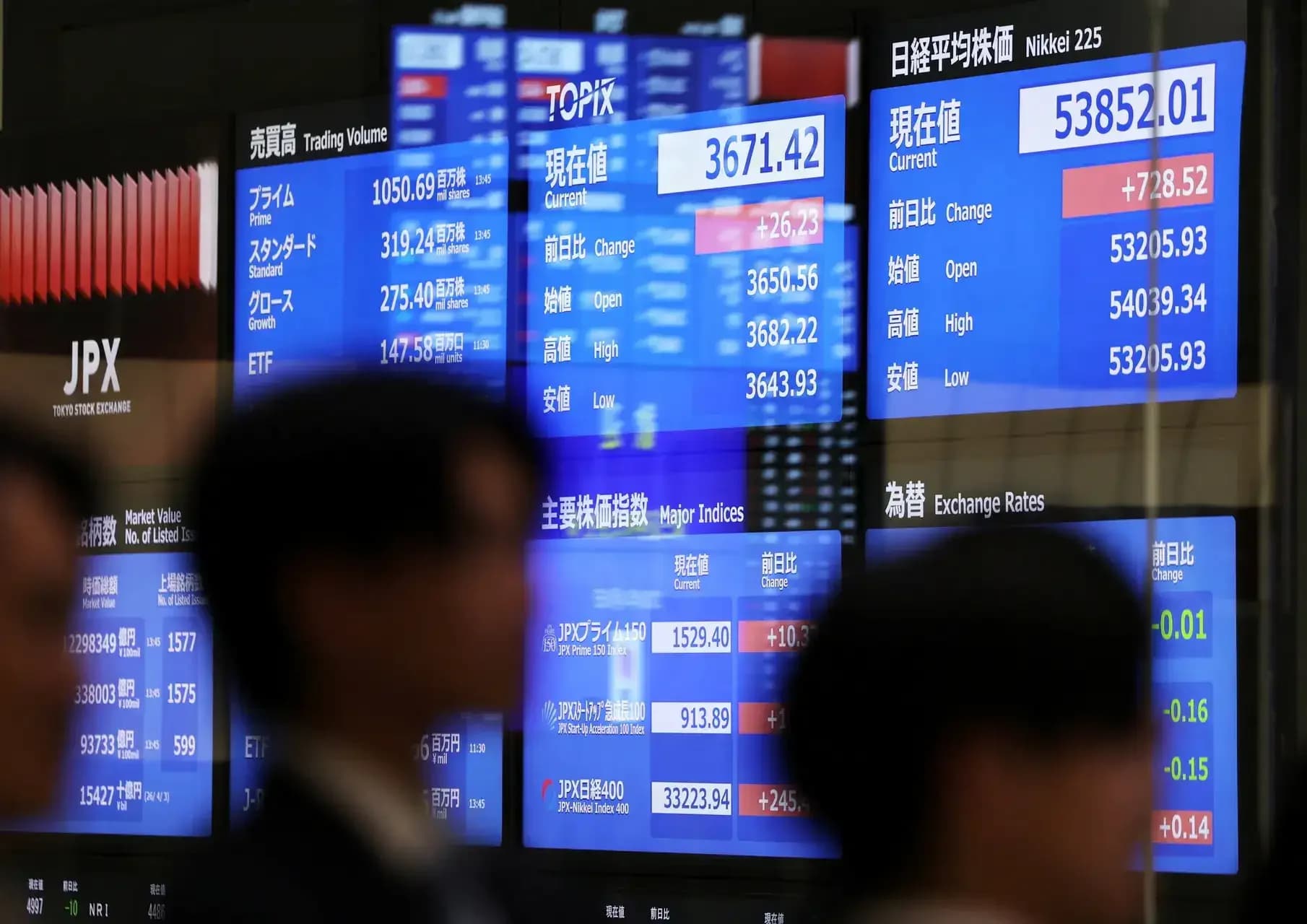
The surge in foreign investments was driven by expectations that the Iran war could end through negotiations, which boosted demand for risk assets. As reported by The Economic Times, seasonal factors also contributed to these recent inflows, as foreigners often shift their holdings from Tokyo to offshore entities in March before the voting rights and dividend entitlements are fixed, and then move them back in April. Japanese long-term bonds attracted a net 707.2 billion yen of foreign funds in a second successive weekly net purchase, as higher yields lured non-native investors. Meanwhile, overseas equities attracted 255.5 billion yen of Japanese investment, marking an eighth straight week of net purchases. The rally has been sustained by strong US corporate earnings, with Bank of America and Morgan Stanley rising as their equity traders posted strong revenue beats, while emerging-market stocks extended gains with the MSCI Emerging Markets Index climbing 1%. The U.S. Dollar Index, which measures the strength of the greenback against a basket six currencies, remained flat at 98.02 as geopolitical concerns eased.
Recent developments in the Middle East conflict have significantly dampened market optimism that drove the initial surge in Japanese stocks. Iran has rejected a second round of negotiations and blocked the Strait of Hormuz, while the U.S. has seized an Iranian cargo ship, heightening concerns that the ceasefire set to end on Tuesday may not hold. As reported by The Economic Times, Australian shares saw a modest rise on Monday but remained largely unchanged as investors remained wary of Mideast risks. Australia's benchmark S&P/ASX 200 index rose 0.1%, or 6.4, to end at 8,953.30 points, with the gauge closing within 0.3 percentage points of this level for the past nine consecutive sessions. Market analyst Hebe Chen from Vantage Markets noted that "weeks of war headlines, ceasefire hopes and sharp volatility have left investors cautious rather than inactive. This is a market waiting for clearer signals before committing." The selective pressure from the conflict is likely to build in sectors most exposed to higher energy costs, supply disruptions, or slower lending growth, according to market experts.