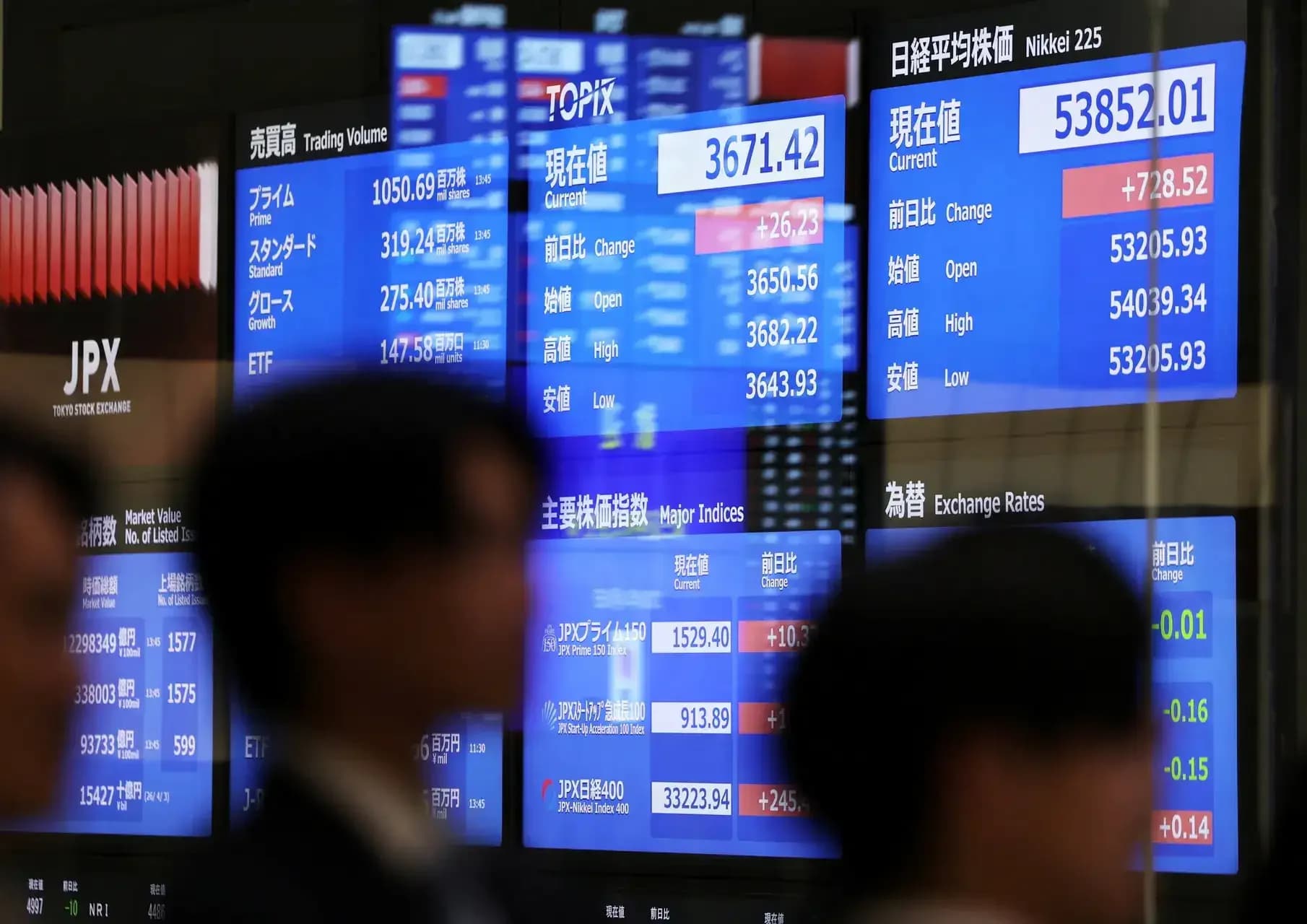
Foreign investors continued their strong interest in Japanese stocks for the eighth consecutive week through May 23, driven by falling oil prices and a surge in AI-related shares. According to data from the Ministry of Finance reported by Reuters, foreigners invested a net 1.08 trillion yen ($6.77 billion) in Japanese stocks during the week ended May 23, representing a near 14% rise from the 948.4 billion yen of net purchases in the prior week. The rally was fuelled by stronger sentiment towards technology counters after chip giant NVIDIA projected robust demand for its flagship AI chips last week.
The technology sector emerged as a key beneficiary of foreign investment, with Nvidia forecasting blockbuster demand for its flagship AI chips last week. As reported by Reuters, AI investor SoftBank Group surged 17.62% last week, while chip designer Socionext rallied 12.26%. Foreigners have invested nearly 11.7 trillion yen into Japanese stocks this year, compared with roughly 742.1 billion yen of net purchases in the same period last year, reflecting the sustained optimism around AI demand outlook.
Japanese long-term bonds attracted significant foreign investment with a net purchase of 1.35 trillion yen after outflows of 1.03 trillion yen in the prior week, as reported by Reuters. However, foreigners divested 2.22 trillion yen of short-term instruments, marking the most since March 28. The bond selloff eased and higher yields attracted investors during this period, with easing bond selloffs and higher yields improving attractiveness to foreign investors.
Japanese investors showed contrasting behavior, withdrawing a net 358.7 billion yen from foreign equities, marking their third weekly net sale in four weeks, according to Reuters. However, they invested a marginal 10.3 billion yen in long-term foreign bonds, extending buying to a fourth straight week. The domestic investment patterns reflect a cautious approach to international markets despite strong foreign interest in Japanese equities, with Japanese investors remaining cautious on overseas equities while showing modest interest in long-term foreign bonds.
US stock futures pointed to a weak opening as tensions in West Asia raised crude oil prices, heightening inflation concerns. S&P 500 futures fell 0.3%, while Nasdaq and Dow futures also declined, as reported by LiveMint. Tehran reportedly targeted a US airbase after Washington launched fresh strikes on Iran, with US Central Command describing attacks on Kuwait as an "egregious ceasefire violation." Brent crude futures climbed toward $97 per barrel, rebounding from previous session losses, while WTI crude rose above $91 per barrel, touching an intraday high. The latest attacks clouded hopes of near-term resolution in West Asia, which had earlier pulled crude oil prices lower and boosted global risk appetite.