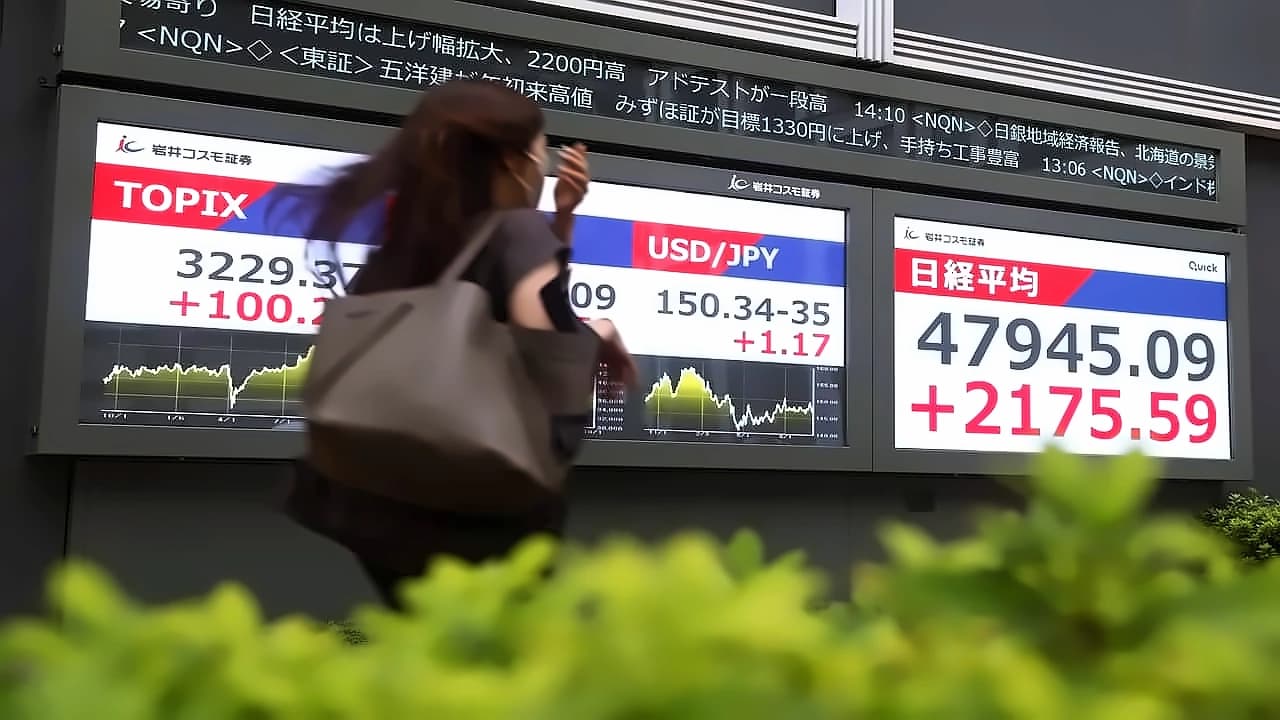
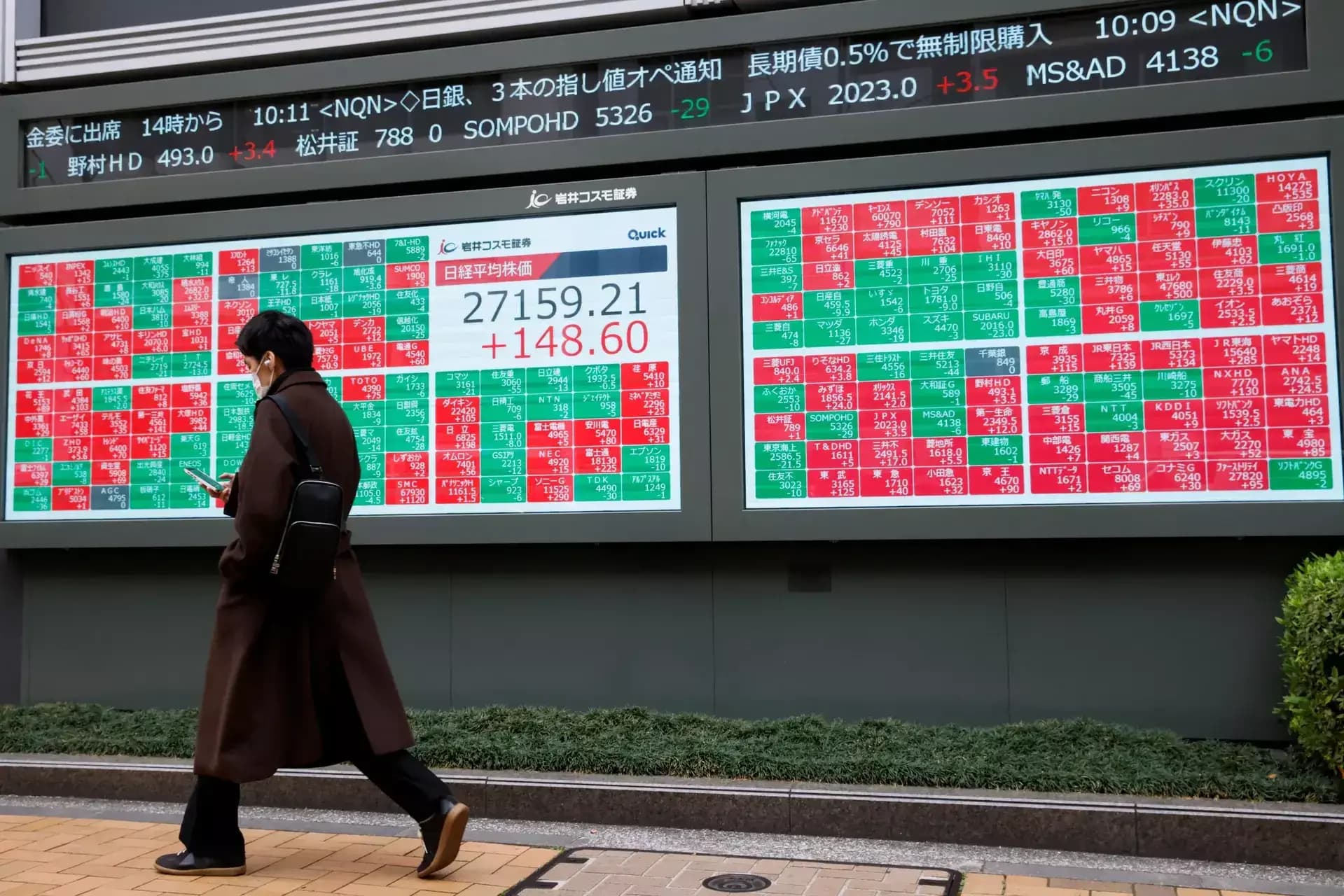
Japanese stocks surged on Tuesday driven by Iran peace deal hopes and strong domestic economic data, with the Nikkei share average jumping 1.5% to 65,650.00 and the Topix gaining 1.2% to 4,000.00. The rally was fueled by retail sales growing at the fastest pace in a year and industrial production unexpectedly rising, adding to the positive momentum from the previous session's gains. According to Business Standard, tech and electronics stocks led the gains, with Kioxia up 7.5%, SoftBank Group rising 5.1%, Murata Manufacturing advancing 12.7%, Taiyo Yuden gaining 13.9%, and Ibiden Co climbing 16.5%. For the month, the Nikkei gained 11.88% and the Topix 6.17%, driven largely by renewed enthusiasm around artificial intelligence.
The S&P 500 held near record highs as hopes for an Iran-related peace deal boosted risk appetite and supported broad-based gains in US equities. US stock futures edged higher heading into Tuesday as traders priced a better chance of a US-Iran deal that could eventually reopen the Strait of Hormuz. Nasdaq 100 futures climbed 0.83%, S&P 500 futures rose 0.62%, and Dow futures gained 0.59% at 9.12 p.m. ET. The S&P 500 traded at 7,530.65, down 26.25 or 0.35%, with the session high at 7,557.85 and low at 7,524.20. The index remains close to record levels after Friday's gains when the S&P 500 closed at 7,473.47, up 0.37%. The pullback looks more like digestion than a trend break, with the Dow Jones Industrial Average rising 0.58% to 50,579.70 and the Nasdaq Composite adding 0.19% to 26,343.97.
Global equity markets rallied as optimism over a potential U.S.-Iran peace agreement boosted risk appetite, driving a sharp pullback in oil prices and renewed buying in Asian and US equities. European stock markets climbed to their highest levels in more than two months on Monday as optimism surrounding possible diplomatic progress between the United States and Iran improved investor sentiment worldwide. The pan European STOXX 600 index moved close to record highs reached earlier this year before the Middle East conflict disrupted global markets and triggered fears of rising inflation and slowing economic growth. According to Investing.com India, this represents a positioning-driven FOMO squeeze fueled by AI momentum, falling oil, and underinvested managers chasing benchmarks higher. The rally was fueled by hopes that Washington and Tehran could move toward a framework agreement that may eventually reopen the Strait of Hormuz, a critical global energy shipping route heavily affected by the conflict.
Crude oil collapsed more than 5% with Brent falling below $100 per barrel as traders aggressively unwound geopolitical hedges built during the Hormuz panic. However, as reported by Investing.com India, the oil market may be far tighter underneath the surface than current price action implies. Using analysis alongside UBS research showing massive SPR and commercial inventory drawdowns, leverage has actually shifted over time, with the unprecedented pace of US crude inventory drains underscoring how critical it is for negotiations between Washington and Tehran to succeed. This creates structural leverage inside energy markets that may now be shifting away from the West. The latest developments show Brent crude futures rose nearly 2% in Asian trade after the U.S. military carried out strikes in Iran, keeping markets on edge as a deal to end the war and open up the Strait of Hormuz remained elusive. Recent reports suggest the Strait of Hormuz could reopen about 30 days after a deal, with Iran clearing mines so ships can pass safely.
Australian shares declined on Tuesday, breaking a three-day rally, as concerns over persistent inflation and diminished hopes for a U.S.-Iran peace deal weighed on investor sentiment. The S&P/ASX 200 index finished 0.4% lower at 8,657.80, with the banking sector leading losses as financials dropped 0.7% amid worries about sticky inflation and potential impacts of federal budget tax changes on mortgage credit growth. According to The Economic Times, the prospect of another firm domestic CPI reading tomorrow has revived fears that inflation could become more entrenched, potentially keeping pressure on interest-rate-sensitive parts of the market. The top lender Commonwealth Bank of Australia inched down 0.2%, having slid around 5% this month after flagging Middle East-related risks, while investors also weighed whether federal budget tax changes could curb mortgage credit growth.
Markets are closely watching Kevin Warsh's first official day as Federal Reserve chair, with inflation concerns already reviving debate over whether the Fed may need to raise rates rather than cut them. The new Fed leadership inherits a difficult setup, with oil shocks pushing inflation pressure higher and consumer sentiment weakening. Warsh pledged to lead a reform-focused Fed as markets watched for how he would handle inflation and policy divisions. The 10-year Treasury yield stood at 4.504%, while the iShares 20+ Year Treasury Bond ETF, TLT, rose about 0.41% amid bullish sentiment. A stable bond market helps equities hold gains, though a renewed rise in yields would make high-valuation technology stocks more exposed. Gold slipped to around $4,542.57 an ounce, showing that some safety demand faded as risk appetite improved, though it remains high enough to show traders have not fully dismissed geopolitical and inflation risks.
The market's reaction remains almost mechanical, with every incremental diplomatic headline involving Iran getting treated like another liquidity injection directly into risk appetite. According to Investing.com India, positioning has moved well beyond cautious optimism and into outright performance panic, with FOMO becoming the dominant cross-asset driver. The analysis suggests that once an actual agreement is formally signed, markets may suddenly discover that much of the emotional upside was already consumed weeks earlier, creating a situation where traders have already aggressively discounted a near-perfect geopolitical outcome while the underlying cost of capital remains restrictive. Even as markets welcomed signs of easing tensions in the Middle East, ongoing conflict in Ukraine continued supporting European defense stocks, with fresh Russian attacks on Kyiv reminding investors that geopolitical risks remain elevated across multiple regions simultaneously. SP500 maintains a bullish short-term bias as long as it holds above 7,487.93 and 7,377.48, with a break above 7,557.85 supporting a move toward 7,663.48, especially if oil stays below $100 and Iran talks keep moving toward a Hormuz reopening plan.