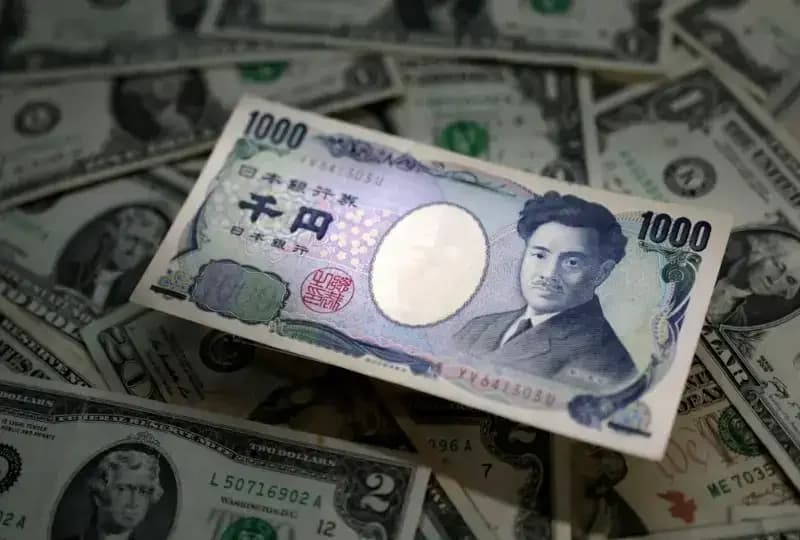
Leveraged funds and asset managers have raised combined Japanese yen short positions to $11 billion, the highest level since July 2024, according to latest data. Short positioning has now climbed for three straight weeks, with the bearish sentiment coming despite Japan's massive intervention efforts. Between late April and late May, authorities deployed 11.73 trillion yen, or about $73.6 billion, setting a record for any month-long stretch and topping the 9.79 trillion yen spent in 2024. The yen's decline pushed Tokyo to step in recently, with the currency slipping past 160 per dollar in late April, the same level that prompted record dollar-selling intervention in 2024. On April 30, the yen swung from 160.725, a near two-year low, to 155.50, but moved toward 155 by May 6 before resuming its slide. The relief faded fast, with the yen weakening back toward 160 in early June, pressured further by the Middle East conflict.

The Bank of Japan is expected to raise its benchmark interest rate to 1.0% from 0.75% at its June 16 policy meeting, marking a significant shift in its monetary policy stance. According to Nikkei, policymakers are leaning toward another rate increase as inflation risks continue to build, while also considering a pause in the reduction of government bond purchases from April 2027. The decision is expected to be closely debated by the nine-member board, with some prioritizing investor sentiment and others advocating for steady reduction of the BOJ's substantial balance sheet. The BOJ still owns 49% of all Japanese government bonds sold in the market, making its every move hugely influential on yields and the cost of funding Japan's huge debt pile. The central bank's choices remain patience or potentially higher rates if inflation proves stubborn, with investors already pricing in nearly 90% chance of a rate hike in June. A hike could narrow the interest rate gap with the United States and test the conviction behind the record short position.
Japanese markets rebounded strongly with tech stocks leading the advance, as chipmakers rebounded strongly after last week's selloff. According to Business Standard, leading performers included Kioxia Holdings (+6.4%), Tokyo Electron (+8.9%), Murata Manufacturing (+11.3%), Taiyo Yuden (+20%), and Advantest (+4.3%). Investor sentiment was also shaped by expectations that the Bank of Japan may raise interest rates later this month to address persistent inflation. On the geopolitical front, tensions eased as Iran and Israel agreed to halt attacks against each other, reducing fears of a wider conflict that could drive energy prices higher. The tech sector's strong performance provided significant support to the broader market recovery, with semiconductor and electronics companies benefiting from renewed investor confidence.
The wide interest rate gap between Japan and the United States remains the main structural driver of yen weakness, with the Bank of Japan holding its policy rate at 0.75% far below US levels. According to The Kobeissi Letter, that differential rewards traders who borrow cheap yen to buy higher-yielding assets, a strategy known as the carry trade that has weighed on the yen for years. When those positions unwind, investors often reduce risk exposure, a dynamic that could pressure assets such as Bitcoin. Finance Minister Satsuki Katayama signaled that authorities remain prepared to act, stating "As for foreign exchange, we continue to maintain our stance that we stand ready to take appropriate action at any time, as needed." The rate gap differential continues to encourage the yen carry trade, which has been a key channel through which BoJ policy decisions affect global risk assets, including digital currencies.
Japanese investors sold foreign stocks at the fastest pace in about five years in May, with net divestments of 2.72 trillion yen ($16.98 billion) during the month, according to data from Japan's Ministry of Finance (MOF). The MSCI World Index, which hit a record 1,138.3 last week, is down about 2.9% so far this month, as a blowout U.S. jobs report triggered a selloff in hot AI-linked technology stocks. The MOF data showed that trust accounts divested a net 3.38 trillion yen of foreign stocks but pumped 3.16 trillion yen into bonds in the overseas markets. Investment trust management companies and life insurers, meanwhile, bought a net 614.6 billion yen and 77.5 billion yen worth of foreign stocks in the last month, providing some support despite the overall outflow trend.