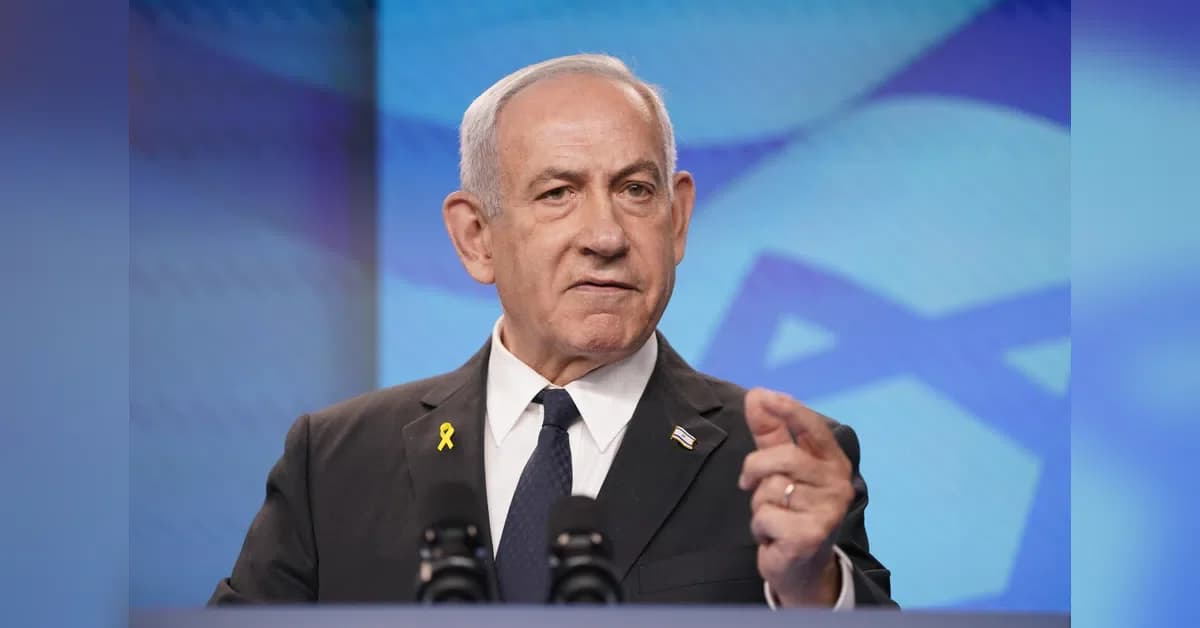
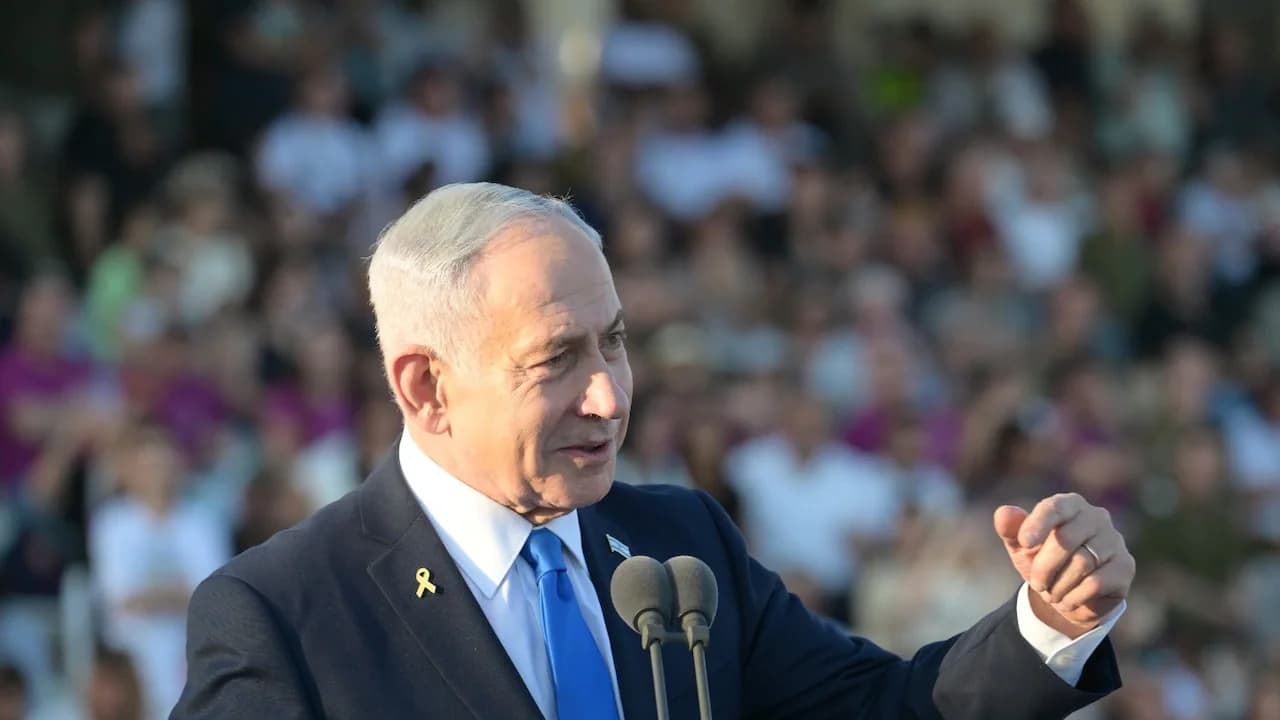
Israeli Prime Minister Benjamin Netanyahu has ordered the military to strike targets in Beirut's southern suburbs, marking a significant escalation in the ongoing Israel-Hezbollah conflict. According to Reuters, Netanyahu's office stated that 'Following repeated violations of the ceasefire in Lebanon by the terrorist group Hezbollah and the attacks against our cities and citizens, Prime Minister Benjamin Netanyahu and Defense Minister Israel Katz ordered the IDF to attack terrorist targets in the Dahiyeh district in Beirut'. The Dahiyeh district, a densely populated southern suburb of the Lebanese capital, is considered a Hezbollah stronghold and has been a repeated target of Israeli strikes during previous rounds of conflict. This latest military action comes after Israeli troops and Hezbollah have continued trading fire since the mid-April ceasefire, with Hezbollah increasingly resorting to cheap, easy-to-assemble kamikaze drones that are difficult for air defence systems to intercept.
Israeli forces have captured Beaufort Castle in southern Lebanon, marking their deepest incursion into the country in more than a quarter century. According to The Times of Israel, Israeli Prime Minister Benjamin Netanyahu announced that 'Last night, our heroic fighters captured the Beaufort Castle. They proudly raised the flag of the State of Israel and the flag of the Golani Brigade there'. The capture of the strategic mountain-topped Crusader-built castle near the city of Nabatiyeh came after days of intense fighting and airstrikes in nearby villages where Israeli troops fought Hezbollah members in the rugged area. Netanyahu described the operation as 'a dramatic stage and a dramatic shift' in Israel's security policy, stating 'Today, we have returned to Beaufort differently. We have returned united, determined, and stronger than ever'. This marks a major gain for Israel in the latest Israel-Hezbollah war, which began in early March, with Israeli troops previously capturing the castle in 1982 and holding it until withdrawing from Lebanon in 2000. The fort has been a military asset for nearly 1,000 years, built as a Crusader castle around the 12th century and later used by Saladin's Jerusalem army, Mamluks, Ottomans, the French mandate and the Palestinian Liberation Organization.
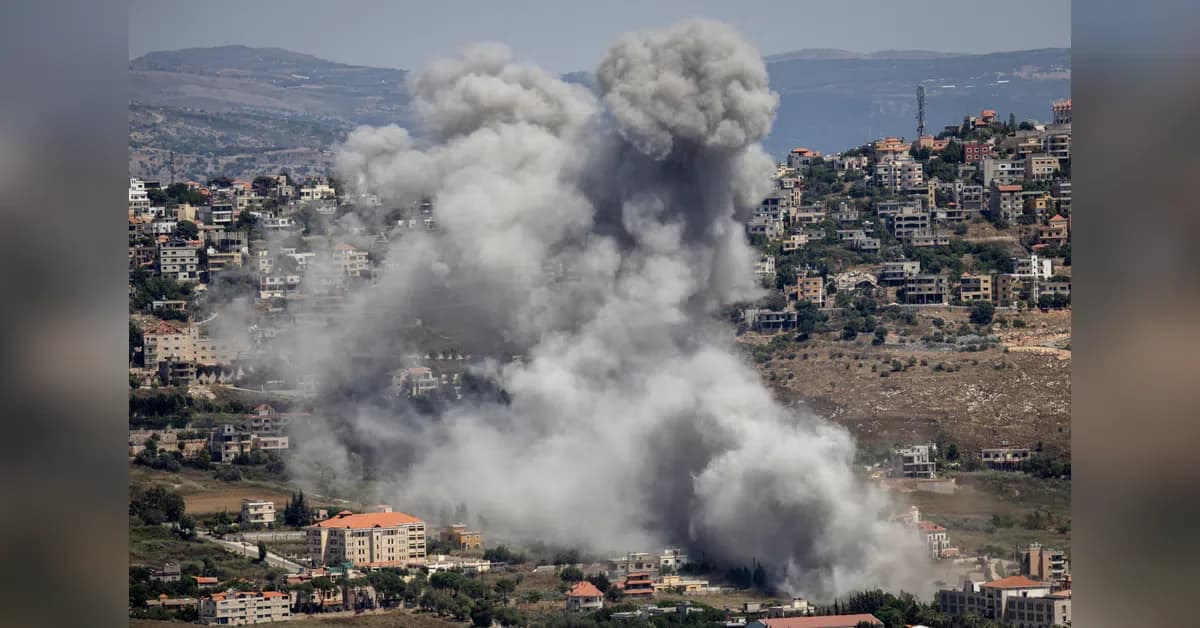
Prime Minister Netanyahu has ordered the Israel Defense Forces (IDF) to deepen and expand their military presence in areas previously controlled by Hezbollah, calling it a strategic and symbolic victory. According to The Times of Israel, Netanyahu stated 'Our heroic fighters have conquered the Beaufort, and we will continue until we complete the mission' and 'It will take time, but we will complete the mission'. The Israeli military launched an operation in the Beaufort Ridge and Suluki valley further south with the aim of dismantling Hezbollah infrastructure and removing direct threats to Israeli civilians. Israeli forces are now about 5 km from the city of Nabatiyeh, a major centre in southern Lebanon, and have called on all its residents to leave, as well as residents of the coastal city of Tyre, the country's fourth largest city, and its surroundings. The Israeli military stated it is ready to expand the operation if needed, with Israel having designated the area from the Litani up to the Zahrani River a combat zone. The operation, approved by the IDF's Chief of the General Staff, involved extensive preparatory airstrikes, artillery and tank fire, and engineering work to secure commanding terrain and neutralise Hezbollah infrastructure under Iranian direction.
Western powers have intensified their diplomatic opposition to Israel's expanding military operations in Lebanon, with Germany and the United Kingdom leading the international condemnation. According to Business Standard, German Foreign Minister Johann Wadephul cautioned that the current trajectory of the conflict would trigger severe humanitarian fallout, stating 'The Israeli army's advance further into southern Lebanon is cause for serious concern'. The British Minister for West Asia and North Africa, Hamish Falconer MP, explicitly called for a halt to the widening theatre of war, stating 'continued escalation in Lebanon is undermining diplomatic efforts and having an unacceptable impact on civilians. Israel's expansion of the conflict must stop'. The United Kingdom intensified the Western diplomatic push for immediate restraint, with Falconer also placing the onus on Hezbollah to dismantle its combat operations and adhere to international frameworks. Qatar has strongly censured Tel Aviv's land operations, labeling the military campaign a grave escalation and demanding global intervention to pressure Israel to adhere to international legal norms.
The conflict's impact on civilians became evident as Israeli forces have called up an additional battalion to Lebanon and are operating with large forces on the ground and seizing strategic areas. According to Business Standard, Israel has demanded that residents leave much of southern Lebanon due to intense strikes in recent days, though people remain in many of the area's towns. The escalation has raised concerns about the potential for further civilian casualties in the region, with residents in parts of southern Lebanon being warned to leave ahead of strikes. Lebanese Prime Minister Nawaf Salam on Saturday accused Israel of 'implementing a policy of total destruction of cities and towns' and said Israel is trying to 'uproot Lebanon's memory and erase the people's history'. Hundreds of thousands of people have fled southern Lebanon as Israeli forces carried out airstrikes and ground troops pushed into the country, with many now sheltering in the capital Beirut, where hundreds have been killed, including in an intense bombardment in April. The German Foreign Minister warned that 'any further escalation will exacerbate the already tense situation and trigger new waves of displacement within Lebanon'.
The latest Israel-Hezbollah war, which began on March 2, has resulted in significant casualties with 3,350 people dead in Lebanon and over 1 million people displaced. According to Israeli Prime Minister Benjamin Netanyahu's office, at least 25 Israeli soldiers and a defence contractor have been killed in or near southern Lebanon and two civilians have been killed in northern Israel, the vast majority by drones. Netanyahu announced that 'Since the beginning of the War of Redemption, we have eliminated 8,000 Hezbollah terrorists. Since Operation Roaring Lion - 3,000. In the past month alone, 700. This is more than everyone we eliminated during the Second Lebanon War'. There was no immediate comment from Hezbollah or the Lebanese government on the Israeli push, with the Israeli military stating it launched the operation a few days ago amid a nominal ceasefire that has been in place since April 17. The United States brokered a ceasefire that began in mid-April, but unlike the one in the Iran war, it has not held. The next round of talks are set to be held at the State Department on June 2 and 3, just days after the latest military advancements.