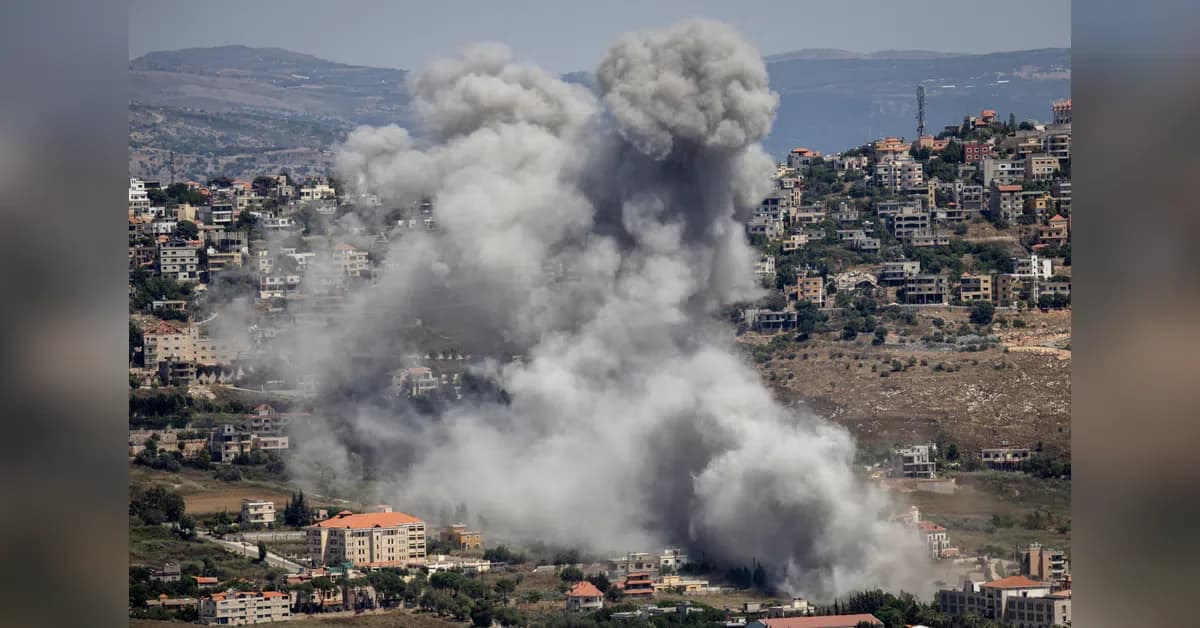
Prime Minister Benjamin Netanyahu announced Sunday that Israeli forces are approaching control of approximately 70% of the Gaza Strip, building on their current control of more than 60% of the territory. Speaking at the start of a cabinet meeting, Netanyahu confirmed that Israeli forces are expected to reach 70% control in the near future, reflecting the continued expansion of Israeli military operations across Palestinian territory in Gaza. According to WAFA, Netanyahu stated that Israeli forces are "pressing them (Hamas) from all sides" and will deal with the remnants once the 70% target is achieved. The premier emphasized that Israeli forces are fighting terrorism on all fronts, with the IDF, ISA, and Israel Police foiling hundreds of attacks every year, though unfortunately not all are prevented. However, National Security Minister Itamar Ben-Gvir had previously demanded that "Jewish settlement in the Gaza Strip" should be declared as one of the goals of the war, though Netanyahu reacted laconically, stating that Jewish settlement in the Gaza Strip was not currently one of the war's goals.
Israel currently controls an estimated 64% of Gaza's territory, according to military maps issued in March, representing a significant expansion from the 53% control that was originally agreed under the October U.S.-brokered truce. The Yellow Line demarcation that was meant to define Israeli control has been unilaterally moved deeper into Hamas-controlled territory by Israel, as reported by Reuters. According to WAFA, satellite imagery and data show continued advances by Israeli forces along the eastern border and the expansion of military buffer zones westward, particularly in the areas of Beit Lahia in the north, the Netzarim Corridor in central Gaza, and south of Khan Younis. The images also show ongoing construction of earthworks and military fortifications throughout areas under Israeli control, with activities beginning north of Rafah in southern Gaza and continuing through central Gaza refugee camps and northern towns.
Israel has significantly intensified its military operations in Gaza, with strikes killing more than 900 people since the truce, according to Gaza health officials, while Israel reports four soldiers killed by militants during the same period. The latest developments coincide with satellite imagery showing continued military advances and the expansion of buffer zones across Gaza. According to WAFA, Palestinian sources report that the offensive has resulted in the killing of 72,971 Palestinians and the injury of 173,128 others, with many victims still believed to be trapped beneath rubble or lying in areas inaccessible to rescue teams. The attacks target senior Hamas leaders who were involved in the October 2023 Hamas-led assault that set off the Gaza war, with Israel killing Hamas's armed wing chief on Tuesday, ten days after killing his predecessor.
Netanyahu described the territory Israel has seized in Gaza, Syria and Lebanon as "buffer zones" that can stave off potential militant attacks following the October 2023 Hamas-led assault. Palestinians view Israel's widening Gaza buffer zone as part of a strategy to permanently displace them, pointing to remarks from senior ministers, including Defense Chief Israel Katz, who have said they want to encourage "voluntary migration" from Gaza. According to WAFA, experts and observers based on the current pace of military operations estimate that Israeli forces may require approximately one month to complete plans aimed at extending their field control to nearly 70% of the Gaza Strip. The Israeli leader noted that Israeli forces are fighting terrorism on all fronts in Judea and Samaria and along the seam line. However, Israel's long-term policy regarding the Gaza Strip remains unclear, with the government and security cabinet never officially approving the 20-point peace plan presented by Trump in October 2025, though Israel gave partial agreements to specific steps.
The ongoing military campaign has created a worsening humanitarian catastrophe in Gaza, with widespread destruction of infrastructure, homes, and civilian facilities displacing the majority of Gaza's population. International organizations have repeatedly warned of the deteriorating situation, as reported by WAFA. The developments come amid Israel's ongoing military campaign in Gaza, which began on October 7, 2023, with the situation reflecting the ongoing tension between military operations and diplomatic efforts to achieve a lasting peace agreement. Palestinians report that "a person in Gaza has no safety at all" - "He could be hit in the street, he could be hit in the house, he could be hit in the hospital, he could be hit on his way to the market," said Abu Azam, a witness to Wednesday's Israeli strike.