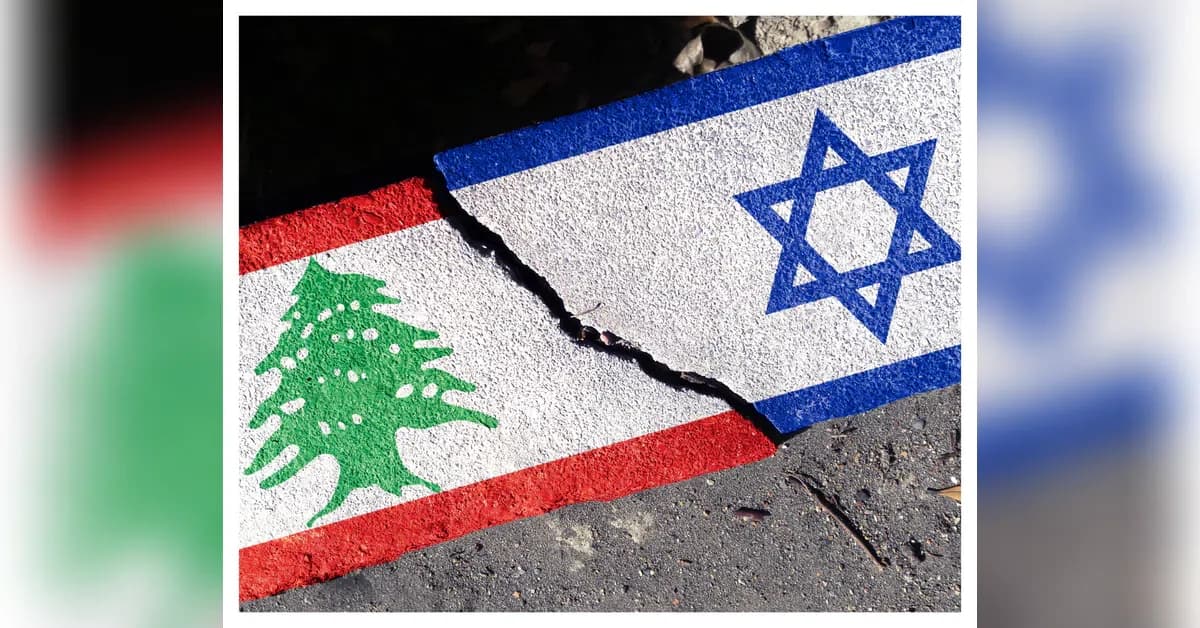
Iran's top diplomat has confirmed that the deal ending the war with the United States would require Israel to withdraw from Lebanon, raising questions about the still-unpublished agreement and whether disagreement over its terms could prolong conflict. Foreign Minister Abbas Araghchi told diplomats from other countries that Israel's continued occupation of southern Lebanon would violate the memorandum of understanding reached between the United States and Iran. As reported by Business Standard, 'The end of the war in Lebanon is an inseparable part of the complete end of the war,' Araghchi said, emphasizing that 'Without the withdrawal of Israeli forces from the territories they occupied during this war, the war has not fully come to an end.' Araghchi warned that further Israeli attacks on Lebanon 'will be considered by us a violation of the Memorandum of Understanding.' The United States has not said whether Lebanon was part of the final agreement, but Araghchi's description clashes with statements made by Israeli officials about the deal. Araghchi declared on Tuesday that as of Monday morning 'the war has officially ended on all fronts,' and confirmed that a new round of negotiations between Iran and the United States would begin this Friday in Switzerland.
Israeli Prime Minister Benjamin Netanyahu has delivered a defiant message to Israelis, suggesting he does not feel bound by the newly reached cease-fire agreement between the United States and Iran. In a Monday address, Netanyahu declared 'The struggle has not ended' and stated he has no intention of withdrawing his forces from neighboring Lebanon - a key demand of the Iranians during negotiations with the United States. As reported by Business Standard, Netanyahu said he will remain in the security zones as long as required in order to defend our country. The Israeli leader is under pressure from critics who say he has subordinated their country's security interests to the whims and will of President Trump, though Netanyahu has tried to present himself as both close to the American president and independent. Netanyahu on Monday described the agreement as Trump's decision, noting Israel had its own priorities and would remain in a buffer zone in Lebanon 'as long as necessary.'
Iran has reiterated that Lebanon remains an integral component of the understanding reached to end the ongoing conflict in the region, with Foreign Ministry spokesperson Esmail Baghaei asserting that Tehran will closely monitor developments and use all available tools to ensure that commitments made by other parties are honoured. According to the Islamic Republic of Iran Broadcasting (IRIB), Baghaei said on Monday that Iran's position on Lebanon has remained consistent throughout the negotiations. "Lebanon and the end of the war in Lebanon is an integral part of the understanding of ending the war. We have shown in the past that we are determined in this regard. In this regard, we have proven in practice that we are serious," Baghaei stated. He added that Iran would remain vigilant regarding future developments linked to the agreement, stating 'In the future, we will definitely monitor developments closely and, wherever necessary, we will use all our tools to ensure that the obligations of the other parties are fulfilled.'
With the text of the agreement reached this week still not publicly released, confusion and conflicting accounts remain over just what was agreed to. According to Business Standard, Israelis across the political spectrum have made their dismay at the deal clear, with Netanyahu appearing to send them a message on Monday. The Iranians demanded that Israel withdraw its forces from Lebanon, though the Israelis were not party to the talks. Israel and Lebanon separately held talks in Washington about a potential peace deal, but it is contingent on Hezbollah, which is distinct from the Lebanese government, not firing on Israel. Hezbollah has rejected those direct talks, which it is not involved in. Netanyahu framed the war against Iran as a victory for Israel, stating that if Israel and the United States had not acted, 'Iran would already have atomic bombs' and the Israelis would be in 'terrible danger of mass death.' The discrepancy underscored how much of the agreement remains apparently unresolved ahead of a ceremonial signing on Friday in Geneva.
According to Associated Press reports, Israel plans to maintain its presence indefinitely in lands it holds in Lebanon, as well as Syria and the Gaza Strip. Over the past two and a half years, Israel has taken control of areas in Gaza, Lebanon, and Syria amounting to 1,000 square kilometres of territory. This area represents a space that is slightly smaller than New York City. The continued hostilities with the Iranian-backed militia Hezbollah in Lebanon, where Israel bombed Beirut's southern suburbs Sunday, nearly derailed the negotiations. Israel joined the U.S. in launching the war on February 28, 2026, making the territorial dispute a complex regional conflict. Over more than three months of Israel-Hezbollah clashes, more than 3,700 Lebanese and at least 30 Israelis have been killed, according to authorities in both countries.
The deal would potentially allow desperately needed oil and natural gas to reach the global market through the critical waterway, according to Associated Press. France's Foreign Minister Jean-Noel Barrot said dozens of nations like France and the United Kingdom could send ships to protect freedom of navigation in the Strait of Hormuz. EU Foreign Policy Chief Kaja Kallas pledged support for further negotiations over outstanding issues like Iran's nuclear program, saying "fingers crossed that they will be also initialized on Friday, because everybody needs the Strait of Hormuz to be open." However, some ministers expressed skepticism, with Luxembourg's Xavier Bettel noting it's a long time till Friday. U.K. Prime Minister Keir Starmer welcomed the breakthrough and said it was vital that all parties in the region seize the opportunity to restore freedom of navigation. The unpublished agreement provides for the 'immediate' opening of the strait and lifting of the blockade, a senior US official said, along with the possibility of releasing Iran's frozen funds, easing sanctions and creating a $300 billion fund to rebuild Iran - all tied to Iran meeting benchmarks.