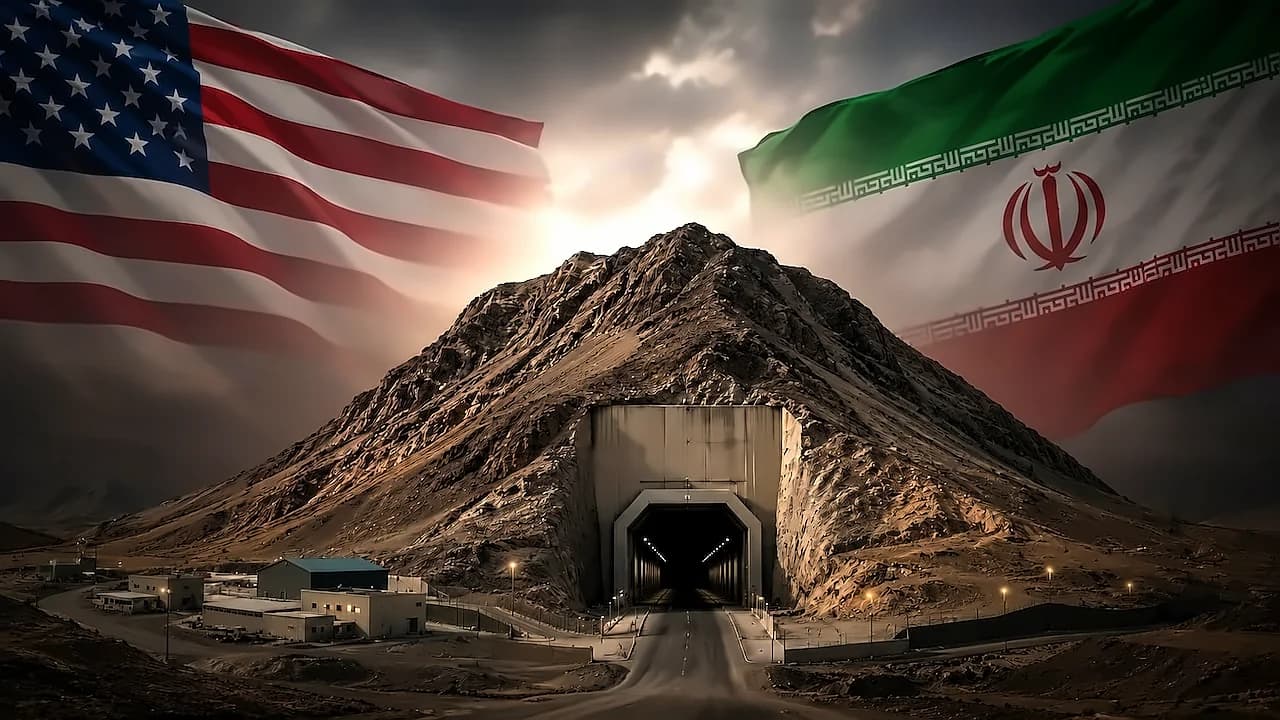
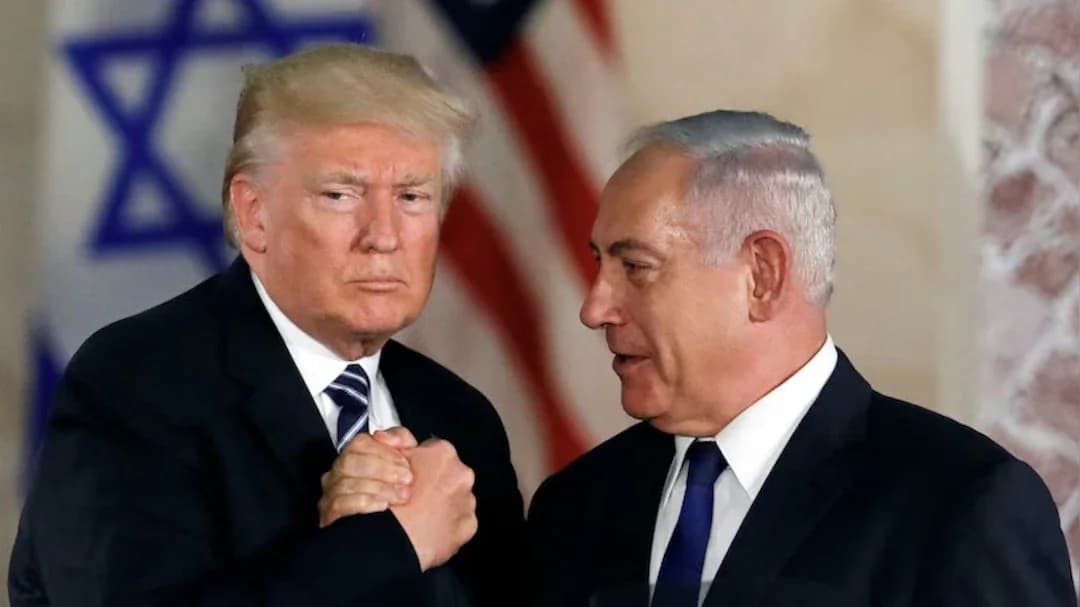
President Trump has strongly disputed reports that Iran has halted negotiations, claiming 'The conversations between us have been going on continuously, including four days ago, three days ago, two days ago, one day ago and today' in a social media post. Trump called reports of a cessation in talks 'false and erroneous' and reiterated his demand to Iran: 'It's time, one way or another, for you to make a Deal.' According to The Associated Press, a regional official involved in the mediation confirmed that Iran had not communicated on Tuesday after saying that a ceasefire needed to be enforced in Lebanon for negotiations to continue. U.S. Secretary of State Marco Rubio did not address the reported cutoff in communications as he testified at a congressional hearing, instead sounding an optimistic note about the nuclear dimension of the negotiations while cautioning that there's no guarantee of reaching 'a deal that's acceptable.'
The U.S. military has intensified its operations against Iranian vessels attempting to violate the American blockade, with the Botswana-flagged merchant vessel M/T Lexie becoming the seventh ship stopped by military action. According to U.S. Central Command, the vessel was stopped by an aircraft firing a Hellfire missile into its engine room after the crew ignored repeated warnings over 24 hours. Additionally, the U.S. military reported that Iranian missiles fired at Kuwait and Bahrain failed or were shot down, with U.S. and Bahrain forces intercepting the missiles aimed at Bahrain. The U.S. launched strikes on an Iranian military ground control station on Qeshm Island in response to the failed attacks. Iran's paramilitary Revolutionary Guard acknowledged that it targeted the headquarters of the 5th Fleet and U.S. military facilities, but did not name Kuwait. Iran's Foreign Ministry condemned the U.S. strikes on Qeshm Island, where it said a telecommunications tower was struck, and called them 'acts of aggression' that violated the ceasefire.
Lebanon has emerged as a key sticking point in Trump's efforts to sign a ceasefire deal with Iran, with Israeli forces moving deeper into Lebanon than at any time in over a quarter of a century while Hezbollah has launched rocket and drone attacks. The declared ceasefire in Lebanon is officially in place, but no side has formally withdrawn or declared the ceasefire over, with attacks continuing. Tehran insists that any larger potential truce must also quell the fighting in Lebanon, while Israeli Prime Minister Benjamin Netanyahu wants to keep the issues separate and is under heavy domestic pressure to strike Hezbollah as he prepares for new elections this fall. According to The Associated Press, a person familiar with the situation said Netanyahu and Trump had a 'tense' conversation earlier this week, with the person not elaborating on the details of the call. The fighting has exposed a rift between close allies Israel and the U.S., with the U.S. pushing for restraint and Israel seeking to step up military pressure on Hezbollah.
In mid-February, shortly before President Trump launched the war on Iran, Iran's Islamic Revolutionary Guards Corps conducted live-fire drills in coastal waters with the official name 'Smart Control of the Strait of Hormuz'. According to reports from Business Standard, this exercise served as a clear warning to the Trump administration, which for reasons still unclear, went largely unheeded. Within days of the war's start, Iran's military exerted control over the strait, menacing commercial tankers with boats, missiles and drones, causing shipping to halt and energy prices to soar. The exercise highlighted Tehran's ability to influence one of the most strategically important waterways on the planet, yet the significance of these warnings appears to have been underestimated in Washington.
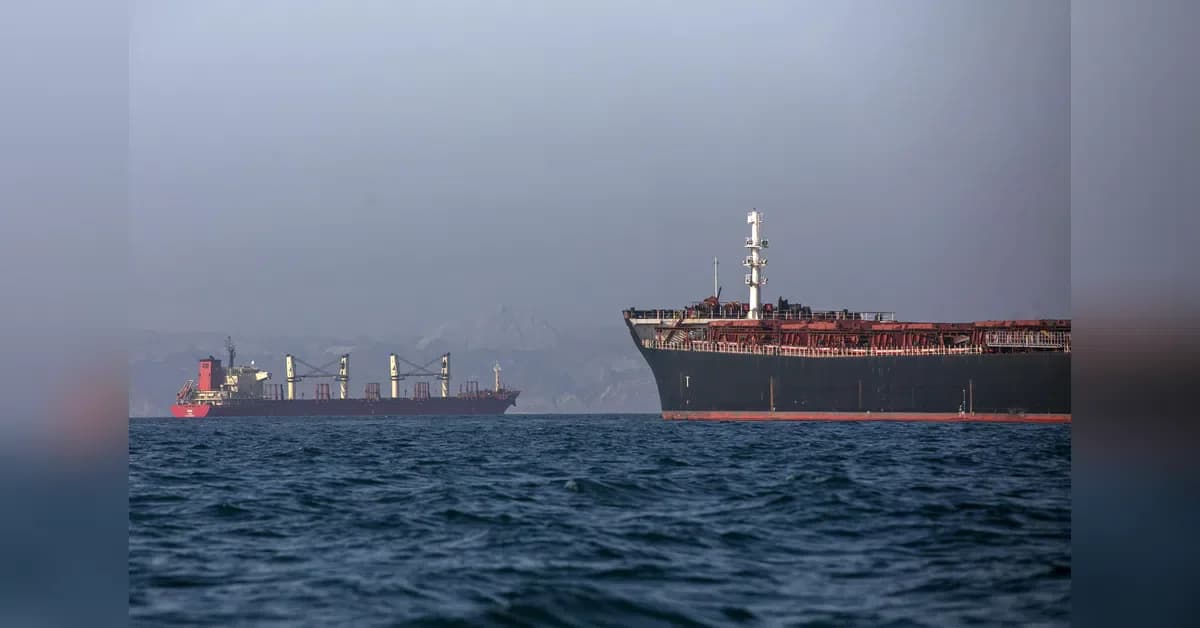
Trump officials believed Iran would not close the strait due to economic concerns, with Secretary of State Marco Rubio telling Fox Business that 'It's economic suicide for them if they do it'. However, as reported by Business Standard, Iran sidestepped this problem by using fewer mines than expected and relying on missiles and drones to terrorize shipping. Ships carrying Iranian oil continued traversing the strait for weeks until Trump imposed a counter-blockade in April. Most analysts had assumed Iran would make the waterway impassable by laying dozens or hundreds of mines, but Iran instead used its relatively new arsenal of cheap drones to attack and menace ships. This made it tough for America to fight back and gave Iran the ability to keep pressure on the other side, while still exporting their own oil.
Trump officials appeared to hope that American allies would join efforts to reopen the strait, with Rubio predicting that 'The whole world would come against them if they did that'. According to Business Standard, no U.S. allies beyond the immediate region have volunteered to join what many consider Trump's reckless war of choice. A coalition led by Britain and France says it is willing to help police the strait only after the United States and Iran reach a formal agreement to reopen it. Trump announced a limited 'humanitarian' operation called Project Freedom in May but abandoned it after just one day after Saudi Arabia protested. The assumption that American allies would help secure the waterway if Iran attempted to interfere with shipping did not fully match reality. A senior Emirati diplomat called for 'a firm, unified, and cohesive Gulf position' against Iran following the attacks, with Anwar Gargash writing on the X platform that 'This aggression does not target a specific state, but rather all of us.'