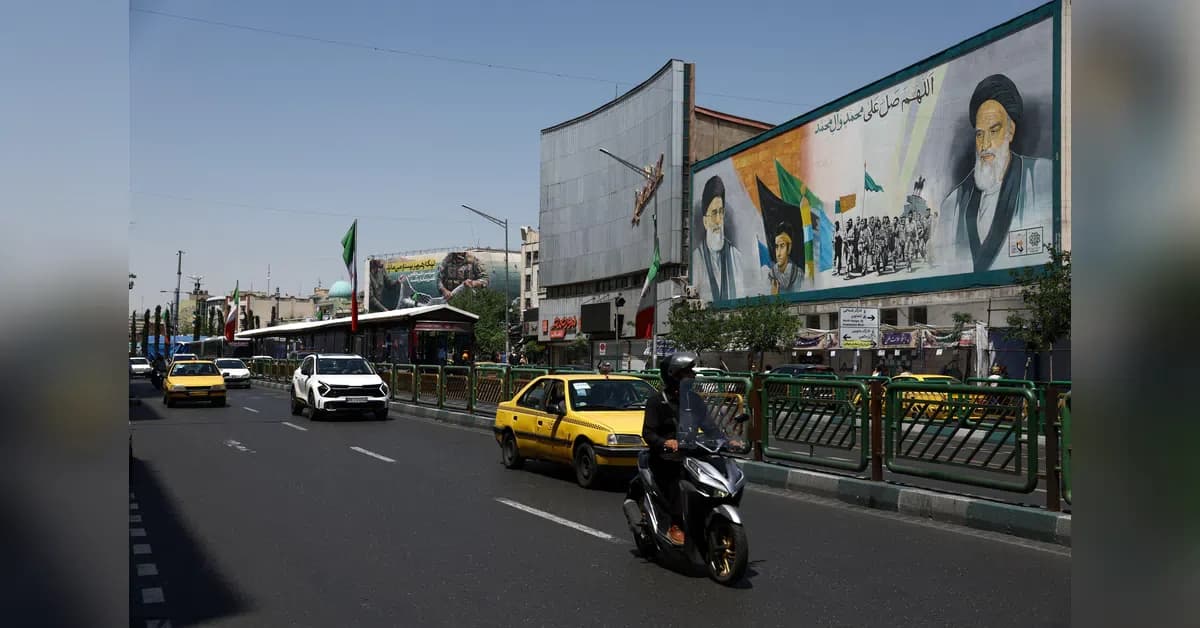
Iran is reviewing a proposed agreement with the US to halt their war, Iranian media reported on Tuesday, after US President Donald Trump said talks to reach a deal were continuing. According to Business Standard, Trump said on Monday that negotiations with Iran were continuing and there would be a deal over the next week to extend a ceasefire agreed in early April and reopen the Strait of Hormuz. The latest developments come as more than three months after the US and Israel launched strikes against Iran, the conflict has hardened into a stalemate while efforts to negotiate an interim deal have proved inconclusive, leaving the Strait of Hormuz largely shut. Iran has not yet responded to a proposed final text of the temporary deal, and was taking a 'stern' approach given what it sees as a history of US non-compliance and longstanding mistrust, as cited by Mehr News Agency.
Trump revealed significant military developments that have strengthened the US position, stating that 'We're close to a very good deal. If we can make it, good. Otherwise we just start up with the Department of War as we call it.' The president claimed 'We're close to a very good deal. If we can make it, good. Otherwise we just start up with the Department of War as we call it.' Trump also addressed nuclear concerns, stating that 'I said, well what happens if you buy a nuclear weapon. So now it says we will not develop or in any way purchase a military weapon. That's a big difference.' According to Axios, the MoU includes a commitment from Iran not to pursue a nuclear weapon, but no specific concessions beyond that. A senior administration official noted 'It's more specifics about how the US gets the material and the timing.' The president's military claims include assertions that 'We're close to a very good deal. If we can make it, good. Otherwise we just start up with the Department of War as we call it.'
In the wider war, Iran is pushing for a limited interim agreement as it tries to ease mounting economic pressure while avoiding major concessions on its nuclear programme, according to Iranian sources. As part of any deal, Tehran is seeking an end to hostilities across all fronts including Lebanon, access to billions of dollars in oil revenues, waivers on crude exports, a lifting of a US blockade on its ports, and continued leverage over the Strait of Hormuz. According to Business Standard, Trump is under pressure to reopen the strait and curb US fuel prices while not making concessions to Iran. Iran's elite Islamic Revolutionary Guard Corps said on Tuesday that 24 vessels had transited the strait in the past 24 hours, after obtaining permission from the Guard's navy. Iran threatened on Monday to expand its blockade to the Bab El Mandeb Strait, another chokepoint at the mouth of the Red Sea, if Israel resumed strikes on Beirut.
Oil prices fell more than 1% on Tuesday, paring the previous day's sharp gains following the latest developments in US-Iran negotiations. According to Business Standard, a senior International Energy Agency official warned that global oil inventories could hit historically low levels. The more actively traded August Brent contract also slipped 0.50% to $92.24 per barrel, as reported by Moneycontrol. American crude dropped 0.4% to about $88.60 a barrel early Friday following reports about the deal, with Asian equities poised to advance. The price movements reflect trader reactions to shifting signals around a possible de-escalation in the Strait of Hormuz crisis, with markets showing high volatility in recent sessions. Latest data shows West Texas Intermediate crude oil futures were last up 0.55% Thursday, a touch above $89 a barrel, while Brent futures traded below $94 a barrel, as reported by Axios.
The effective closure of the Hormuz Strait since the start of the war in late February has strangled about a fifth of the world's oil and liquefied natural gas supplies, leading to a surge in prices and boosting inflation. US forces shot down four Iranian drones fired at a commercial ship and hit a launch unit near the Strait of Hormuz, according to a US official, who said the strikes were defensive and the ceasefire remains intact. Iran targeted the US base from which the assault came, state-run Press TV reported. The Islamic Revolutionary Guard Corps said 24 commercial ships and oil tankers have transited the waterway in the past 24 hours after obtaining permission, according to the semi-official Tasnim news agency. Just two ships were observed transiting into the Persian Gulf, while a Chinese fuel tanker apparently paused midway on its voyage out, according to ship-tracking data compiled by Bloomberg. The US Treasury Department said it took action against Iran's Persian Gulf Strait Authority, accusing it of launching a new attempt 'to monetize its campaign of state-sponsored terror by extorting vessels transiting the Strait of Hormuz.'
While oil prices declined on ceasefire hopes, central banks are expected to maintain hawkish stances despite the potential deal, as reported by Investing.com. Warren's energy analysis suggests oil prices might not have much further to fall, with the market down by upwards of 1.6 billion barrels when the crisis is resolved, requiring strategic reserve replenishment and production facility repairs. The Bank of England Governor has warned that gas markets look 'too optimistic', with Europe facing increased competition for LNG flows from Asia. Inflation swaps are increasing by 30bp for every month the Strait stays closed, creating persistent macro impacts that central banks must address. A 25 basis point ECB rate hike in June is virtually a done deal to demonstrate credibility, while the Fed is expected to ultimately cut rates again, maybe as soon as December, reflecting different regional economic conditions and energy price outlooks.
Prices were down more than 8% for the week, with Brent hitting a low of $87.11 after touching a high of $109.47 last week, reflecting sharp volatility driven by conflicting signals over a potential end to the Iran war and prospects of reopening the strategic Strait of Hormuz. The dramatic price swings highlight the market's sensitivity to developments in the Middle East conflict and its potential impact on global oil flows, with markets showing continued volatility amid mixed signals from diplomatic talks. The latest price movements show West Texas Intermediate crude oil futures were last up 0.55% Thursday, a touch above $89 a barrel, while Brent futures traded below $94 a barrel, as reported by Axios.
While oil prices declined on ceasefire hopes, new economic data released Thursday pointed to persistent price pressures that continue to weigh on markets. The personal consumption expenditures price index, the Fed's preferred inflation gauge, rose 3.8% in April from the year-earlier period, as reported by Axios. According to FWDBonds chief economist Chris Rupkey, 'If Washington economic officials were looking for evidence to back up claims there is no cost-of-living crisis in America, they will have to look elsewhere because PCE consumer inflation is still heating up in April as the Iran war pushes energy costs sharply higher.' The inflation data, which matched expectations, has some market participants concerned about the continued upward pressure on prices. Meanwhile, Treasury yields edged lower Thursday after the report that U.S. and Iranian negotiators agreed to extend the ceasefire, with the 10-year U.S. Treasury note yield dipping almost 3 basis points to 4.453%, the 2-year Treasury note yield falling nearly 1 basis point to 4.025%, and the 30-year Treasury bond yield dropping 3 basis points to 4.98%, as reported by Axios.
While oil prices declined, gold markets showed contrasting strength as investors evaluated geopolitical developments alongside persistent inflation concerns and expectations around US interest rates. Spot gold rose 0.4% to $4,512.79 per ounce as of 0113 GMT and was marginally higher for the week, according to Moneycontrol. US gold futures also gained 0.2% to $4,543.10 per ounce, benefiting from safe-haven demand amid the ongoing US-Iran tensions. The precious metal's performance reflects investor concerns about global economic stability and potential monetary policy shifts.