US President Donald Trump claimed Iran has 'agreed to just about everything we need' in ongoing negotiations to finalise a lasting accord between the two countries, in an interview with CNBC's Joe Kernen at the Oval Office. As reported by CNBC, Trump asserted that Iran had been 'totally defeated' militarily, though it retained 'some missiles left' that the US 'could wipe out too'. He added that Washington had struck Iran 'three nights in a row' after Tehran targeted a ship with a drone, following an earlier round of strikes 'two nights in a row'. On the US naval posture in the Gulf, Trump described the measure as 'essentially not a blockade,' calling it 'a wall of steel' that stopped Iranian oil shipments and pushed the country's inflation to 300%.
The United States has issued a stern warning to Iran, stating it will reject any changes to the current status quo in the Strait of Hormuz, with such moves constituting a violation of the agreement between the two countries. As reported by Al Arabiya, Washington considers Iran's attitude and approach towards the situation in Hormuz to be the first test of Tehran's commitment to the deal, with any progress on unfreezing Iranian funds conditional on Iran fully complying with the agreement's terms. The warning comes after the latest round of indirect talks in Doha, where Iranian Deputy Foreign Minister Kazem Gharibabadi announced the conclusion of discussions on implementing the memorandum of understanding (MoU) that halted the US-Iran war. Both sides agreed to establish a communication channel to report and record violations of the agreement, with the development coming even as Qatar said indirect talks between the United States and Iranian delegations in Doha have concluded with 'positive progress' on the Islamabad Memorandum of Understanding.
US Vice President JD Vance confirmed that US-Iran negotiations in Doha are progressing positively, telling CNN on Wednesday that 'talks are going well' despite the early stages of the diplomatic process. As reported by CNN, Vance explained that 'technical negotiators are sitting down with the Iranians, with the Qataris, and with others in Doha, talking about some of the details here.' Vance emphasized that the US is focused on the nuclear issue, stating 'We're worried about the nuclear issue. We're going to start talking about that, so right now the talks are going well.' Speaking at Naval Air Station Oceana in Virginia Beach, Vance thanked US military personnel and said the ongoing negotiations were taking place 'not out of weakness' but 'out of strength.' He contrasted the current diplomatic approach with previous military interventions, arguing that President Trump would only authorize military action with clearly defined objectives.
The talks in Doha are structured as sessions between chief negotiators and specialists, with discussions beginning on Tuesday night and continuing on Wednesday, according to a source with direct knowledge of the talks. As reported by Business Standard, the talks are based on a 14-point interim accord signed last month that was meant to halt the war that began with U.S.-Israeli strikes on Iran in February and reopen the Strait of Hormuz. The current round of discussions focused specifically on two key priorities: management of the strait and the release of $6 billion in Iranian frozen assets. Iran's stated priority is agreeing on management of the strait and the release of frozen assets, while the stated priority of the US is to ensure the free flow of traffic through the strait. The next meeting will take place after funeral processions for Iran's late Supreme Leader Ayatollah Ali Khamenei, who is due to be buried on July 9, according to Qatar's Foreign Ministry.
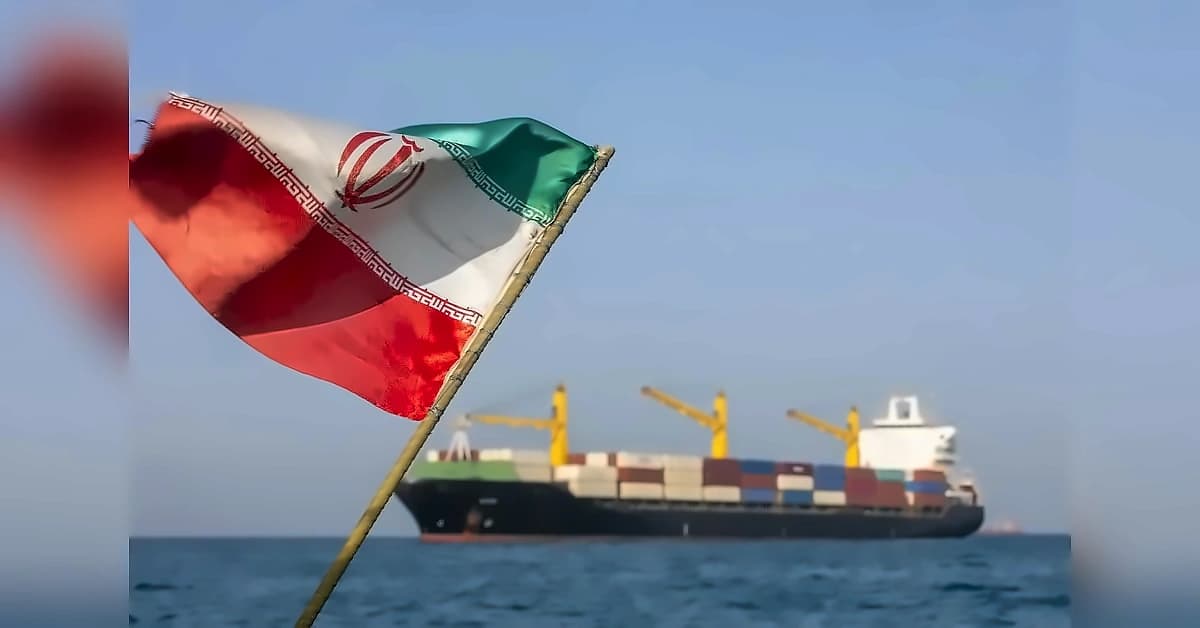
The escalation centers around the Strait of Hormuz, a critical waterway that sees about one-fifth of the world's oil traffic, where Iranian Foreign Minister Abbas Araghchi reiterated Sunday Tehran's position that it must control the Strait. As reported by CNN, there's a dispute between the US and its allies and Iran about operating multiple lanes for ships to move through the Strait. Iran is determined to win international recognition of its control over the strait and its ability to levy fees on ships entering or leaving the Gulf even if it has to do so by force, according to two senior Iranian sources. Iran has repeatedly said it will assess tolls on shipping starting in mid-August, after a toll-free period specified by the initial agreement expires. Iran's state media said on Wednesday a foreign container ship had run aground in the Strait of Hormuz after entering shallow waters outside the shipping route designated by Iranian authorities. Traffic through the strait has partially resumed but remains patchy, unpredictable, and not fully transparent, said Vandana Hari, founder of oil market analysis provider Vanda Insights. A senior source told Al Arabiya that a new Omani proposal on the strait remains under discussion, with negotiating delegations expected to return to their capitals for consultations.
Iranian Deputy Foreign Minister Kazem Gharibabadi announced the conclusion of the latest round of talks in Doha on implementing the memorandum of understanding (MoU) that halted the US-Iran war, with Iran's state-run IRNA news agency reporting that participants had agreed that 'a communication channel would be established by Thursday' to report and record violations of the agreement. A trilateral meeting was also held between Iran, Qatar and Pakistan on the sidelines of the talks to review the MoU's implementation, with discussions covering both Lebanon and the Strait of Hormuz, according to Al Arabiya sources. Iran accused Israel of undermining the agreement by keeping its forces in Lebanon, while Tehran maintained that the Strait of Hormuz falls under Iranian and Omani sovereignty. Iran has requested that five provisions of the MoU be implemented before other issues are addressed, as reported by Al Arabiya sources. Iranian Foreign Ministry spokesperson Esmaeil Baghaei confirmed that the United States has issued the necessary licenses tied to Clause 10, which covers oil sales, and that Iran is following up on implementing them. He also said implementation of Clause 11, related to the release of Iran's frozen assets, is being pursued.
US President Donald Trump expressed optimism about the diplomatic process, claiming that 'the denuclearisation of Iran is going well' as he departed for North Dakota to visit the Theodore Roosevelt Presidential Library. As reported by CNN, Trump said 'We hit them very hard last week. They're fine. We're going to get it. It's the denuclearisation of Iran.' Trump reiterated Washington's longstanding position, stating 'Iran cannot have a nuclear weapon. Otherwise, all of this stuff that we look at, all of these things that we do, the country has never had activity like it's got right now.' Trump's remarks come even as Iranian officials have not participated in direct high-level talks with the United States in Doha, Qatar, with the absence of senior Iranian officials from direct negotiations. The President's assessment suggests progress despite the technical nature of current discussions and the ongoing disputes over the Strait of Hormuz control.