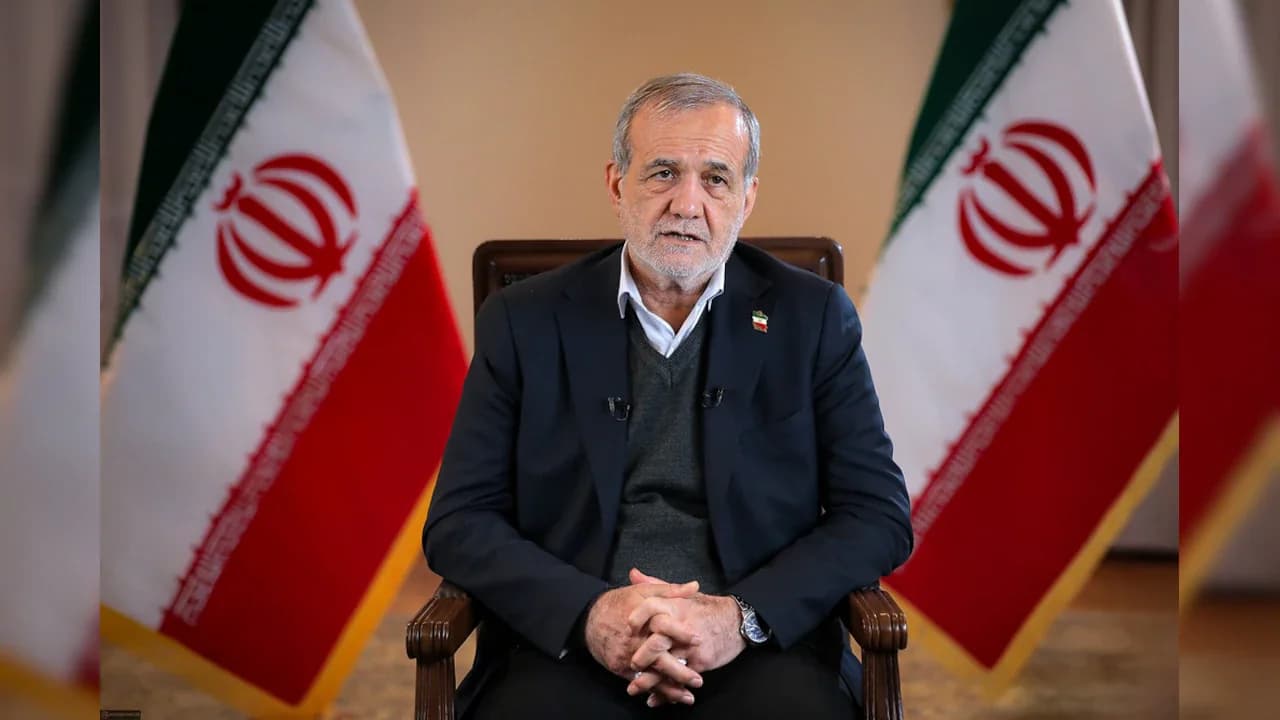
President Donald Trump has discarded Iran's peace proposal plan and stated that the ceasefire stands on 'life support', marking a significant escalation in tensions. Speaking on Monday, Trump called the Iranian proposal 'a piece of garbage' and unacceptable, stating 'After reading that piece of garbage they sent us, I didn't even finish reading it. They (Iran) are on life support. The ceasefire is on massive life support.' Trump reiterated his claims that Iran has been defeated militarily, saying 'whatever little Iran had built up in the period of ceasefire, the US would 'knock that out in about a day' and that 'the Iranian leadership has been killed at several levels'. The remarks come as Iranian parliament speaker Mohammad-Bagher Ghalibaf said there is no alternative but to accept the 14-point proposal, calling any other approach inconclusive and a failure, while stressing that delays would result in American taxpayers bearing the brunt.
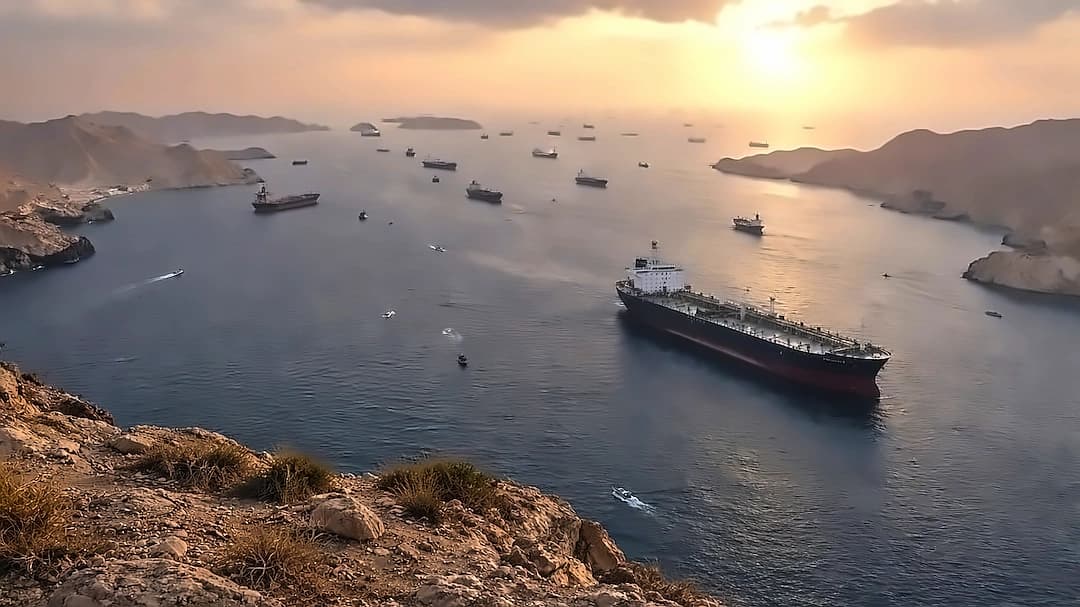
Iran has widened its claims over the Strait of Hormuz operational zone to a 200-300 mile crescent from Jask to Siri Island, significantly expanding its legal control over the critical waterway. According to latest reports, the IRGC has redefined the Strait of Hormuz operational zone as this expanded area, asserting greater sovereignty over the chokepoint that carries one-fifth of global oil. An army spokesperson has signalled that supervision of the waterway could generate revenue amounting to twice Iran's oil income, while strengthening its foreign policy leverage. Iranian Deputy Foreign Minister Kazem Gharibabadi told ANI that the Strait of Hormuz situation will be better than before once peace is established, stating 'There will be transparency. There will be no discrepancy. We will not go beyond international law. If peace is established, it will have more safety and security than before.'
A Chinese supertanker carrying 2 million barrels of Iraqi crude was attempting to sail through the Strait of Hormuz on Wednesday, according to ship-tracking data, marking the third known passage by a Chinese oil tanker through the channel since the U.S. and Israel launched strikes on Iran on February 28. This development comes as Iran has appeared to firm up its control over the Strait of Hormuz in recent days, cutting deals with Iraq and Pakistan to ship oil and liquefied natural gas from the region. Iranian officials have signalled they see that control as a long-term strategic goal, with other countries exploring shipping arrangements similar to Tehran's deals with Iraq and Pakistan, potentially entrenching Tehran's control of the waterway. The war impacts global energy markets, with the International Energy Agency saying global oil supply will fall by around 3.9 million barrels per day across 2026 due to disruptions caused by the Iran war.
Iranian Deputy Foreign Minister Kazem Gharibabadi has accused the United States of 'not doing serious diplomacy' in response to Trump's rejection of Iran's peace proposal. Gharibabadi maintained that 'We have not attacked neighbouring countries. They handed territories to the US. Thousands of times, attacks are launched on Iran from there. We have documented each attack in 500 pages for the UN.' He emphasized that 'We don't have sophisticated military equipment. The US and Israel are defeated only by Iranian missiles.' An Iranian commander says recent military drills around the country's capital show the Islamic Republic's forces are at 'high level of comprehensive readiness' to confront a new attack by the US or Israel, with Brigadier General Hassan Hassanzadeh noting the five-day drills demonstrated troops' ability 'to confront any movement by the hostile enemy, the American and Zionist enemies, at any place and at any time with the shortest possible response time.'
The Iran war has cost US taxpayers $29 billion so far, acting Pentagon comptroller Jules Hurst told lawmakers on Tuesday, with Defense Secretary Pete Hegseth having previously put a $25 billion price tag on it. The conflict has caused the price of jet fuel to more than double in some markets since late February, with the European Union's energy commissioner warning that while there is no immediate threat to jet fuel supplies, the possibility of a longer-term shortage cannot be ruled out. Brent crude futures edged up slightly to around $108 per barrel, extending a three-day rally driven by the Hormuz deadlock. Countries are tapping into oil inventories and strategic reserves at a 'record pace' due to the 'unprecedented' supply disruptions caused by the Middle East war, the International Energy Agency said Wednesday, with global stocks drawn down by a further 117 million barrels in April after a 129-million-barrel drawdown in March.
Chinese Foreign Minister Wang Yi spoke Wednesday on the phone with Pakistani counterpart Foreign Minister Mohammad Ishaq Dar and urged Pakistan to 'maintain confidence' and 'step up mediation efforts' between the US and Iran. According to a Chinese Foreign Ministry spokesperson, Wang commended Pakistan for facilitating U.S.-Iran talks and helping extend the temporary ceasefire, expressing hope that Pakistan will maintain confidence, step up mediation efforts and contribute to properly resolving the issue of opening the Strait of Hormuz and the early restoration of regional peace. Gharibabadi welcomed Pakistan's mediation role, noting that 'Egypt, Qatar, and Oman mediated. A mediator is only facilitating, not negotiating. Pakistan came with an initiative, and we welcomed it.' He added that 'India has always supported peace. They are in favour of peace. Whatever role India plays and comes with any initiative, we will welcome.'
The Brics foreign ministers' meeting in New Delhi is expected to address America's unilateral coercive measures and their effects on regional development. According to Times Now, Gharibabadi stated that 'We are in favour of having a Brics declaration. We want the Brics hosted by India to be successful. We don't want to give the message that Brics is divided.' Russian Foreign Minister Sergey Lavrov pledged that agreements on energy supplies to India would be fulfilled despite unfair external competition, emphasizing that 'Cooperation on the construction of new power units for this nuclear plant is continuing.' The Kudankulam Nuclear Power Plant remains a flagship project meeting significant shares of India's energy needs.