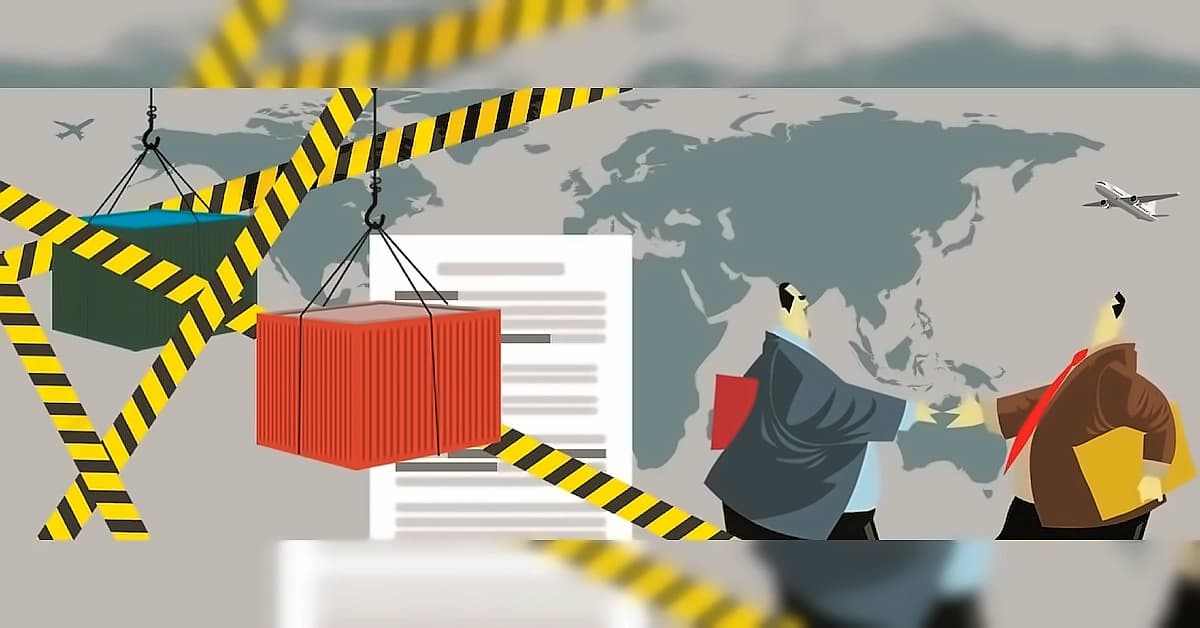
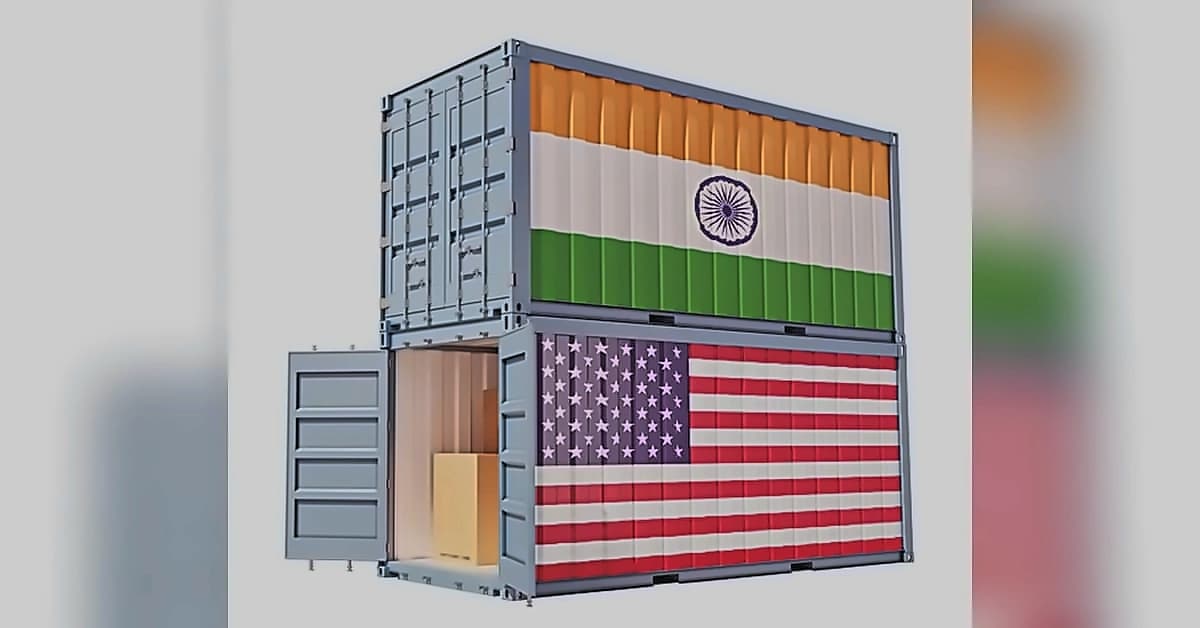
Despite recent tariff relief measures, India-US trade relations remain strained with India's exports to the US increasing by 11% to $50.8 billion in the first quarter of the year ending September, while imports from the US rose at a higher rate of 26% to $32.3 billion. According to recent reports, India's aim in trade talks has become more modest, now seeking lower US tariffs than those applied to Bangladesh, Vietnam and Cambodia. The relationship faces additional pressure from five Indian IT companies being suspended from a green-card sponsorship programme in October, which JD Vance described as foreign indentured servants of H-1B workers, affecting Indians who receive nearly 70% of H-1B visas. Commerce Secretary Howard Lutnick previously stated that an earlier deal had been scrapped as a result of "Modi not calling" Trump.
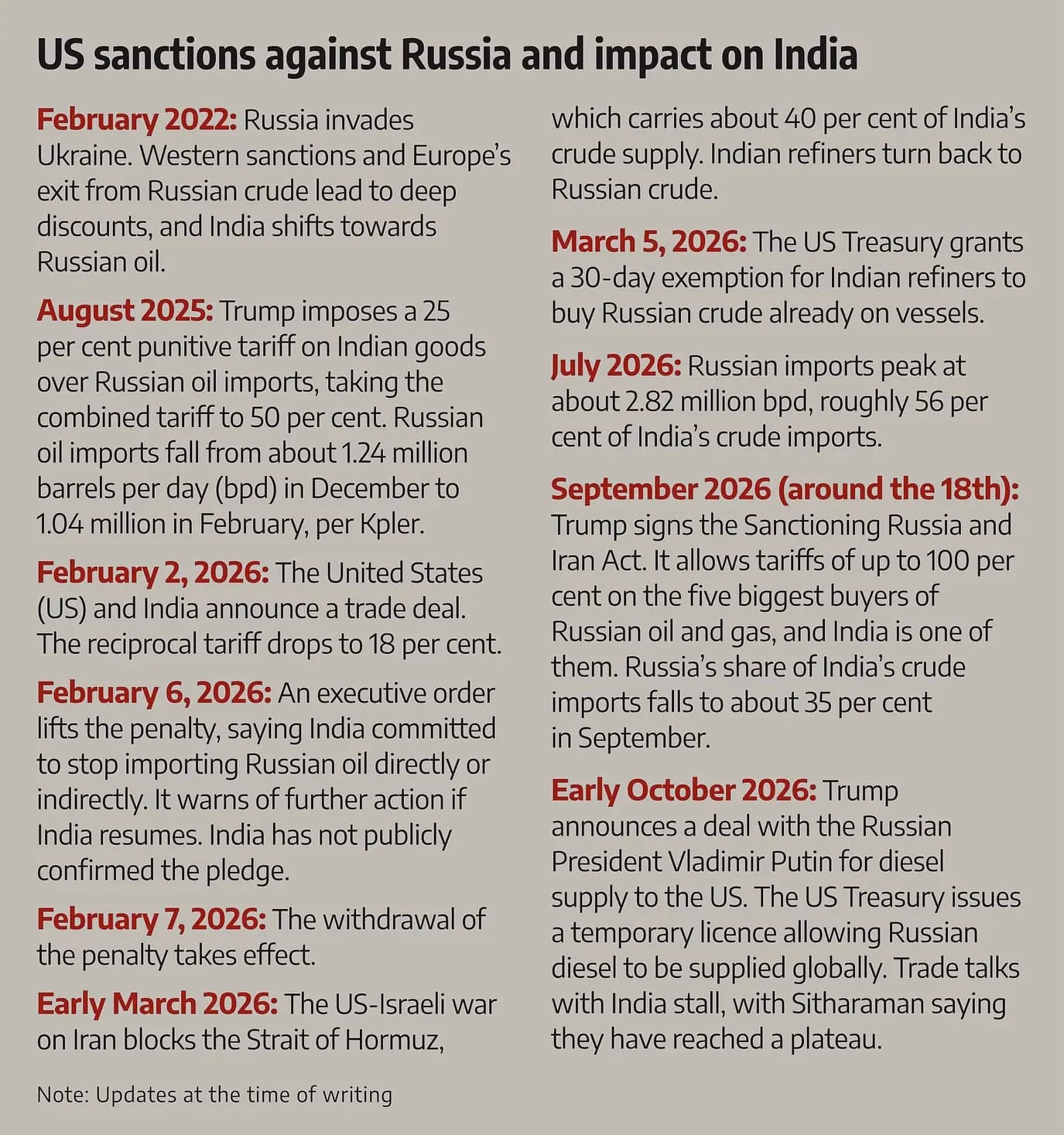
In early October, Trump announced a deal with Russian President Vladimir Putin for more than 300,000 tonnes of diesel fuel to be supplied to the American market, with millions more to follow. As reported by Business Standard, the US Treasury issued a temporary licence allowing Russian diesel to be supplied to the world within hours of the announcement. US President Donald Trump signed an executive order on October 16 waiving tariffs under the Sanctioning Russia and Iran Act, just two days before the 30-day deadline for implementing the 100% tariff on goods from the five biggest Russian oil buyers. The waivers remain in force until the president or secretary of state decides further action is appropriate, with the US Trade Representative monitoring which countries buy Russian crude oil.
India has been purchasing discounted Russian crude for four years and still managed to maintain its partnership with the US largely intact. According to Business Standard, India's oil imports from Russia dropped from 1.24 million barrels per day in December to 1.04 million in February, and further to 1.9 million by the end of March. In July, imports reached a peak of 2.82 million barrels per day, with Russian crude comprising roughly 56% of India's crude imports which fell to about 35% in September after the new law came into effect. The 100% tariff ceiling on goods from the five biggest buyers of Russian oil and gas, with India being one of them, has created significant market dynamics for Indian refiners.
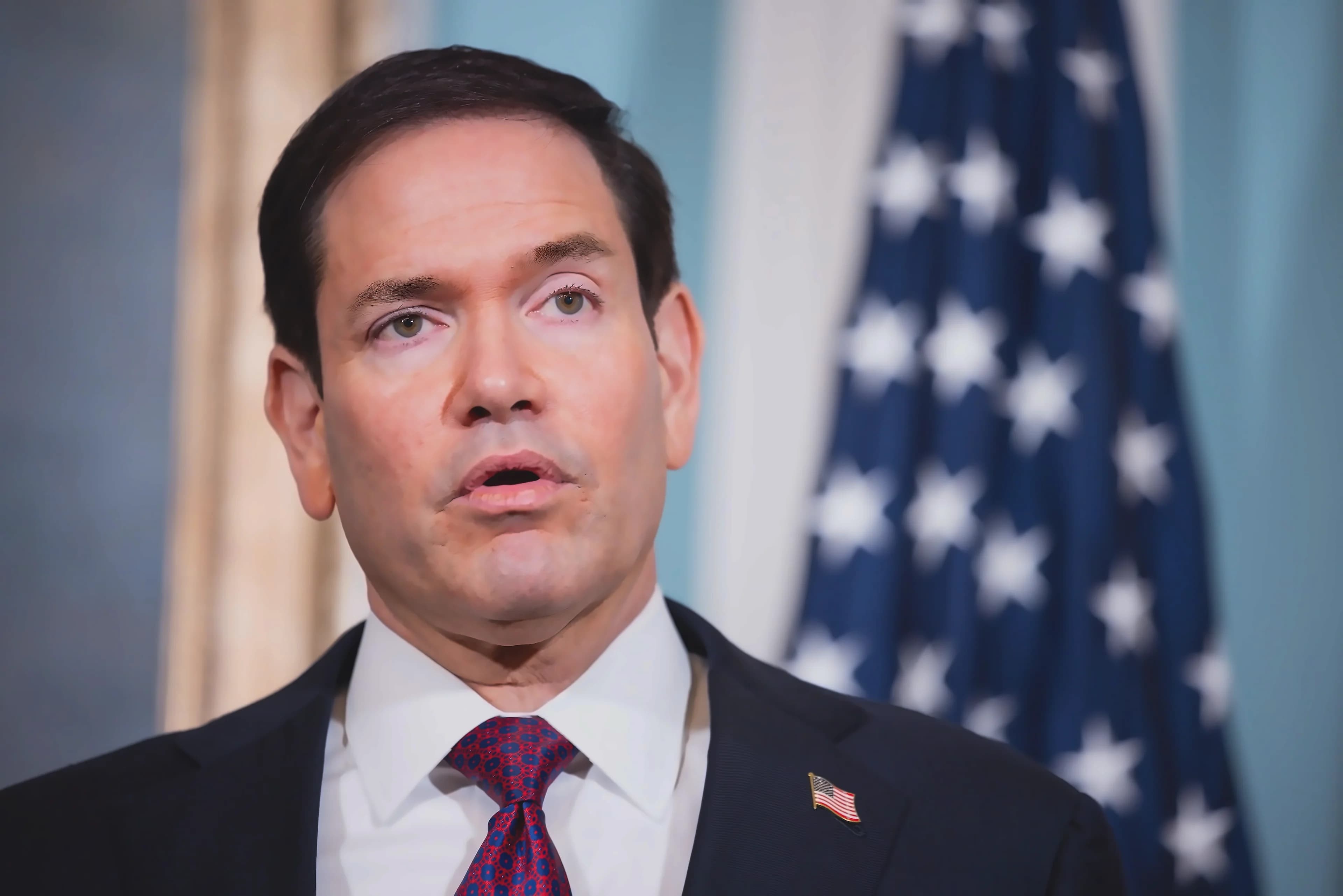
Former US State Department sanctions coordinator Daniel Fried told Business Standard that India should take the Russia Sanctions Act seriously but noted the law provides flexibility in application. Ajai Malhotra, former Indian ambassador to Russia, argued that calibrated pressure is more likely than the 100% tariff ceiling, noting that Trump is not obliged to use the maximum penalty. Victoria Panova from the Brics Expert Council-Russia warned that stopping Russian oil purchases could sharply raise import costs, weaken the rupee, and widen the current account deficit. The relationship has been further strained by Marco Rubio's second visit to India in October, which notably excluded New Delhi and focused on Mumbai and Reliance's refinery in Jamnagar, raising questions about Washington's commitment to India as a strategic partner.
India has started diversifying its oil suppliers, with Iraq becoming India's second-largest supplier behind Russia in September for the first time since the Iran war began. However, many refineries on India's western coast were built for Gulf crude, and switching crude grades takes time and money. The biggest challenge remains agricultural trade negotiations, with Washington demanding India open its market to US dairy, GM corn and soymeal. As reported by Business Standard, Finance Minister Nirmala Sitharaman noted that talks have reached a "plateau" with the main issue being agricultural market access. Modi's August 2025 statement that he would not bow down to anyone on farmers' interests, even if it costs "a heavy price," has left India's negotiators with limited room for compromise, despite the potential for a trade deal within two months following the US midterm elections.