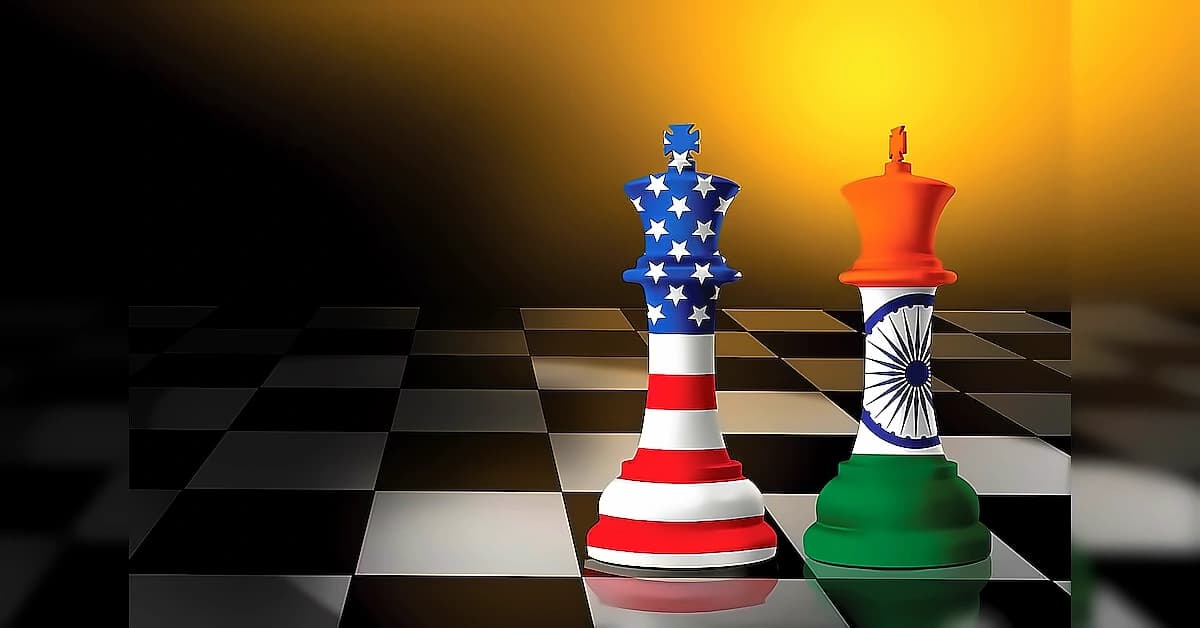
The India-US defence relationship, established through the 2005 New Framework agreement, has emerged as a remarkable success story despite current political tensions. According to reports from Business Standard, this partnership has been renewed twice, most recently on October 31, 2024, providing stability during strained political and economic relations. The defence framework has evolved into comprehensive cooperation including joint military exercises, 2+2 Ministerial Dialogue between foreign and defence ministers, and four foundational agreements covering military information protection, logistics support, communication security, and geospatial intelligence sharing.
The Defence Technology and Trade Initiative (DTTI) concluded in 2012 has facilitated co-development of advanced weapons systems, with notable successes including the Air Launched Unmanned Aerial Vehicle (ALUAV) project launched in 2021. As reported by Business Standard, the initiative has also supported the joint Synthetic Aperture Radar mission (NISAR) launched on July 30, 2025, which is now operational and providing quality data for agriculture and forest monitoring. The India-US Defence Acceleration Ecosystem (INDUS-X) launched in June 2023 aims to build defence innovation bridges between startups, investors, and universities in both countries, complementing the Initiative on Critical and Emerging Technologies (iCET) launched in January 2023.
A significant development under the 2022 Ministerial 2+2 agreement involves Indian shipyards concluding master ship repair agreements with the US Navy for commercial ship maintenance. According to Business Standard, Larsen & Toubro, Cochin Shipyard, and Mazagon Dock Shipbuilders Limited have signed such agreements, with several US vessels already utilizing these facilities. The partnership extends beyond bilateral cooperation to include Quad collaborations in critical and emerging technologies, with India participating in the Minerals Security Partnership and Pax Silica initiative for secure supply chains in rare earths and metals.
Despite the robust defence partnership, analysts warn of potential geopolitical shifts affecting India's strategic position. As reported by Business Standard, the US under Trump has declared it does not see India's emergence as a great power as necessarily in long-term US interests, raising questions about future defence cooperation support. The analysis suggests that India must reduce dependencies on US technology while building indigenous capabilities through strategic partnerships with Europe, Japan, Australia, and the UK, leveraging its competitive advantages in skilled manpower and emerging technologies like AI and semiconductors.