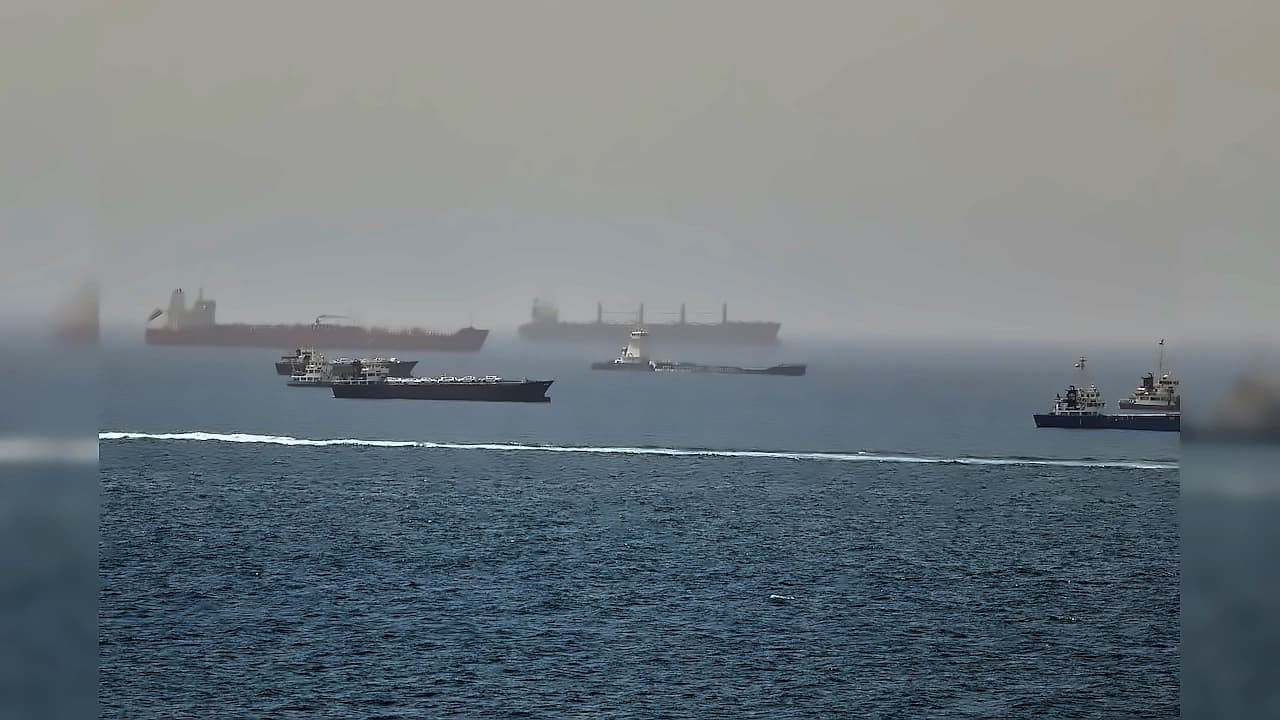
The Modi-Trump bilateral meeting at the G7 Summit in France has taken on heightened significance following a major maritime incident that has become one of the most sensitive issues in bilateral relations. Three Indian seafarers were killed when the US Navy attacked the Palau-flagged tanker MT Settebello near the Strait of Hormuz last week. The vessel had 24 Indian sailors on board when US forces struck it for allegedly violating the naval blockade against Iran. External Affairs Minister S Jaishankar raised the matter directly with US Secretary of State Marco Rubio, reiterating "India's strong protest at the attacks by the US Navy in the Gulf that killed three Indian mariners" and stressing that "such lethal actions against commercial shipping are not justified." The incident has triggered strong protests from New Delhi and is expected to dominate discussions between the two leaders. As per NDTV, Modi had previously raised concerns over the impact of tensions in West Asia on global trade and maritime security, highlighting the deaths of Indian civilians and seafarers while addressing the Outreach Session of the G7 Summit in Evian, France.
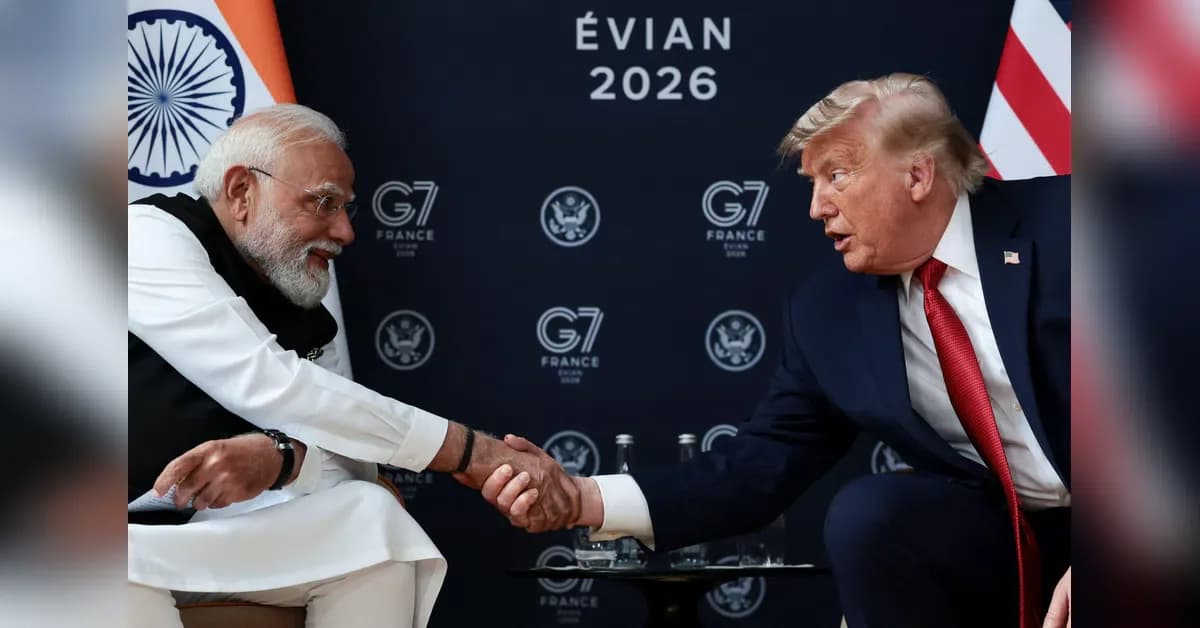
The Prime Minister's intervention also took place shortly after a brief interaction with President Trump on the sidelines of the summit. As reported by NDTV, visuals from the venue showed the two leaders greeting each other following the traditional family photograph. Trump was seen shaking hands with Modi and patting him on the arm as leaders gathered for the session. The interaction marked the first face-to-face meeting between the two leaders since Modi's visit to Washington last year. During the outreach session, Modi and Trump were seated next to each other, with the interaction occurring shortly after Modi's maritime security remarks. The meeting comes just days after a major diplomatic disagreement involving the Strait of Hormuz, making it particularly significant for bilateral relations.
Addressing the G7 session on 'Forging New Partnerships and Rebuilding International Solidarity' with President Trump seated beside him, PM Modi made a strong appeal for global maritime safety. "The disruption of maritime trade through the Strait of Hormuz has caused damage to economies across the world. Several Indian civilians have lost their lives," the Prime Minister said, according to the text of his address released by the Prime Minister's Office. "It is our responsibility to protect the seafarers who connect all nations through global maritime trade. We must ensure sea routes remain safe, and that seafarers can carry out their work without fear." The remarks carried particular weight given the scale of the maritime crisis triggered by the ongoing US-Iran conflict, with the disruption of maritime trade causing significant economic damage to friendly nations in the region. The United States and Iran are preparing to sign a memorandum of understanding aimed at ending months of conflict and reopening the Strait of Hormuz, making India's call for seafarer protection particularly timely. Modi's latest remarks came less than a week after the MT Settebello incident, emphasizing the urgent need for secure maritime routes.
Speaking at the G7 Summit outreach session, PM Modi called for rebuilding trust in the global order, stating that "the world today suffers not from a shortage of resources but from a 'shortage of trust.'" Addressing the theme 'Forging New Partnerships and Rebuilding International Solidarity,' Modi emphasized that "trust has become the most important strategic asset in an increasingly interconnected and interdependent world." The Prime Minister noted that energy security, food security, health security, cyber security and economic prosperity can no longer be determined within national borders alone, making partnerships increasingly important. "Partnerships succeed only when trust is at their core," he said, stressing that technology and supply chains should not be used as weapons but for the global good. Modi urged developed nations to move beyond the donor-recipient framework, stating that "their expectation is not support, but partnership. They do not want to be beneficiaries of global development, but participants in it." He called for equal partnerships based on dignity rather than dependency, emphasizing that such an approach would help lay a strong foundation for sustainable development for future generations.
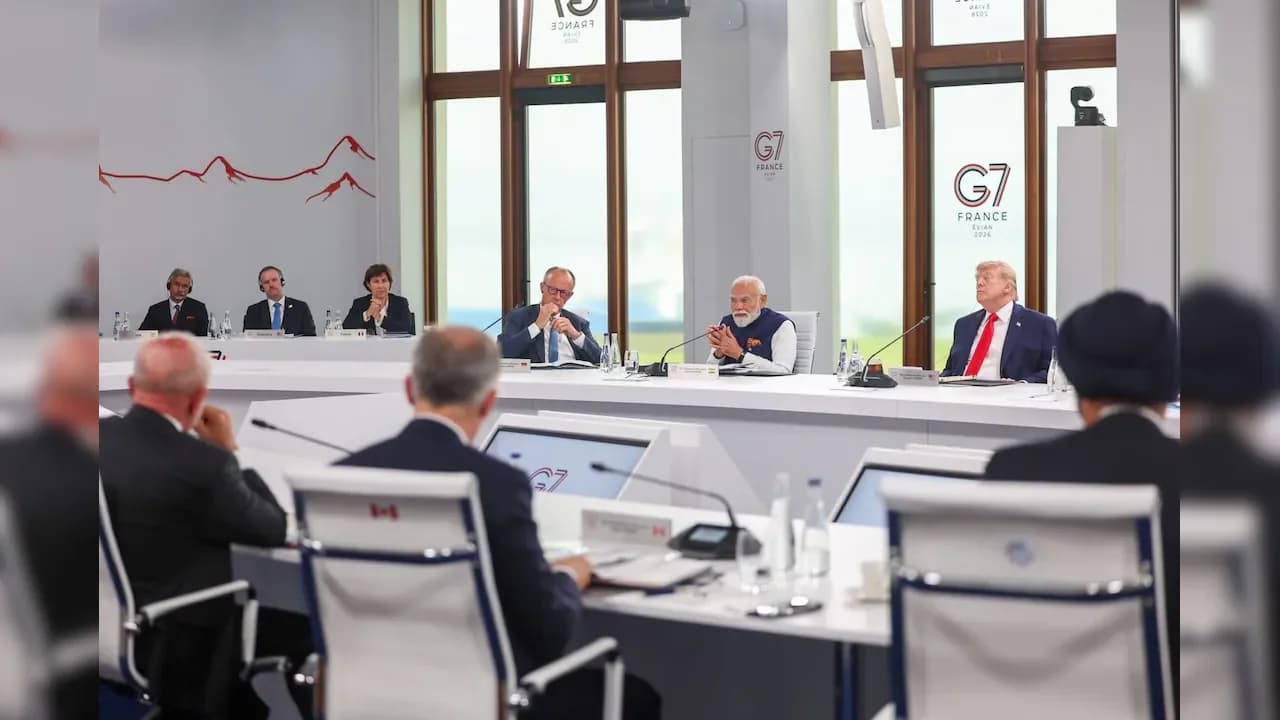
Modi arrived in the French city earlier on Tuesday at the invitation of French President Emmanuel Macron. As reported by NDTV, the visit marks India's 13th participation in the G7 Summit as a partner country and Modi's seventh consecutive appearance at the forum. India, along with Brazil, Egypt, Kenya and South Korea, was invited as a partner country to the summit hosted by France in the resort town of Evian. Upon arriving at the summit venue, the Prime Minister was welcomed by Macron before joining leaders of G7 member countries and invited nations for the customary family photograph. Modi said India's engagement with the world is guided by the philosophy of "Vasudhaiva Kutumbakam" — the belief that the world is one family — and reaffirmed India's commitment to supporting equitable and people-centric solutions to global challenges. For PM Modi, the summit also represents an opportunity to project India's growing international role, with India attending as a guest nation for the eighth consecutive time, reflecting its increasing importance in global discussions.