Recent US and Iran military exchanges have revived discussions about nuclear options, with the latest escalation beginning when US forces struck two Iranian rocket launchers on Larak Island after observing preparations to launch sea mines into the Strait of Hormuz. Iran responded by claiming attacks on facilities used by the US military in Jordan and the UAE, marking the first direct exchange between the two sides in more than a month. According to NDTV Profit, this renewed violence comes despite Washington's recent effort to shift emphasis toward economic pressure, with Treasury Secretary Scott Bessent recently saying Washington's goal is to make Iran an 'economic outcast' and warning that entities facilitating Iranian financial activity could be cut off from the US dollar system. However, six months into the conflict, neither military force nor economic pressure has delivered a breakthrough, with Iran continuing to challenge shipping through the Strait of Hormuz while Washington remains committed to keeping the vital energy corridor open.
Iran has strongly criticized the US approach to negotiations, accusing Washington of mistaking the concept of negotiation for dictation, according to Anadolu Agency. Foreign Ministry spokesman Esmaeil Baqaei stated that such an approach will definitely not work with Iran, arguing that the US has become trapped in what he described as a strategic mistake. Baqaei accused Washington of acting in 'bad faith' and being confused over its approach toward Iran, warning that as long as they act in this manner, they will certainly achieve no result other than what they have obtained so far. The latest military exchange has highlighted the extent to which the war has become a contest of endurance rather than a march toward a decisive outcome, with former officials raising concerns about limited conventional choices available to Washington.
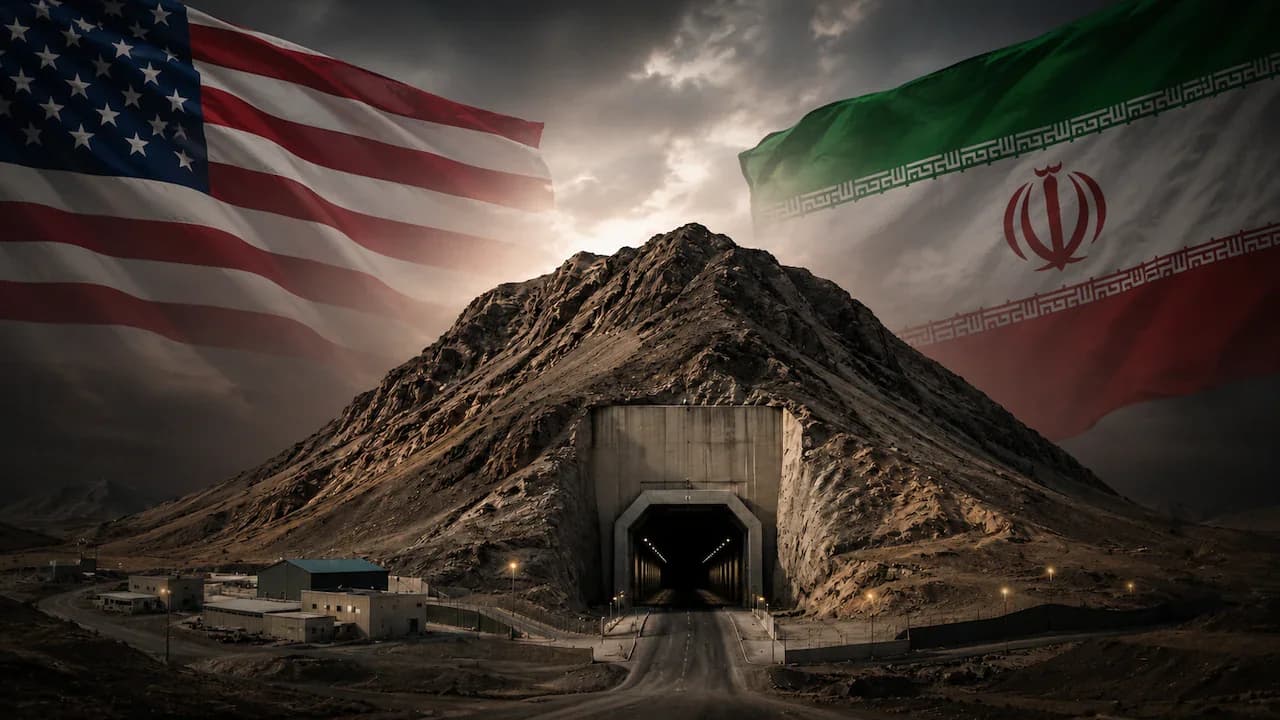
Iran has categorically denied allegations of nuclear activities at the 'Pickaxe Mountain' site, according to reports from NDTV Profit. Iranian Foreign Ministry spokesman Esmaeil Baqaei stated that Tehran has no nuclear activities at the deeply buried facility, dismissing claims that the site was being used to rebuild capabilities damaged during the US-Israeli military campaign earlier this year. The denial comes as Western governments and nuclear analysts have been scrutinizing the site due to its hardened underground construction and potential suitability for sensitive nuclear work. IAEA Director General Rafael Grossi recently said there was no solid evidence supporting allegations about nuclear activities at the location, with Baqaei noting that Grossi's latest remarks were consistent with Tehran's longstanding position. Analysts believe some of these facilities are protected by extensive tunnel networks buried beneath layers of rock that may exceed the penetration capability of conventional bunker-buster bombs.
The latest military exchange has revived discussions about nuclear options, with former Trump counter-terrorism adviser Joe Kent arguing that the administration is running out of options if it remains committed to forcing Iran into what he described as a position of total surrender. Kent suggested that only two paths remain if Washington continues pursuing maximalist goals against Tehran - a large-scale ground invasion or the use of a tactical nuclear weapon against hardened underground facilities. He specifically raised the possibility of a limited nuclear strike against deeply buried uranium enrichment facilities located beneath mountainous terrain, stating that 'If you just play out the scenario for long enough, you arrive at weapons of mass destruction fairly quickly'. Conservative commentator Tucker Carlson argued that any president seriously considering the first use of nuclear weapons should be removed from office immediately, reflecting growing divide within parts of the American right over foreign policy. However, there is no public evidence that Washington is preparing a nuclear strike against Iran, with the White House not confirming that nuclear options are being actively considered.
Despite the nuclear tensions, Foreign Minister Seyyed Abbas Araghchi has indicated that the diplomatic channel with Washington remains open, according to NDTV Profit. He stated that Iran is not holding direct talks with the US but is exchanging messages through intermediaries, with several countries working to facilitate a return to negotiations. Baqaei confirmed that Iran remains in routine contact with the International Atomic Energy Agency (IAEA), but denied that any new negotiations are underway between Tehran and the UN nuclear watchdog. He emphasized that 'Our mission to the International Atomic Energy Agency in Vienna holds discussions with the relevant parties at the agency whenever necessary'. The debate centers on Iran's deeply buried nuclear facilities and their vulnerability, with questions growing about whether conventional military power can permanently eliminate Iran's most heavily protected nuclear facilities.
Baqaei addressed broader regional security concerns, stating that Iran would continue consultations with Türkiye and other regional countries, adding that regional states increasingly see cooperation and mutual trust as necessary for protecting their security. Regarding the Mecca defense pact between Türkiye, Pakistan and Saudi Arabia, Baqaei said Tehran does not view it as a threat to Iran, noting that the three countries have directly or indirectly faced Israeli threats. Asked about reports that Iran was considering withdrawal from the Nuclear Non-Proliferation Treaty (NPT), Baqaei said a debate exists among experts and the public, particularly over what he described as Iran being deprived of the treaty's benefits despite fulfilling its obligations, while stressing that Tehran's official position remains unchanged and it considers itself committed to the obligations contained in the NPT.