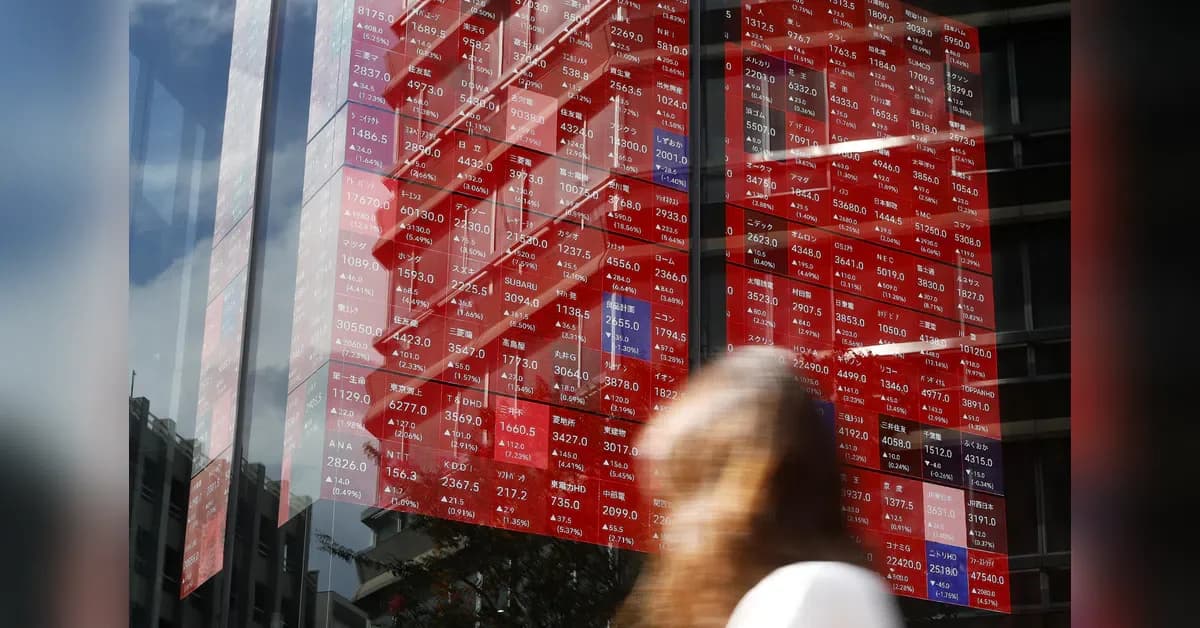
The Japanese yen has plummeted to levels not seen in two years, with the currency trading around 161.3 per US dollar on Friday, grinding closer to its weakest level in 40 years. According to The Economic Times, the yen has found little relief even after the Ministry of Finance's dollar-selling intervention earlier this year and the Bank of Japan hiking interest rates to a 31-year high this week. The yen's weakness has intensified as US Vice President JD Vance pulled out of a planned trip to meet Iranian negotiators in Switzerland on Friday, casting doubt on the implementation of the 14-point agreement struck between Tehran and Washington to end their war. As per Danske Bank analysts, markets will be watching closely to see how implementation and tougher follow-up negotiations develop in the coming days.
The dollar has surged this week, rising 1% against a basket of other major currencies to a 13-month top, largely thanks to Wednesday's Federal Reserve meeting where policymakers' new quarterly projections showed nine of 19 now anticipate a rate hike by year end. According to The Economic Times, the dollar climbed as high as 161.8 yen late on Thursday, closing in on July 2024's 161.96, which would take it to its strongest against the yen since 1986. Francesco Pesole, currency strategist at ING, noted that "In the near term, the dollar may enjoy post-Fed enthusiasm for a bit longer, with markets probably keen to fully price two hikes by December at the first strong data print." The dollar's strength comes as traders reassess expectations that the Federal Reserve could act sooner than expected to tame inflation, perhaps as early as next month.

Speculative yen shorts have reached record levels as traders maintain their bearish positioning against the Japanese currency. DBS analysts noted that large speculative short positions against the yen remain elevated despite the BOJ's tightening measures, with traders increasingly positioning for further weakness. Market analysts predict that Japan's Ministry of Finance will likely defend the 161.95 level the first couple of times it's tested, deploying similar firepower to what was seen in April and May - around ¥11.7 trillion. However, analysts caution that authorities may eventually need to be more selective to preserve reserves and maintain policy credibility. As per DBS analysts, Japan's tolerance for yen weakness appears close to its limit, with policymakers potentially deploying both rhetoric and further market interventions to curb yen depreciation.
Japan's annual core inflation stayed below the central bank's 2% target for a fourth straight month in May, data showed on Friday, as government fuel subsidies offset rising raw material costs from the Middle East conflict. However, analysts from Capital Economics expect the pass-through of higher energy costs to utilities charges and other goods and services to lift inflation to around 3.5% by early-2027. Bank of Japan Deputy Governor Ryozo Himino said the central bank will continue to raise interest rates with an eye on the risk that underlying inflation overshoots its 2% target. Minutes from the central bank's meeting in April released on Friday morning and comments from BOJ Deputy Governor Ryozo Himino also cautioned there could be more rate hikes tied to the inflationary effects of the Iran war. Money markets have sharply increased expectations of further US monetary tightening, with traders now pricing in a 38.5% probability of a 25-basis-point rate hike at the Fed's July meeting.
The dollar's strength has weighed on other major currencies, with the euro hitting a three-month low of $1.1418 before rebounding to trade flat at $1.1464. The pound hit an over two-month low of $1.3164 but was last at $1.323, 0.2% higher on the day, as sterling traders had much to digest with Friday data showing stronger than expected retail sales for May. The Swiss franc was softer, with the euro up 0.2% to 0.9238 francs, a day after the Swiss National Bank left its benchmark interest rate unchanged and repeated its increased readiness to step into markets to stop the currency appreciating. The dollar climbed to 0.8091 francs, its highest since November 2025, and was last up 0.15%. In the cryptocurrency market, Bitcoin was off 0.7% at $62,549.31 and Ether slid 0.9% to $1,693.19 as investors continued to assess the implications of a stronger dollar and tighter global financial conditions.