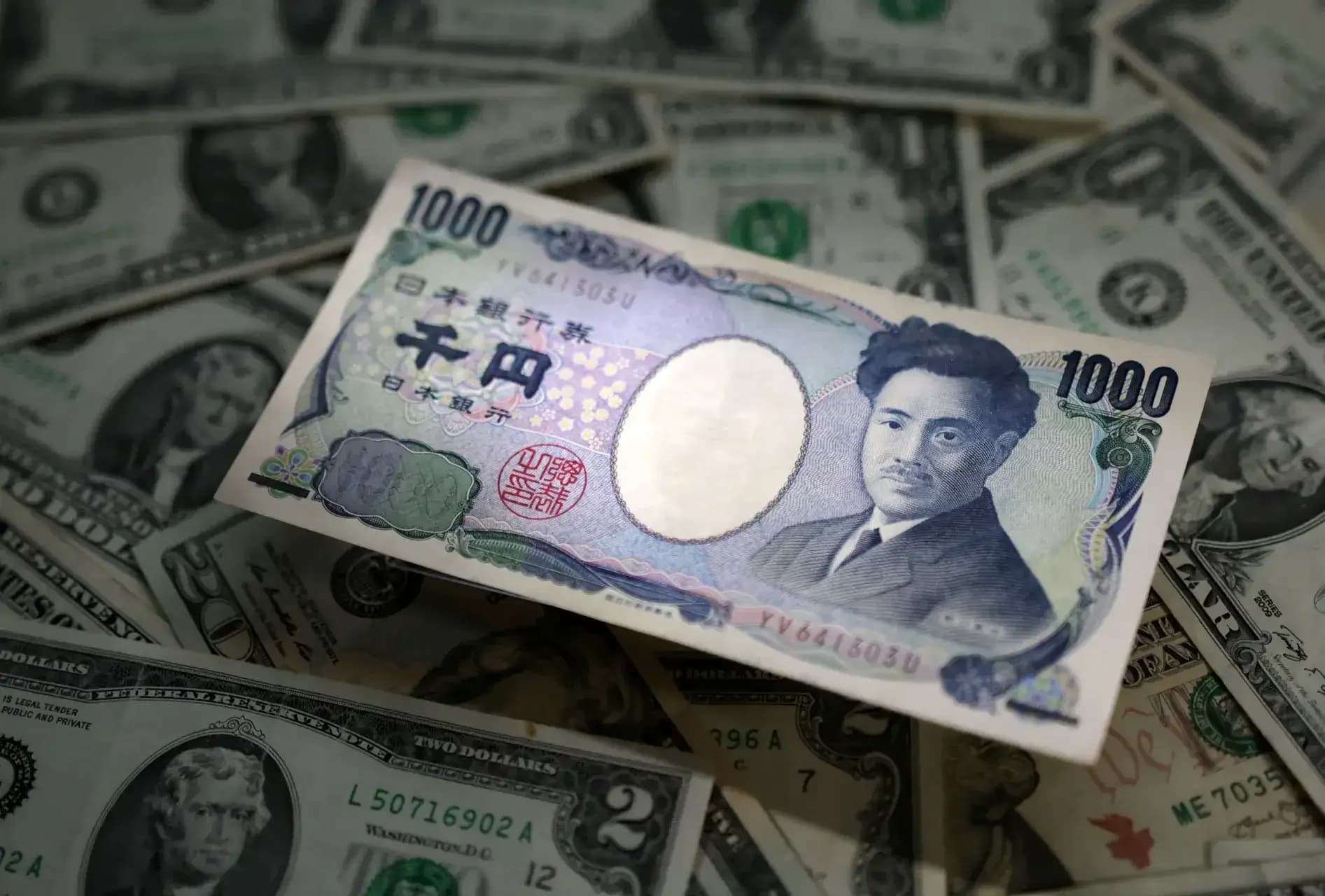
The yen has strengthened against the dollar on Thursday, with the dollar trading 0.44% higher at 158.45 yen after three consecutive sessions of gains. According to Reuters reports, this represents a recovery from Monday's low of 155.20 yen, which was the weakest level since early May. The dollar's recent strength comes as investors adopt safe-haven positioning amid concerns over a potential U.S.-Iran deal and ahead of Friday's monthly U.S. jobs report. As John Velis, FX and macro strategist at BNY, noted, "The idea that maybe there's some good news on a ceasefire or a deal in the Persian Gulf has taken some of the dollar premium off with lower oil prices and so forth."
Japan's major automakers are maintaining their currency assumptions despite recent US-Japan intervention efforts. According to Bloomberg reports, Toyota Motor Corp., Nissan Motor Co., and other Japanese carmakers based their profit and sales outlooks on expectations that the yen will remain at ¥150 to ¥160 against the dollar for the fiscal year through March 2027. The yen is currently trading within this range at around ¥157.6 as of Wednesday, following joint action by the US and Japan governments over the past week - their first coordinated intervention since 2011. However, the intervention has created mixed implications for automotive manufacturers, as a stronger yen would help alleviate inflation and import price pressures in Japan while cutting into carmakers' earnings from overseas sales.
The currency intervention has created mixed implications for automotive manufacturers. As reported by Bloomberg, while a stronger yen would help alleviate inflation and import price pressures in Japan, it would also cut into carmakers' earnings driven by overseas sales that translate into higher profits when brought back home. Toyota, Honda, and Suzuki revised their assumptions toward a weaker yen from levels set in May, while others left theirs unchanged, providing scope for additional profit if current exchange rates persist. The intervention has also created broader market dynamics, with non-commercial traders holding net short positions on the yen exceeding 163,000 futures contracts by late July, indicating widespread expectations of further yen weakness.

The yen's weakness poses concerns for America's trade agenda, as Japanese goods become cheaper in dollar terms, effectively neutralizing tariff policies. Japan's goods surplus with the United States has averaged around $56 billion annually over the past fifteen years, with currency differentials being a key ingredient in this trade asymmetry. While the deficit fell from $62 billion in 2024 to $55 billion in 2025 despite the yen remaining historically weak, a stronger yen would deliver relative advantages to American industry. The intervention also raises regional concerns, as Japan's competitor economies have been weakening their currencies in response to the yen's trajectory. Bessent argues that the falling yen was dragging the Korean won down with it, while giving China less reason to allow the renminbi to strengthen, potentially starting a wider round of competitive depreciation across Asia.
Toyota is better positioned to handle currency risks due to its global earnings spread across Japan, North America, Europe, Asia, and financial services. As reported by Bloomberg, exchange-rate movements added roughly ¥345 billion to Toyota's operating profit in the first quarter, with the company's upgraded full-year assumption to ¥160 from ¥150 adding another ¥420 billion to its outlook. Nissan and Honda face challenges in taking advantage of weaker yen benefits due to struggles with US market sales volume and rising input costs. The intervention has also created market volatility, with the dollar-yen exchange rate experiencing significant swings as institutions and households seek better returns abroad, with the US receiving 84% of Japan's outbound portfolio investment in 2025.