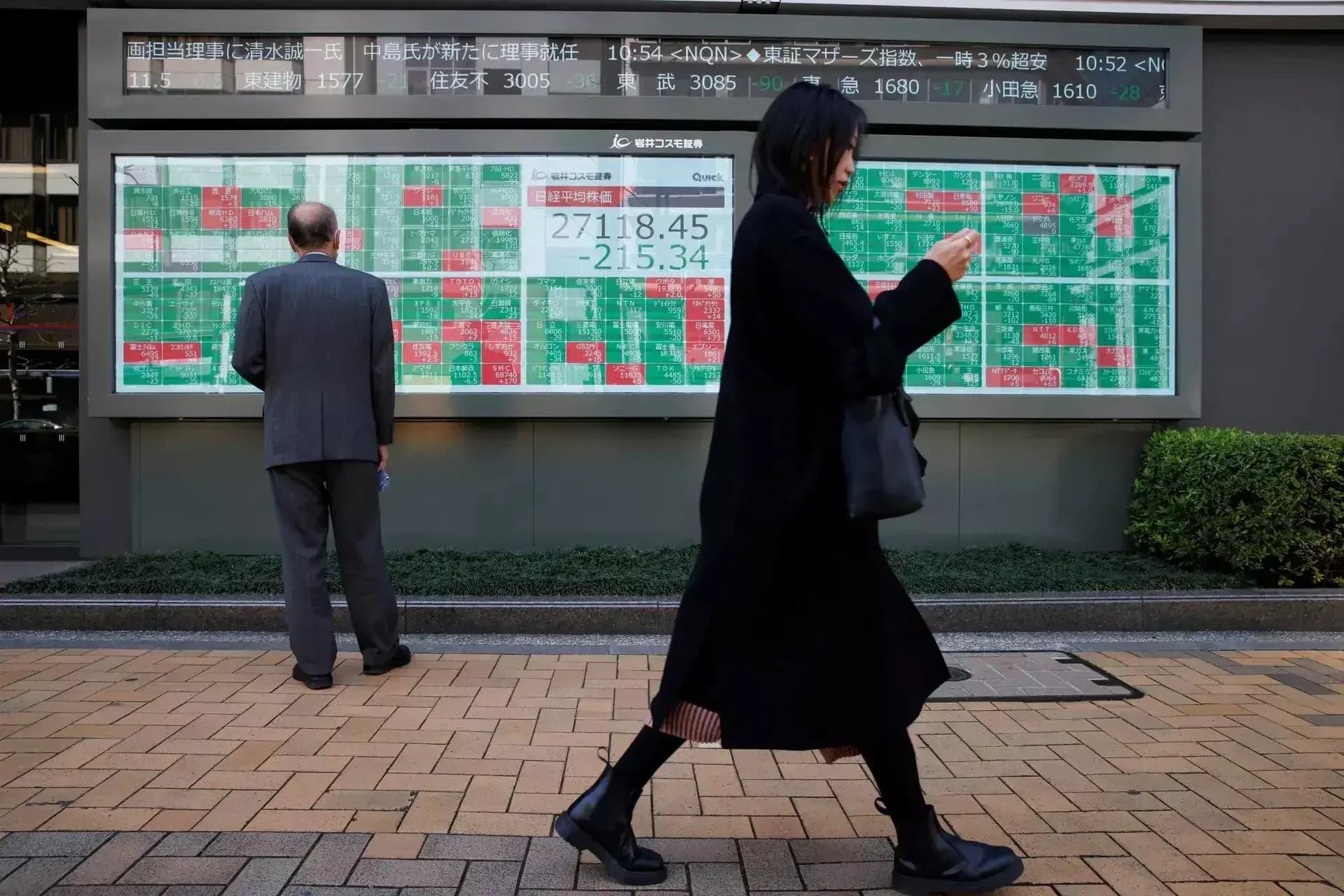
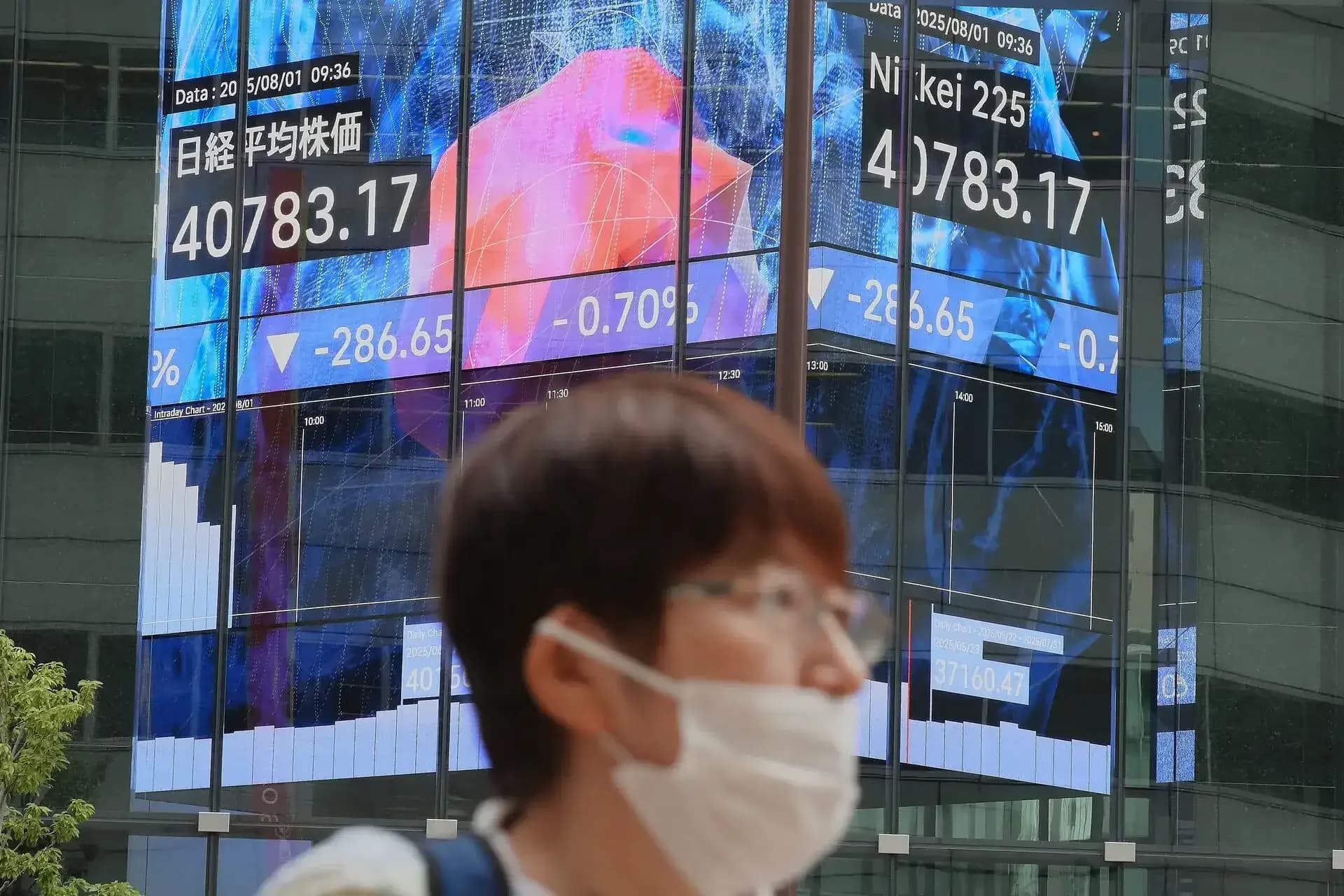
Asian markets continued their remarkable run on Wednesday, with Japan's Nikkei 225 climbing 2.54% while South Korea's Kospi slipped 0.30%, according to Bloomberg News. This follows a record quarterly performance that saw Japan's Nikkei rising 1.6% and set for a record rise of more than 38% for the quarter, while South Korea's chipmaker-driven KOSPI rose 3% and is set for an eye-popping second-quarter rise of nearly 71%. The semiconductor-driven rally has been remarkable, with Wall Street indexes rising overnight and futures slightly higher in Asia afternoon, while European futures gained 0.6%, poised for a strong start to the session. Taiwan's benchmark is set for a more than 46% rise this quarter, while Hong Kong's Hang Seng and Shanghai markets were closed for a holiday. Australia's ASX 200 declined 0.39% during the session.
The Japanese yen fell to 162.28 against the dollar, extending losses from the previous session and marking its weakest level in 40 years, as reported by Bloomberg News. This represents a dramatic reversal from the yen's previous strength, as the last time the yen traded at such a depressed level, the currency was moving in the entirely opposite direction during Japan's asset bubble expansion in 1986. Despite Japanese authorities launching a record-scale intervention between April 28 and May 27, injecting 11.73 trillion yen (approximately 72.4 billion U.S. dollars) to prop up the currency, the yen continues to face pressure. Finance Minister Mayu Katayama reiterated on June 19 that authorities stand ready to take bold action to curb excessive speculation, while Chief Cabinet Secretary Minoru Kihara's public remarks failed to halt the persistent decline. Market participants now expect the yen to face further downside targets toward the 163-164 range against the U.S. dollar, with strategists increasingly pointing to these levels as the next intervention threshold.
Investors monitored significant developments in Middle East diplomacy after U.S. officials reported progress in discussions aimed at advancing negotiations with Iran, according to Bloomberg News. U.S. negotiators Jared Kushner and Steve Witkoff held constructive meetings with regional leaders in Qatar, while technical discussions with Iran continued, with a senior US official confirming the positive developments. The diplomatic effort follows an interim agreement signed earlier this month that established a 60-day window for negotiations, though the process has encountered fresh challenges after recent confrontations around the Strait of Hormuz. Oil prices recovered some ground after sharp losses in the previous session, with Brent crude rising about 0.7% to around $73.50 a barrel in early Asian trade as investors reassessed expectations that the U.S.-Iran ceasefire would remain intact. Gold traded little changed near $4,010 an ounce, while U.S. Treasury prices declined during the previous session.
Federal Reserve policymakers voted unanimously to leave interest rates steady at last month's meeting, the first led by Chairman Kevin Warsh, according to CNBC TV18. Steady employment data and elevated inflation readings have raised expectations that the Fed may need to raise rates later this year to tame price pressures, with officials holding their next policy meeting at the end of July. Tuesday's economic reports showed US job openings were little changed in May, signaling labor demand remained steady, while consumer confidence edged higher in June as lower gasoline prices helped offset concerns about the job market. Investors have looked past lingering geopolitical tensions as fresh US data reinforced the view that the economy remains resilient, with steady US consumer spending and a still-solid labor market helping ease concerns that higher energy prices and trade uncertainty would derail growth. The positive economic data has bolstered confidence that companies can continue delivering strong earnings.
While Asian markets lead global gains, other regions show more modest performance amid holiday closures. According to CNBC TV18, the gains came after a tech-fueled rally lifted US stocks, with the S&P 500 climbing 0.8% and the Nasdaq 100 gaining 1.7%, with a gauge of semiconductor stocks rising nearly 4%. US negotiators Jared Kushner and Steve Witkoff had positive discussions with regional leaders in Qatar and technical talks with Iran are moving ahead, according to a senior administration official. An interim agreement signed earlier this month opened the door to a 60-day negotiating period, though those efforts faced setbacks after recent clashes over the Strait of Hormuz. Market participants are watching for US jobs data due Thursday and Federal Reserve Chair Kevin Warsh's Wednesday appearance for potential market-moving developments.