Asian markets opened October with mixed performance as investors weighed a sharp late reversal on Wall Street that wiped out gains from softer US inflation data. According to CNBC TV18, Hang Seng futures fell 0.7% and South Korea's Kospi lost 0.62%, while Japan's benchmarks showed mixed signals with the Nikkei 225 climbing 1.28% while the broader Topix slipped 0.56%. The Japanese yen remained steady at 157.39 per dollar and the offshore yuan was at 6.7086. In India, the GIFT Nifty hinted towards a muted start in the red. The hesitancy in Asia mirrored a turnaround in New York on Wednesday, where all three major indices climbed after inflation release, then gave back most of those gains. As per Business Standard, MSCI's broadest index of Asia-Pacific shares outside Japan was down 0.2%, with South Korea's KOSPI easing 0.14%, while Japan's Nikkei though was up over 1% as chip-related shares rose.
The US Federal Reserve's preferred gauge, the Personal Consumption Expenditure (PCE) index, rose 0.3% month-on-month in August, matching forecasts, but annual PCE inflation came in at 3.4%, well below the 3.7% economists had projected. As reported by CNBC TV18, core PCE, which strips out energy and food costs, rose 3% year-on-year, against expectations of 3.3%. These figures cut the likelihood of an interest rate rise at the Fed's October meeting, with money markets now seeing less than a 40% chance of a hike. According to Business Standard, traders are now pricing in a 38% chance of a hike this month, versus 50% a day earlier, as per CME's FedWatch tool. The S&P 500 retreated 70 points from its intraday high and ended 0.25% lower, capping its worst month since June, while the Nasdaq fared better and finished 0.2% higher, although it also shed 250 points from its own peak. Despite the softer inflation data, Treasury yields crept higher even as the PCE reading came in lighter than anticipated, with the 10-year Treasury yield breaching 5.3% at one point on Wednesday, trading near 2007 highs, and the 30-year yield surpassing 5.6%, reaching its highest level since 2002.
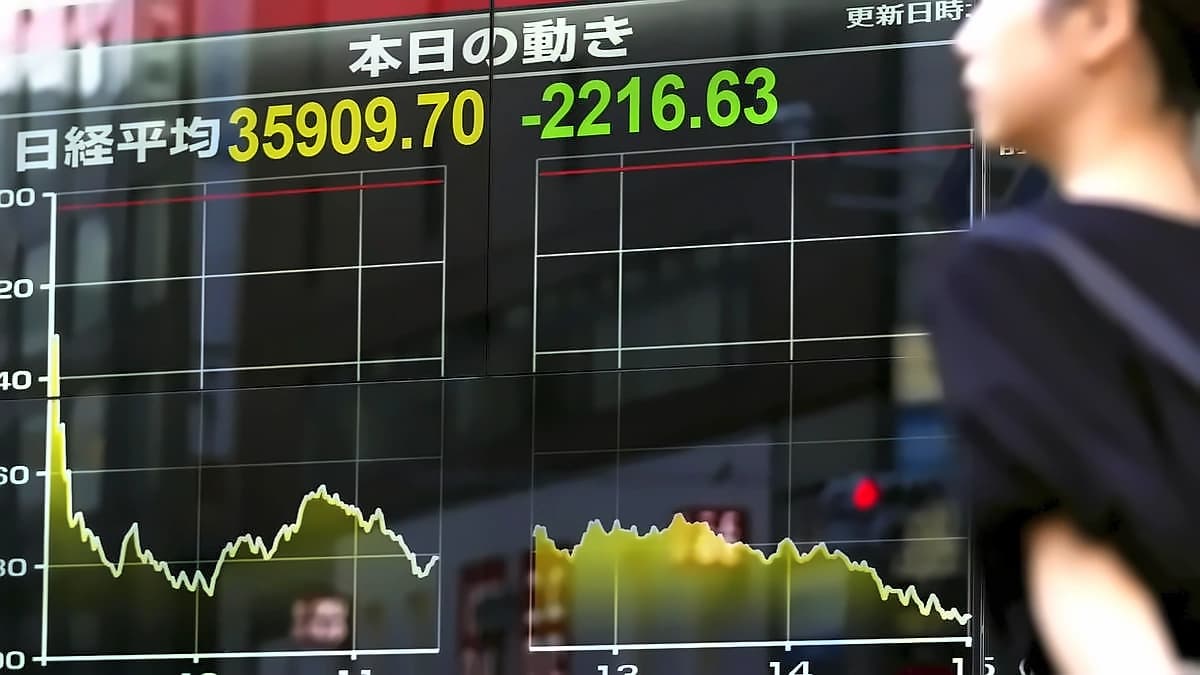
In Japan, a summary of opinions from the Bank of Japan's September 17-18 meeting, released on Thursday, showed that policymakers now focus on stopping inflation from overshooting the 2% target. As reported by CNBC TV18, Governor Kazuo Ueda's board had voted 7-2 to raise the policy rate to 1.25%, the highest since 1995. That move came just three months after the June increase, the shortest gap between hikes since 1990. As per Business Standard, some Bank of Japan policymakers saw the need to accelerate the pace of interest rate hikes, according to the meeting summary. One member said the bank had entered a new phase after 13 years of trying to lift price growth gradually, while others suggested the neutral rate could prove higher than estimated and that raising rates early was desirable.
South Korea delivered exceptional export performance in September, with exports jumping 83.5% year-on-year to post a record monthly high, according to customs data released on Thursday. The surge was driven by semiconductor shipments, fueled by global spending on artificial intelligence, which also set a record. Average exports per working day jumped by 104.9% compared to the previous year, marking the country's 16th consecutive month of export growth. Imports climbed 26.0% year-on-year, outpacing the 21.5% forecast, resulting in a provisional trade surplus of $49.85 billion, up from $34.79 billion in August. This exceptional performance demonstrates the strength of South Korea's technology sector and its role in the global AI infrastructure build-out.
Oil prices remained elevated with Brent crude settling around $98.15 a barrel after surging over 14% last month, a third straight month of gains, according to Business Standard. West Texas Intermediate for November delivery slipped 0.4% to $90.07, having risen 1.2% a day earlier. According to CNBC TV18, Wall Street analysts and traders said crude flows from West Asia were nearing pre-war levels, although fuel supplies had lagged behind. JPMorgan Chase & Co analysts said in a September 29 note that the region's oil exports were flowing again, calling the rebound remarkable for a region still at war, but adding that it had been uneven. In commodities, oil prices were mostly flat in early trading as investors assessed the outcome of US-Iran peace talks and the outlook for Middle East crude exports. The US dollar stood firm near a two-month high, supported by elevated Treasury yields, while the euro was steady at $1.1334 after dropping 2.5% last month.