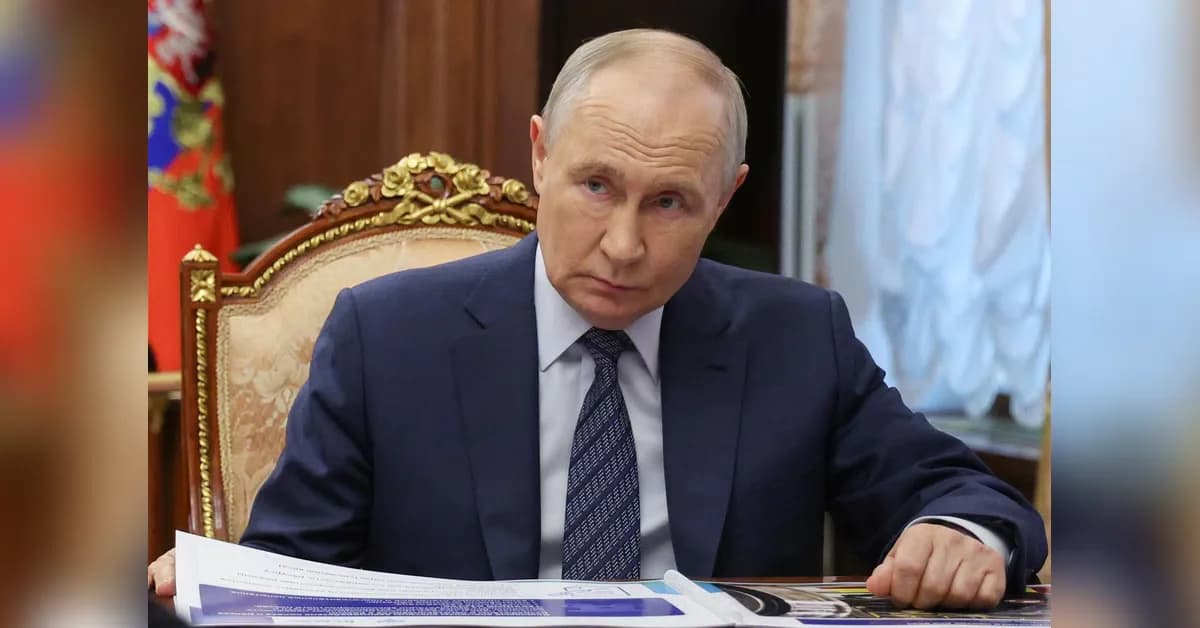
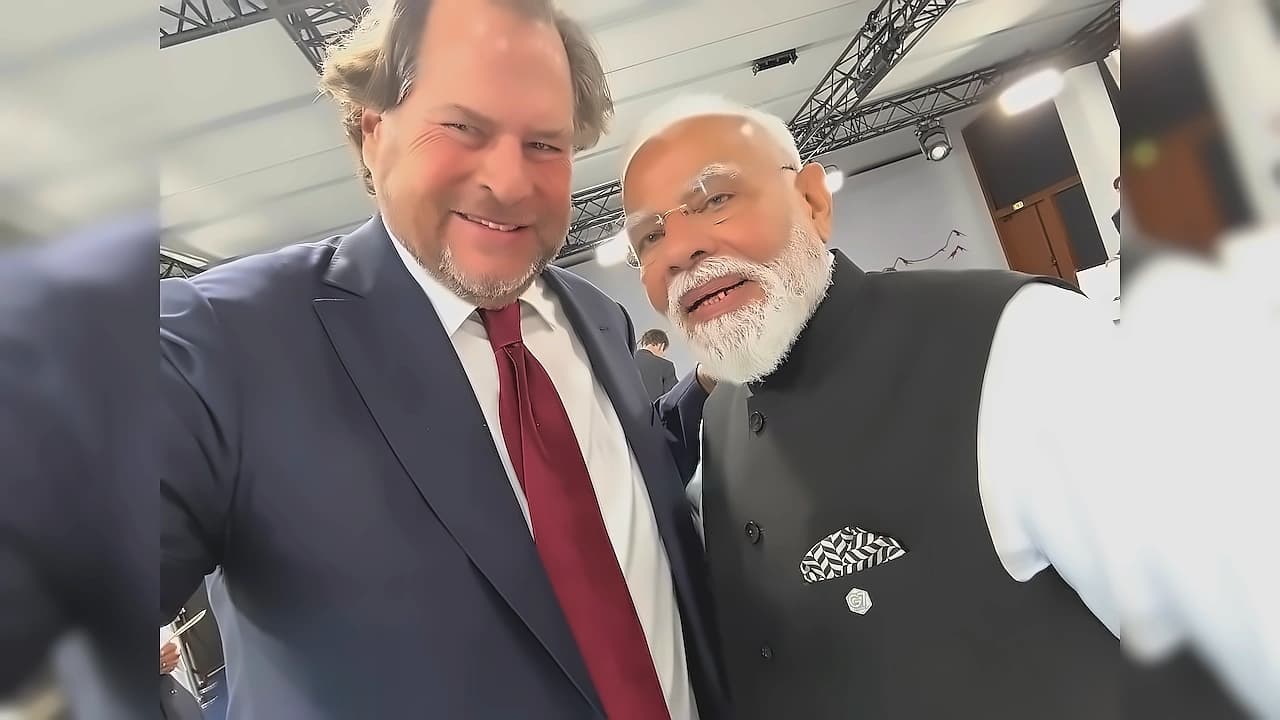
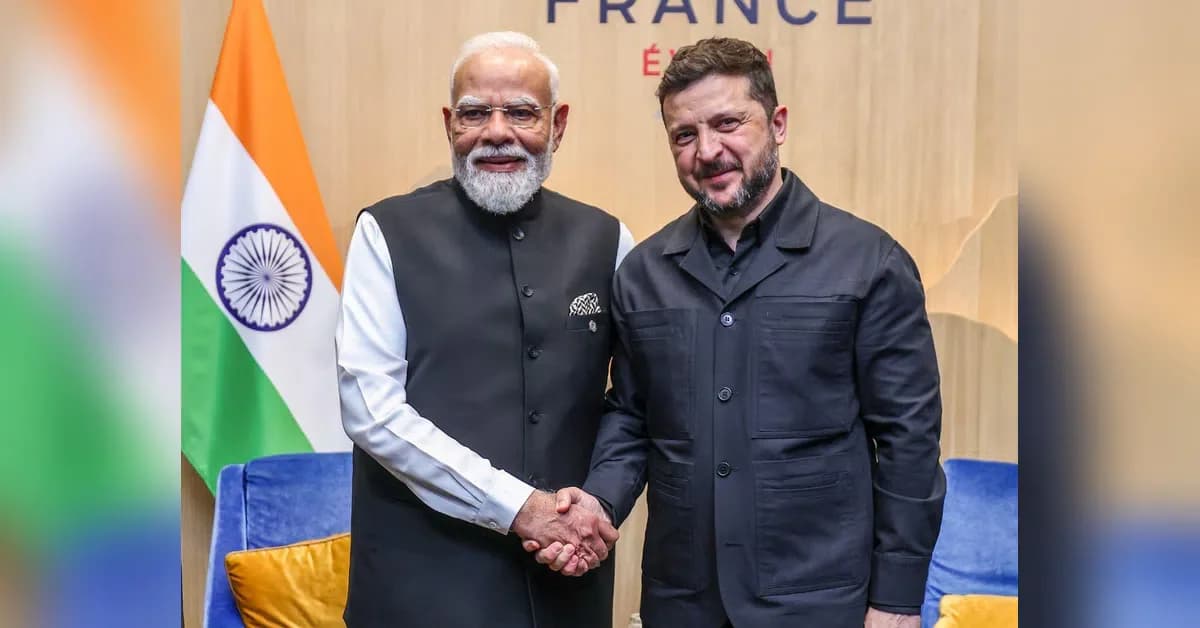
G7 leaders issued a united statement on Wednesday supporting Ukraine's territorial integrity and agreeing to increase sanctions on Russia, as reported by Business Standard. The unity of the joint statement from the June 15-17 G7 summit in the French lakeside resort of Evian-les-Bains was notable as US President Donald Trump's administration has at times been hard to bring on board, particularly on the thorny issue of how to end the Ukraine war. The statement followed what Trump called a 'very good' meeting with Ukrainian President Volodymyr Zelenskyy and other G7 leaders on Tuesday, sparking optimism that a peace deal could be struck. Zelenskyy said he could meet Trump again on Wednesday, demonstrating continued diplomatic momentum. According to Business Standard, Indian Prime Minister Narendra Modi led the discussions at the working session, endorsing the G7's call for partnerships rather than aid but also underlining support for developing countries.
G7 leaders agreed to increase pressure on Russia through sanctions targeting its oil and natural gas sectors, as reported by NPR. The UK announced a new set of sanctions targeting the 'shadow fleet' Russia uses to ship oil and gas, including several vessels recently purchased by Russia to transport liquefied natural gas from its sanctioned Arctic LNG 2 project. A French diplomat familiar with the talks described the conversation as 'very fruitful' on Ukraine. Leaders also agreed on a common position to support Ukraine by providing additional air defence capabilities and other means of protection. As the US under Trump has cut back aid to Ukraine, France and its European allies are now the biggest providers of military and financial support to Kyiv. After the summit, Zelensky said he had stressed his nation's desperate need for air defense missiles capable of countering the Kremlin's growing arsenal of ballistic missiles, stating that 'If the war has not ended by winter and shortages arise, all partners pledged to support Ukraine with supplies of diesel fuel, natural gas, and gasoline.'
Ukraine is currently seen as being in a strong position according to European leaders, with Ukraine holding the front line and even partially regaining territory, as stated by European Commission President Ursula von der Leyen. According to DW, European leaders presented a very united front, with a source telling DW that 'The dynamics have changed, Ukraine is in a position of strength. Russia cannot win the war and Russia is under pressure. In that respect, we have observed a change in tone.' During the summit, Zelensky announced that Ukrainian drones had targeted an oil refinery in Moscow, about 10 miles from the Kremlin, with Moscow's mayor confirming the city came under attack by dozens of drones. However, no one was killed or injured in the strike, though the extent of damage was not disclosed. The attacks on Ukraine's biggest cities came after Zelenskyy and Putin spoke separately by phone with Trump on Sunday, the US leader's 80th birthday. According to NPR, hours before the summit began, Russia fired hundreds of drones and dozens of missiles at Ukraine's biggest cities in a barrage that killed 11 people and set fire to a religious landmark.
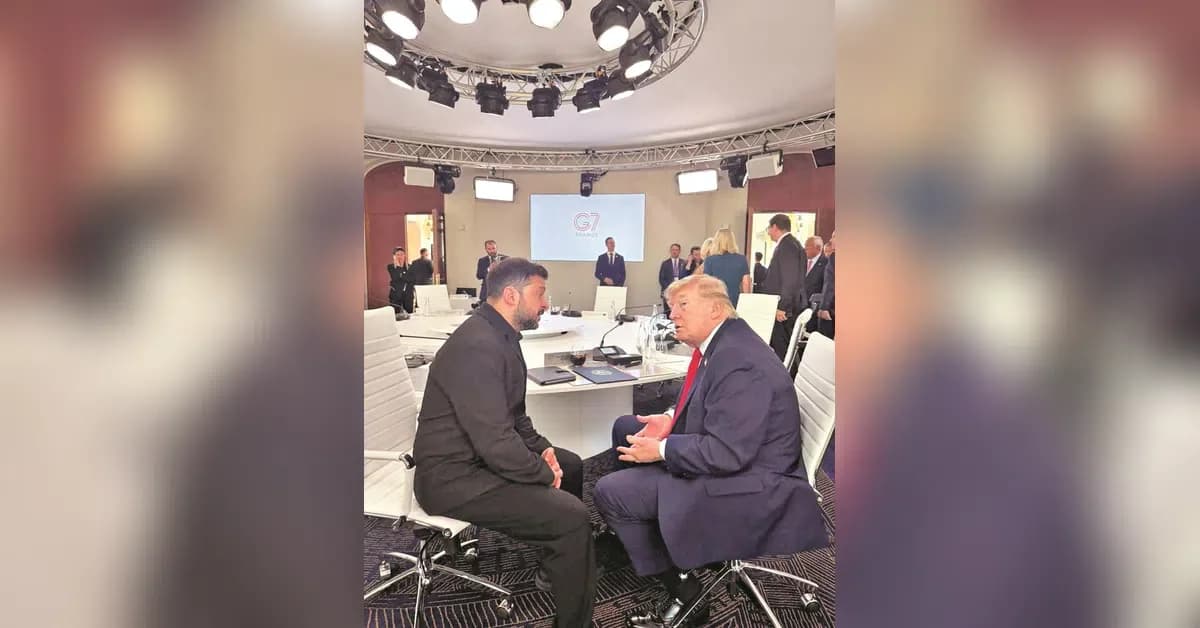
The US-Iran ceasefire deal has been a flashpoint between Trump and European leaders, with Trump expressing frustration over Israel's continued hostilities with the Iranian-backed militia Hezbollah in Lebanon. According to NPR, Trump held one-on-one talks with the Emir of Qatar, Sheikh Tamim bin Hamad al-Thani, and will meet with UAE President Mohammed bin Zayed Al Nahyan. Trump told reporters he's 'not happy with the way Israel has handled themselves with Lebanon and with Hezbollah,' stating 'They should have been able to deal with them faster. It just goes on forever.' The United States and Iran have announced a preliminary agreement to reopen the Strait of Hormuz, through which much oil and natural gas is usually shipped, and to continue negotiations. European nations have promised to deploy ships to help secure the waterway if it becomes clear that the cease-fire will hold. European leaders also hope to rekindle Mr. Trump's interest in engaging with Russia on a peace settlement in Ukraine. Trump told reporters he would be able to reimpose sanctions on Russian oil 'soon' now that the agreement with Iran had raised the chances of reopening the Strait of Hormuz.
On Wednesday, G7 leaders will turn their attention to critical minerals and global economic imbalances, with France pushing partners to agree a statement on critical minerals that could include measures to help the West reduce its reliance on China and shield investors from counter-measures and dumping. According to Business Standard, China spooked the global economy last year when some industries nearly ground to a halt after Beijing imposed export curbs on permanent magnets made of rare earths, an episode which highlighted how reliant Western supply chains in the energy, defence and technology sectors are on these goods. A French presidency official said ahead of the summit: 'We are negotiating texts that are significant on critical minerals and, as a consequence, on economic sovereignty.' Measures under discussion include price supports, market standards, subsidies and guaranteed purchases, as well as means to scale up private investment in critical mineral supply chains outside China. However, any measures announced at the G7 are likely to be first steps.