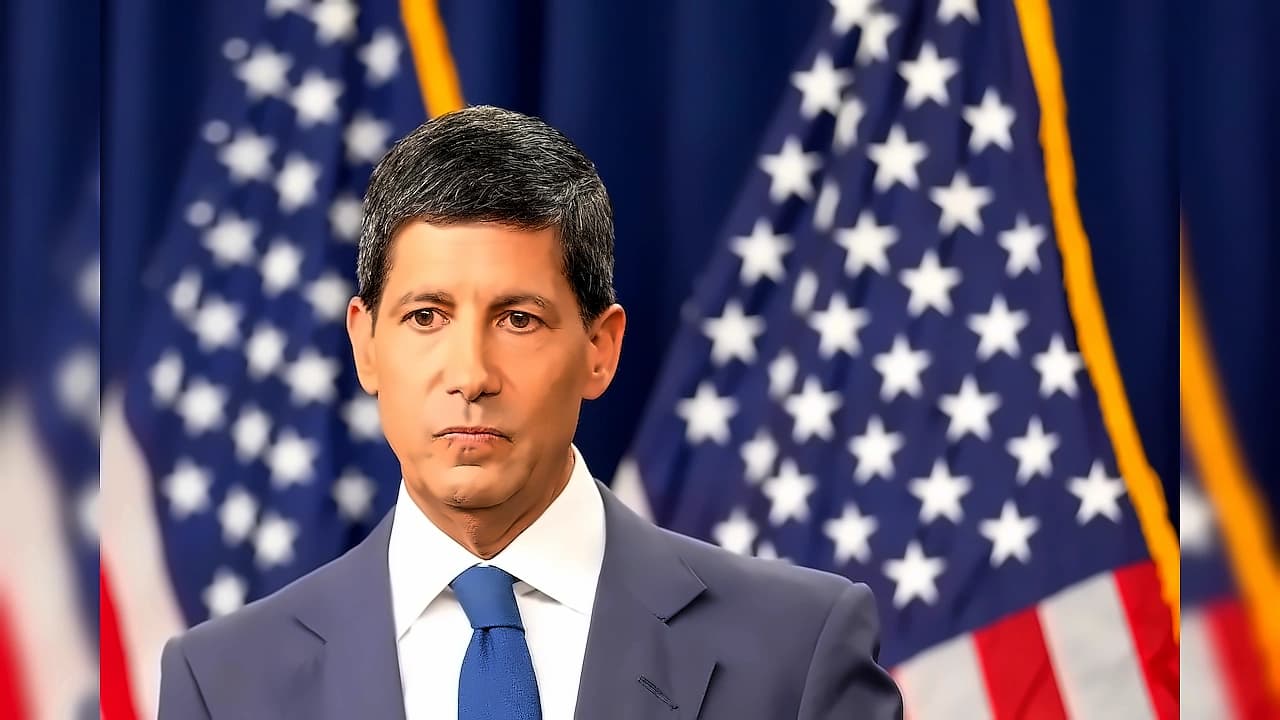
St. Louis Fed President Alberto Musalem has reinforced the Federal Reserve's hawkish stance, stating that maintaining higher interest rates is still appropriate due to ongoing inflationary pressures. Speaking on CNBC, Musalem emphasized that "monetary policy is accommodative" right now and the inflation-adjusted federal funds target rate is below where the committee believes the neutral long-run rate ought to be. The official noted that "financial conditions are pretty accommodative here" while inflation remains too high with underlying price pressures between 2.5% and 3% against the 2% inflation target. As per The Economic Times, Musalem stated "We need to bring inflation back down to 2% over the next 18 months." He sees two main scenarios ahead of the central bank on inflation: one where it eases, and another where it stays sticky around current levels. Musalem's view that inflation will not ease caused him to argue in favor of hiking the current 3.5%-3.75% federal funds rate at the late July meeting.
The July FOMC meeting minutes revealed that the Fed is increasingly concerned about the re-escalation of conflict in the Middle East and its impact on inflation. As reported by Goodreturns, "participants judged that their inflation outlooks were highly uncertain and that inflation risks were skewed to the upside. Many participants noted that the recent re-escalation of the conflict in the Middle East significantly clouded the inflation outlook." The Fed minutes stated that "a protracted conflict could prolong supply chain challenges and could put upward pressures on inflation." The central bank also highlighted that "the possibility that, after several years of inflation above 2 per cent, continued elevated inflation rates could begin to affect inflation expectations and wage- and price-setting decisions." This represents a significant shift from earlier expectations, with the Fed now viewing the West Asian conflict as a major threat to achieving its 2% inflation target.
Initial jobless claims climbed to 209,000 in the week ended August 7, snapping the streak of sub-200,000 readings, though the four-week average of 199,000 still points to a tight labor market. According to Goodreturns, the Fed minutes indicated that "labour market conditions were stable with demand and supply in balance." However, the central bank noted that "uncertainties associated with AI-related developments as well as current and anticipated productivity gains were keeping both hiring and firing low." The minutes observed that "in sectors connected to the ongoing AI buildout, there was strong demand for skilled workers – including electricians, machinists, and engineers – leading to notable increases in their wages." A few participants noted some lingering signs of softness in the labor market, including the low job-finding rate and the persistently elevated long-term unemployment rate, though overall nominal wage growth remained moderate.
July's industrial production scheduled for Tuesday follows June's report showing total output up just 1.1% year-over-year, even as real GDP goods growth ran much hotter at 4.8% in Q2. According to Investing.com India, aggregate weekly hours in manufacturing edged up in July, suggesting that manufacturing output did the same. A Wall Street Journal poll projects a slowdown in industrial production last month, tipping on-year growth at 4.8% versus 5.3% in June, with FAI expected to have contracted further year-to-date while the property sector remains stuck in the doldrums. Goldman Sachs economists expect the industrial output print to reflect softer export growth, weaker manufacturing activity and a sharper contraction in steel production and demand. Retail sales - a gauge of consumption - could offer a bright spot, with the WSJ poll guiding for a rise of 1.4% in July versus 1.0% the prior month. The two measures have diverged repeatedly since 2010, with GDP goods consistently outpacing industrial output.
The Fed is expected to hold its policy rate steady again at its September 15-16 meeting after recent data showed inflation easing slightly and firms unexpectedly shedding jobs in July. According to The Economic Times, the data has left officials still divided over whether rate hikes will be needed to slow inflation further, but also more cautious about the strength of the labor market and the risks to their goal of maintaining full employment. Musalem has indicated he will maintain an "open mind" into every meeting, stating "I want to maintain an open mind into every meeting." However, he also reiterated his preference for "more gradual interest rate increases are preferable, better, less disruptive than later, potentially larger, potentially more abrupt increases." The minutes showed no mention of support for a rate cut, a sign of how the Fed's policy debate has shifted over the course of a year that began with an expectation that the central bank would be able to lower borrowing costs this year as inflation slowed. However, ING analysis suggests the voting members who favor hikes are already voting for them, with only three of the nine hawkish members likely to be voting this year, while the other six predicting hikes have no voting power.