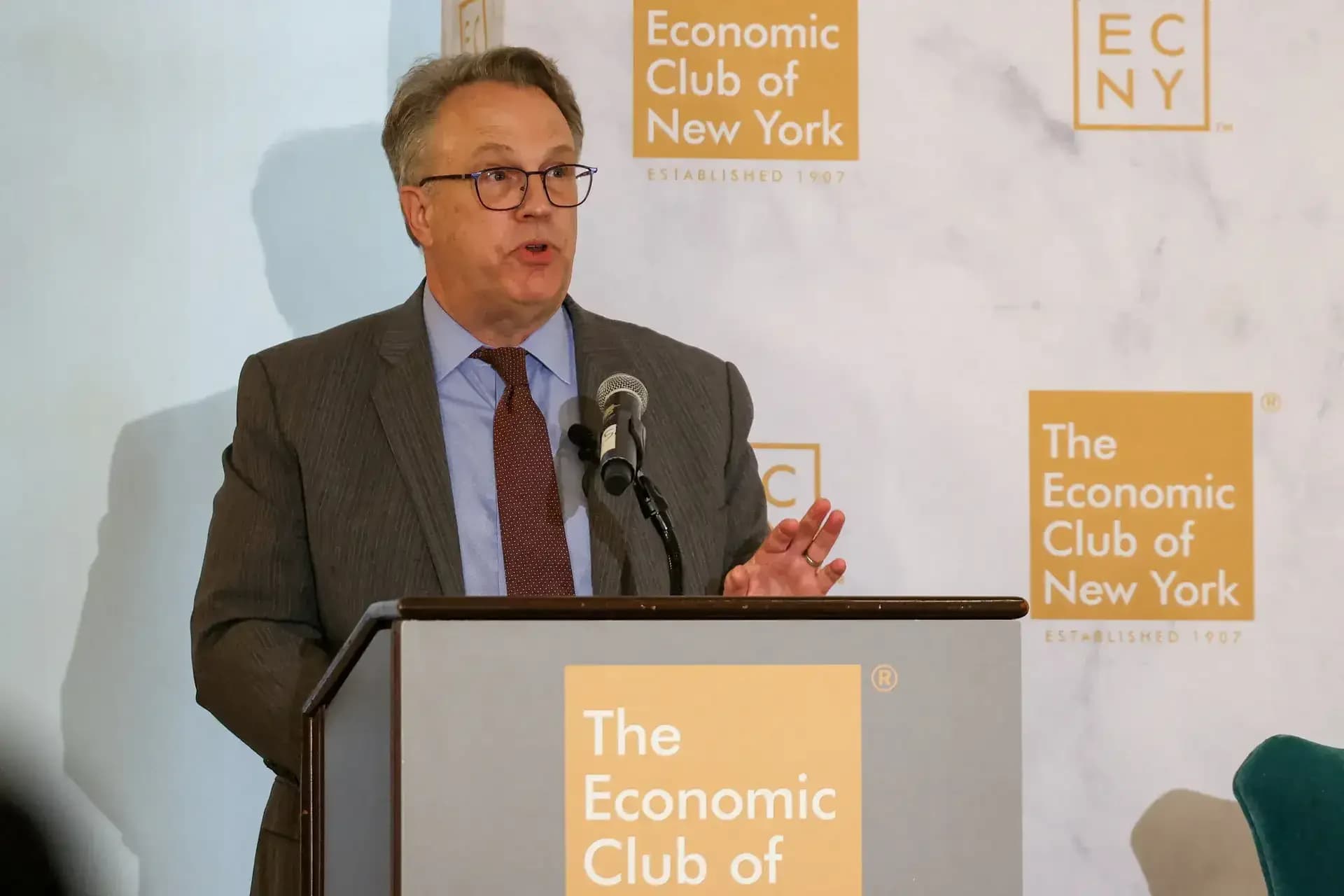
Federal Reserve officials have gone quite a long way to offer strong signals into possible direction of interest rates despite Chairman Kevin Warsh's strong reluctance to give any guidance whatsoever, according to Bloomberg reports. Fed Vice Chair Philip Jefferson and New York Fed President John Williams have in recent days suggested that policymakers believe the central bank has time to assess the economy before considering another increase. The remarks do not mean the Fed has ruled out further policy tightening, with officials continuing to warn that inflation remains too high, while consumer price data due on October 14 could play a major role in determining the next policy move. Ellen Meade, an economics professor at Duke University who advised Fed officials during a decades-long career at the Board of Governors, told Bloomberg the speeches by Jefferson and Williams did not necessarily amount to traditional forward guidance. "This is the Fed behaving like the Fed," said Meade. "But I think there's a difference between forward guidance that locks in a rate change and forward guidance that says we're going to take our time making a decision and collect a lot of data. Subtle, but there's a difference," she explained.
Before Williams spoke on Tuesday, traders saw a 70% probability of a hike at the Oct. 27-28 meeting, based on federal funds futures pricing. By the time Jefferson finished his speech on Thursday, those odds had fallen to about 25%, with softer-than-expected inflation data also contributing to the shift. The shift puts a hold in front, but it does not settle whether policymakers are pausing or delaying another increase, with the market's own rules pointing to competing pressures from August CPI at 3.4% year-over-year, elevated PMI price components, and resilient labor conditions. The comments triggered a sharp repricing of expectations for Fed interest rates over the remainder of the year. Goldman Sachs economists said the combination of the Jefferson and Williams speeches reinforced their view that an October rate hike is unlikely, a conclusion echoed by other analysts. Krishna Guha, head of economics at Evercore ISI, and colleagues wrote in a note to clients Thursday after Jefferson made his remarks: "We think the joint message from Jefferson and Williams is authoritative."
The US economy added only 29,000 jobs last month, significantly below economists' forecast of 90,000 jobs, according to the latest Labor Department data. The unemployment rate rose to 4.2% from 4.1%, indicating a slight deterioration in the labor market. Hiring dropped from a revised 133,000 in August, adding to concerns about economic momentum. The disappointing employment figures have prompted traders to scale back expectations for another Fed rate increase, with interest-rate futures pricing in less than 20% chance of a hike at the Fed's October meeting, down from more than 25% previously. Expectations for a December increase also eased, although markets still put the probability at nearly 90%. The data leaves the Fed balancing two competing risks: keeping rates high enough to contain inflation while avoiding excessive pressure on an already weakening labor market.
Three regional Fed presidents appearing together at a conference in Asheville, North Carolina, declined to provide clues about their expectations for the central bank's final two meetings of the year. Richmond Fed President Tom Barkin, Boston Fed President Susan Collins and Kansas City Fed President Jeff Schmid instead pointed to upcoming economic data. "Let's see how things develop," Barkin said. Chicago Fed President Austan Goolsbee on Friday said there is room for both a rate hike and a rate cut on the table. He said the latest jobs data show the labor market is steady and that too-high inflation remains the Fed's bigger policy priority, but added that he would look at more evidence "that suggests we're headed back to 2% inflation."** The comments from multiple regional presidents reinforce the broader message of patience and data dependence from the Fed leadership.
Federal Reserve Bank of Dallas President Lorie Logan said the central bank must continue raising interest rates to fully cool inflation, suggesting that rising Treasury yields may also help slow the economy. According to her prepared remarks for an event at the Dallas Fed, "I currently estimate the target range needs to rise an additional 50 basis points or more to appropriately balance the outlook and risks for our dual mandate goals." Logan, who before joining the Dallas Fed spent more than two decades on the New York Fed's markets desk, noted that market participants have told her that started with expectations of strong growth and a higher neutral rate for the Fed, but models now show that term premiums — the extra return investors demand to own longer-dated bonds instead of shorter ones — is also rising. "Higher term premiums can slow the economy, reducing the need to tighten monetary policy," she said, adding that she will continue to watch moves in yields and other aspects of the economy to assess what level of interest rates will result in some restraint on the economy.
Futures for the S&P 500 and Nasdaq Composite added to their gains after the data was released, while Treasury yields moved lower with the yield on the 10-year Treasury falling to 5.17% from 5.24% a day earlier. The yield on the 10-year Treasury was 5.17%, down from 5.24% a day earlier. Friday's jobs report is the last one that will come out before the November 3 elections that will determine whether President Donald Trump's Republicans maintain full control of Congress. The weaker-than-expected labor market data provides political cover for policymakers to maintain a cautious stance on monetary policy ahead of the critical midterm elections.