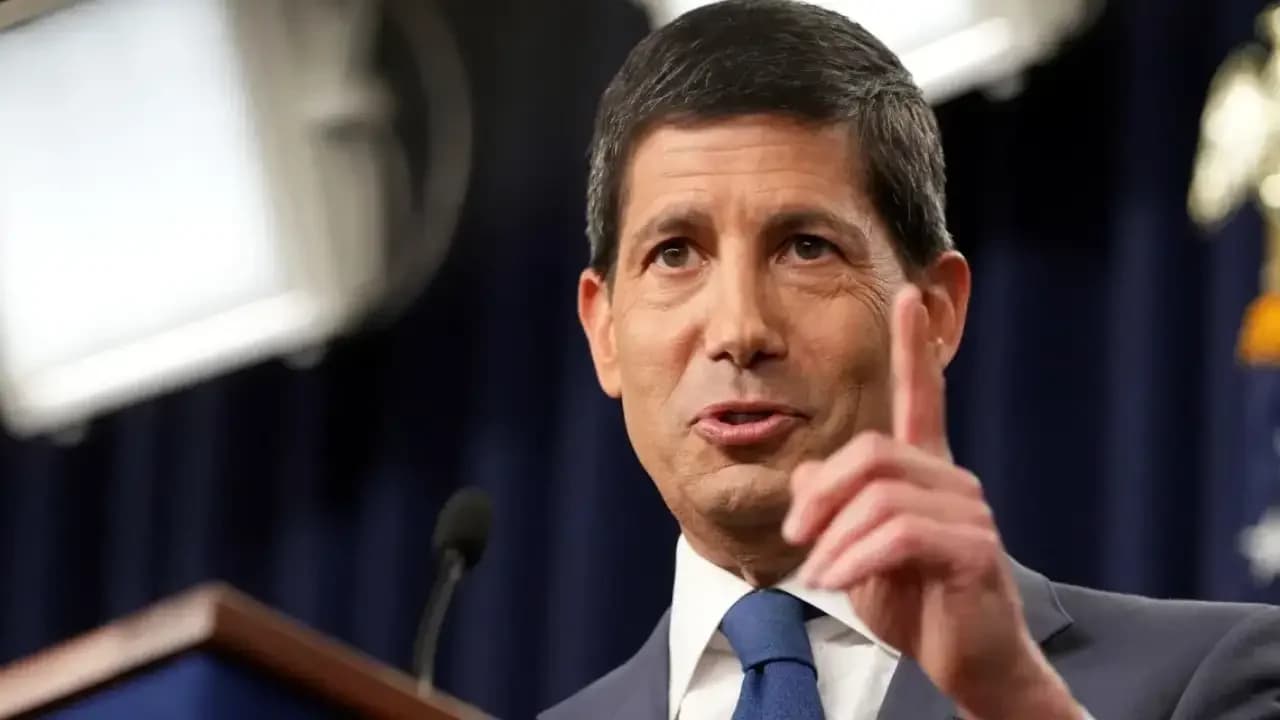
Federal Reserve officials opened the Jackson Hole conference with a warning that could complicate expectations for lower interest rates: inflation remains stubbornly high, and some policymakers believe the central bank may need to raise rates further to bring price pressures back under control. According to Reuters, Kansas City Fed President Jeffrey Schmid, Cleveland Fed President Beth Hammack and Chicago Fed President Austan Goolsbee all voiced concerns about inflation on Thursday as central bankers gathered in Wyoming for the Kansas City Fed's annual economic symposium. Schmid said inflation is "still stubborn and it's still sticky and we've got to continue to find ways to break through" and return it to 2%, speaking to CNBC on the sidelines of the conference. Hammack was more direct about the need for action, saying "I don't want to prejudge anything," but "I believe now is the time to act." Goolsbee offered a more measured assessment, saying the recent three-month inflation picture "doesn't look terrible," but warned that rates could eventually be lowered if there is evidence inflation is moving back toward 2%. The central bank left its benchmark interest rate in the 3.50%-3.75% range at its July 28-29 meeting, with officials questioning whether this stance is providing sufficient economic restraint.
Boston Fed President Susan Collins offered a more nuanced view of the latest inflation data, calling July's readings "mixed" and maintaining her expectation of gradual disinflation. According to The Economic Times, Collins said the overall inflation number was "maybe a bit higher than I might have expected," but noted "there's some promising signs in there," including monthly inflation for goods and services where prices are set by market forces being around the Fed's 2% target. "My modal scenario does continue to have that gradual disinflation," Collins said, citing Boston Fed research that pointed to improved productivity and indications that inflation linked to the Trump administration's import tariffs may have almost run its course. Collins noted that she is ready to raise rates if it does not, but emphasized that "it's mixed. A very broad-based elevation, across market prices, would have been more concerning." Cleveland Fed President Beth Hammack remained more hawkish, saying inflation could stay above target through next year and reiterating that a rate hike is needed to quell high inflation. Hammack's forecast is that inflation is going to end this year around 3% and "I think we're not going to make significant progress next year, I think we'll get to maybe mid-twos at best."
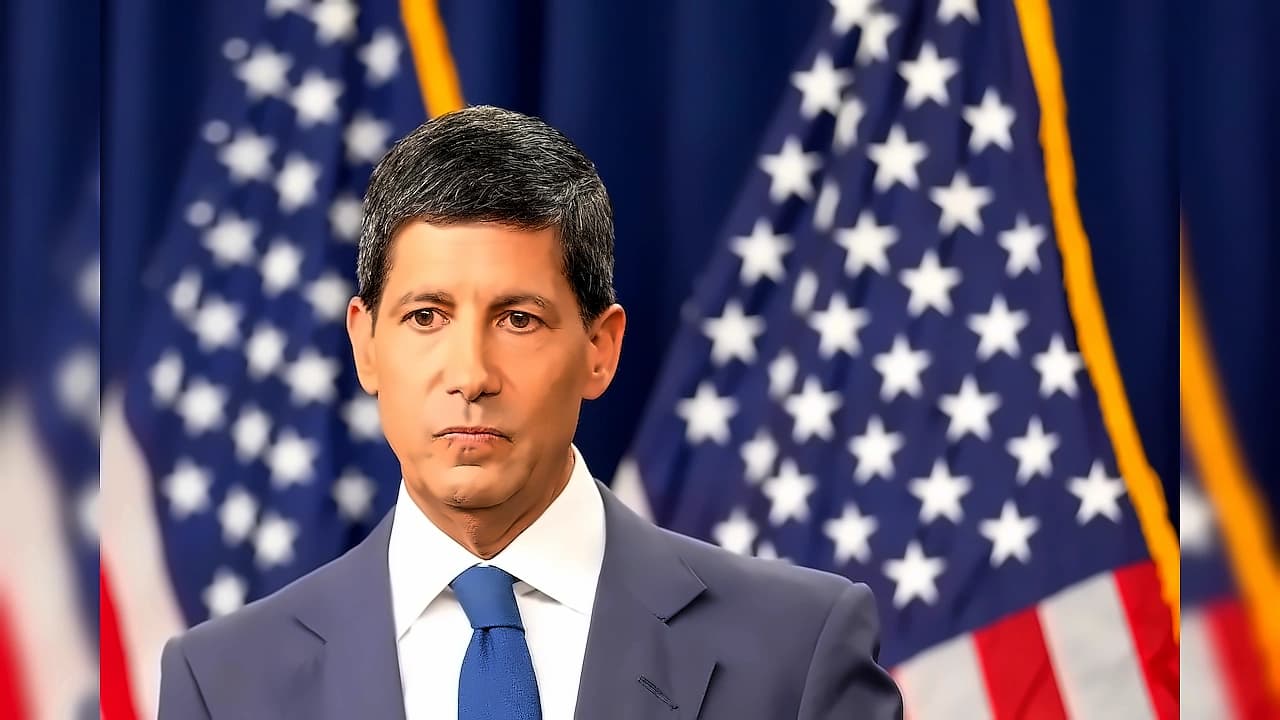
A CNBC survey reveals 80% of economists want Federal Reserve Chairman Kevin Warsh to provide more insights into his economic views at his Jackson Hole debut on Friday. The poll of 31 economists, strategists, and investors shows deep division over how far Warsh should go, with respondents split 48% to 48% on whether he should address the rate outlook at all. Warsh has said little about the economy or his policy outlook since taking office in May, marking a departure from how earlier chairs handled the job. According to CNBC, most of the panel expects the silence to hold, with 45% thinking Warsh says nothing about rates on Friday, against 32% who see a somewhat hawkish tone and 19% who expect neutrality. Constance Hunter, chief economist at Economist Enterprise, argued that Warsh has "abdicated his role in communicating about the reaction function." Ahead of the symposium, Kansas City Fed President Jeffrey Schmid said the current level of central bank rates is not providing sufficient restraint to the economy, suggesting that he still favours raising rates to bring inflation back to the Fed's 2% target.
Federal Reserve Chair Kevin Warsh delivers his first Jackson Hole speech as Fed Chair on Friday, August 28, at the Kansas City Fed's annual symposium in Wyoming. According to reports from Investing.com India and The Economic Times, the meeting occurs August 27-29 amid strong bond market jitters and Warsh's previous comments that he does not want to "spoon-feed" markets with detailed guidance on future decisions. The meeting occurs less than three weeks before the September 15-16 FOMC decision, making Warsh's remarks particularly crucial for market direction. While the official topic is "Financial Innovation: Implications for Payments and Policy," Wall Street will primarily focus on whether Warsh attempts to talk the hawks out of their tightening bias. This marks the first time Warsh will deliver keynote remarks at the Kansas City Fed's annual gathering, putting him under scrutiny as leader of the world's top central bank. As reported by Bloomberg Economics, Warsh faces a critical choice: either use the prime-time opportunity to reassure markets the Fed has a plan to bring down inflation or double down on his crusade to cut forward guidance and withhold signals about monetary policy direction.
Investors are heading into the Jackson Hole symposium with one question: How far is Federal Reserve Chair Kevin Warsh willing to go to demonstrate that the central bank is still serious about inflation? According to a Reuters report, traders are pricing in no change in borrowing costs at the Fed's September meeting but see about a 70% probability of at least a 25-basis-point rate increase by December as Middle East tensions keep oil prices elevated and inflation remains sticky. Data released earlier this week showed inflation rose more than economists had expected in July, reinforcing expectations that rates may have to stay restrictive through the end of the year. Another report showed the US economy grew 1.5% in the second quarter, creating a challenging mix of sticky inflation and slow growth that has made the Fed's communication harder. The debate centers on whether high inflation reflects temporary shocks, including tariffs and war, or an economy that is still running too hot. Three officials voted to raise rates last month, while others have indicated they may support an increase, with Warsh having not revealed where he stands as part of a broader shift toward more restrained communication. Fed funds futures price 40% odds of a September hike and 70% by December, while inflation is projected to cool to 2.6% next year from 3.4% in 2026. Two Federal Reserve officials expressed continued concern about the U.S. inflation outlook as central bankers gathered in Jackson Hole, with Kansas City Fed President Jeffrey Schmid questioning whether the current policy rate of 3.50%-3.75% is sufficiently restrictive.
The benchmark U.S. 10-year yield has climbed 8 basis points and the 30-year bond yield has advanced 10 basis points since Warsh took the helm in May, according to Business Standard. Treasury Secretary Scott Bessent announced an increase in purchases of long-dated bonds last week, with the US Treasury Department announcing last week that it would at least double the size of its planned purchases of longer-term government debt. Treasury Secretary Scott Bessent also indicated that the repurchase programme could be expanded further. The 30-year Treasury yield has pulled back from its recent peak, but only modestly, and it's unclear whether further declines are likely. The rate path itself remains contested, with 53% forecasting hikes, 30% seeing cuts, and 16% expecting no change over the next year. Fed funds futures price 40% odds of a September hike and 70% by December, while inflation is projected to cool to 2.6% next year from 3.4% in 2026. Bond yields have witnessed sharp moves in August, as higher oil prices and rising government spending fuelled inflation and fiscal concerns, pushing the yield on the 30-year US Treasury note to its highest level since 2007 last week. U.S. Treasury yields edged lower on Thursday as traders awaited Federal Reserve Chair Kevin Warsh's appearance at the Jackson Hole symposium, with the two-year yield falling 0.64 basis points to 4.218% and the 10-year yield slipping 0.36 basis points to 4.66%.
The Iran conflict continues to pose significant risks for inflation and monetary policy, with Iran and Oman on Wednesday announcing an agreement to temporarily reopen the Strait of Hormuz, according to an Iranian official. Such a deal won't fly at the White House — President Trump has warned against this type of arrangement and has threatened to bomb Oman, a U.S. ally, if it "gets in the way." The latest sign that a U.S.–Iran stalemate remains the path of least resistance keeps energy prices elevated and delays meaningful disinflationary relief that would likely arrive once the Middle East crisis is genuinely resolved. The bond market's growing concern over U.S. government debt and the lack of political efforts in Congress to tackle the mounting red ink also contribute to uncertainty about Treasury yields and monetary policy direction. Chicago Fed President Austan Goolsbee likewise warned that inflation has remained above target for too long and that renewed price increases could worsen affordability pressures, citing higher energy costs linked to the war in Iran and continued uncertainty over the Trump administration's tariffs as key risks. The Federal Reserve has been struggling to bring inflation back to its 2% target, with the Iran war disrupted global oil shipments through the Strait of Hormuz adding to inflationary pressures. Goolsbee also raised concerns about political pressure on the central bank, saying attacks on the Fed "puts me on edge." In countries where political authorities interfere with monetary policy, he said, "inflation comes roaring back."