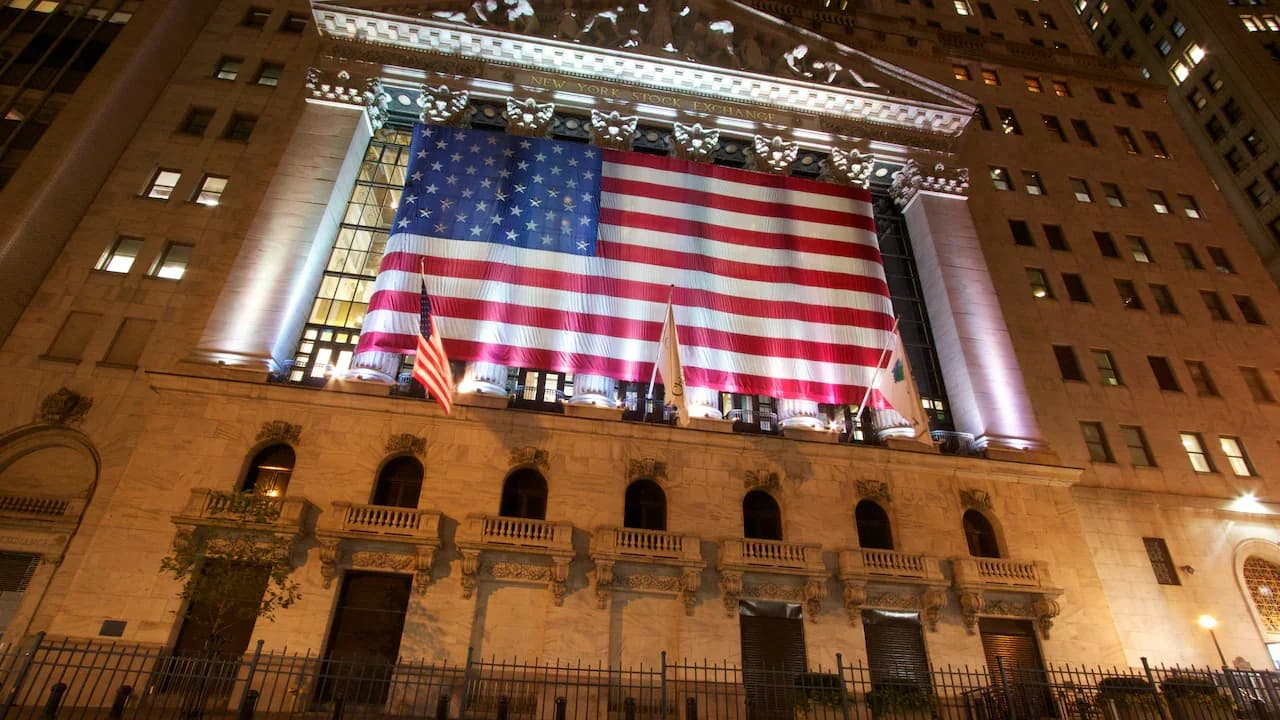
US stock markets traded near record highs on Friday with S&P 500 futures remaining little changed as investors showed few signs of concern after the index pushed to another all-time high in the previous session. According to Investing.com, this week's inflation figures failed to disrupt the unusually calm summer trading environment, leaving volatility subdued. The S&P 500 has reached record highs while maintaining its resilience amid subdued volatility and softer inflation supporting investor confidence. However, markets are now pricing in roughly a 40% probability of a 25 basis point rate hike in September, down from around 55% just a week ago, as the Federal Reserve's policy path remains uncertain. As of 9:35 a.m. Eastern time, the Dow Jones Industrial Average had slipped 27 points, or 0.1%, while the Nasdaq Composite was trading 0.1% higher, following the record close achieved a day earlier.
Markets are pricing an increased chance that the Federal Reserve will raise interest rates in September, but the probability has declined significantly. According to Investing.com, the latest inflation figures offered little reason for investors to materially alter their expectations, with consumer price inflation broadly in line with forecasts and producer price inflation coming in slightly softer than anticipated. Treasury yields edged lower following the data, although they remain relatively elevated. The figures provided little evidence of a broad-based acceleration in inflation, allowing investors to increase their expectations that the Fed will leave interest rates unchanged next month. Short-term Treasury yields edged lower after the retail sales report, indicating that traders now see a reduced likelihood of the Federal Reserve raising interest rates at its September policy meeting. The benchmark 10-year US Treasury yield edged higher to 4.65% from 4.63% at Thursday's close, reflecting ongoing market uncertainty about the Fed's next move.
Consumer spending at US retailers declined from the previous month, catching economists off guard as they had expected retail sales to post another monthly increase, according to an AP report. From the market's perspective, weaker consumer spending could help ease inflationary pressures, as inflation remains well above desired levels but data earlier in the week indicated that the pace of price increases has begun to moderate. If that trend continues, the Federal Reserve may choose to delay raising interest rates, as higher borrowing costs are an effective tool to curb inflation but also restrain economic activity. However, the softer retail sales figures, coupled with last week's unexpectedly weak employment report, have also fuelled fears that the US economy may be losing momentum. Some market participants urged caution in interpreting the retail sales data, suggesting the weakness may be temporary rather than indicative of broader economic slowdown.

Corporate earnings showed mixed results as investors awaited key economic data. Reddit surged 14.7% after it was announced that the company would be added to the S&P 500 index on Tuesday. Inclusion in the benchmark typically attracts buying from index funds and institutional investors that either replicate the index or use it as a performance benchmark. Applied Materials declined 4% despite reporting quarterly revenue and profit that exceeded analysts' expectations. The semiconductor equipment maker said strong global demand for artificial intelligence technologies helped it deliver another record quarter, with CEO Gary Dickerson crediting the growing appetite for AI as a key driver. However, the stock came under pressure after having more than doubled in value this year, leaving investor expectations exceptionally high. The broader AI sector has remained volatile in recent months amid concerns that share prices had risen too quickly on enthusiasm surrounding artificial intelligence and that the rapid pace of revenue growth may not be sustainable.
Oil prices continue to pose the biggest threat to the current market stability, with Brent crude slipping 0.2% to $86.92 a barrel after experiencing sharp swings in recent weeks. According to Investing.com, US-Iran negotiations don't appear to restart any time soon, leaving geopolitical tensions and the continued disruption around the Strait of Hormuz as important risks for both oil prices and the global inflation outlook. US Treasury Secretary Scott Bessent has also warned that Washington intends to introduce unprecedented measures against Iran as part of its maximum-pressure campaign, adding another layer of uncertainty. The recent calm in financial markets should not be mistaken for the disappearance of inflation risks, as oil prices jumped by around 20% in July, and if those gains are sustained, they could begin feeding through into inflation readings in the coming months. In the commodities market, oil prices were relatively stable after experiencing sharp swings in recent weeks, as markets continued to react to changing expectations over when the conflict involving Iran might ease sufficiently to allow crude shipments from the Middle East to resume normal global flows.