Former Federal Reserve Chair Jerome Powell issued a stark warning about the central bank's future credibility, stating that the Fed would lose the priceless asset of credibility if any president could dismiss Fed officials over policy disagreements. Speaking at the John F. Kennedy Profile in Courage Award ceremony at the JFK Presidential Library in Boston, Powell emphasized that 'If any administration finds a way to remove Fed officials over policy differences, then future administrations will do so as well'. According to AFP, Powell warned that 'The Fed's credibility would be lost' and that the public would lose faith that the Fed would make decisions based on what's best for all Americans. He highlighted that 'Our credibility has been built and sustained over many decades, and we have a duty to safeguard that priceless asset for our fellow citizens and for generations to come'. Powell called universities, courts, Congress and the central bank 'the foundation and the embodiment of our democracy' and argued that 'Congress wisely chose to insulate monetary policy decisions from political pressure'. All other advanced economy nations have done the same, he noted.
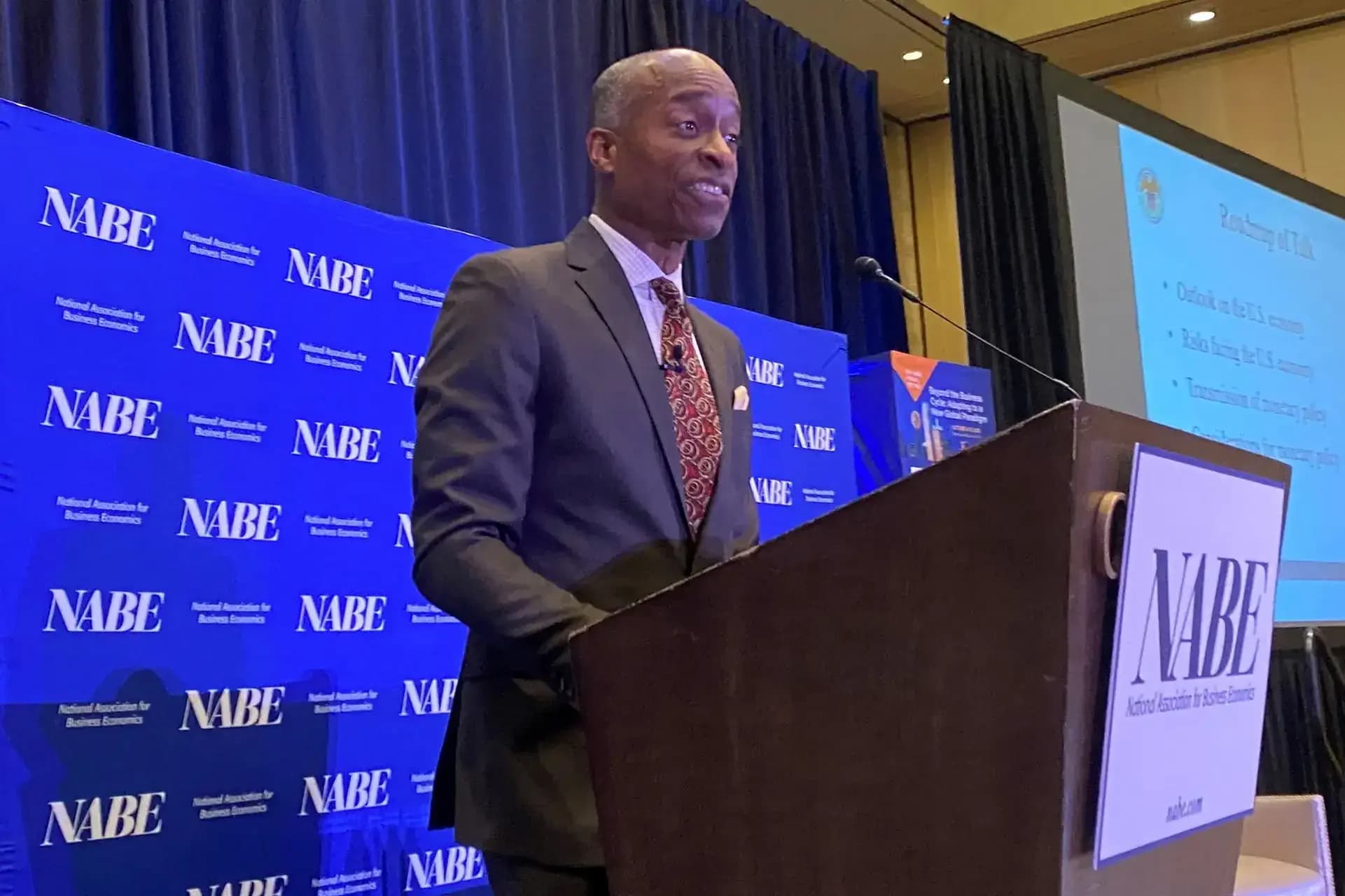
Federal Reserve Vice Chair Philip Jefferson said the current US monetary policy stance remains appropriate as policymakers assess persistent inflation risks tied to the Iran conflict and ongoing energy disruptions. Speaking at the 2026 Bank of Japan-Institute for Monetary and Economic Studies Conference in Tokyo, Jefferson said the federal funds target rate range of 3.5% to 3.75% leaves the Federal Reserve well positioned to respond to economic developments based on incoming data, the evolving outlook, and the balance of risks. According to reports from Reuters, Jefferson indicated that policymakers remain data-dependent and have not yet decided the course of action for the Federal Open Market Committee's June 16–17 meeting. Jefferson was deliberate about keeping options open, saying he had not prejudged the outcome and was looking forward to engaging with colleagues on the policy path best suited to achieving the Fed's dual mandate.
Jefferson described the broader US economy as delivering solid performance, supported by a stable labour market characterised by low levels of both hiring and layoffs. According to Reuters, Jefferson said the labour market has been 'very resilient' to the current energy shock, making it appropriate to focus on returning inflation to the central bank's 2% target. He said the labour market's resilience means policymakers can prioritize inflation control while maintaining employment stability. Jefferson noted that the strength of the labour market gives policymakers room to focus more directly on restoring price stability while continuing to monitor employment conditions in line with the Fed's dual mandate of price stability and maximum employment.
Jefferson warned that inflation risks tied to the Iran conflict remain elevated, with the United States not fully insulated from the energy disruptions the war has created. As reported by Reuters, he acknowledged that while the United States is a major oil producer, the economy remains vulnerable to global energy disruptions caused by the ongoing conflict in the Middle East. Jefferson described the energy shock as a downside risk to growth and an upside risk to inflation, a two-sided assessment that reflects the bind facing policymakers as the conflict continues. He expects price pressures to ease later in the year as the impact of tariffs and energy costs fades, but framed this as a baseline rather than a certainty. Jefferson said inflationary pressures are expected to ease later this year, though risks remain tilted to the upside.
Powell's remarks come as the country's highest court deliberates the fate of Fed Governor Lisa Cook, whom President Donald Trump has sought to fire over unproven mortgage fraud allegations. According to AFP, Powell's remarks come amid escalating tensions between the Federal Reserve and President Donald Trump, who has repeatedly criticized the central bank's leadership during his second term. Trump has accused Powell of moving too slowly to cut interest rates and has frequently targeted the Fed's policy decisions. The Justice Department pursued a criminal investigation into Powell over a Federal Reserve building renovation project, although the probe was eventually dropped as the administration sought to facilitate the Senate confirmation of Powell's successor. Powell's remarks also follow tensions with President Donald Trump over interest rates and Fed decisions, with Trump administration officials signaling expectations of a different approach at the central bank under new leadership.