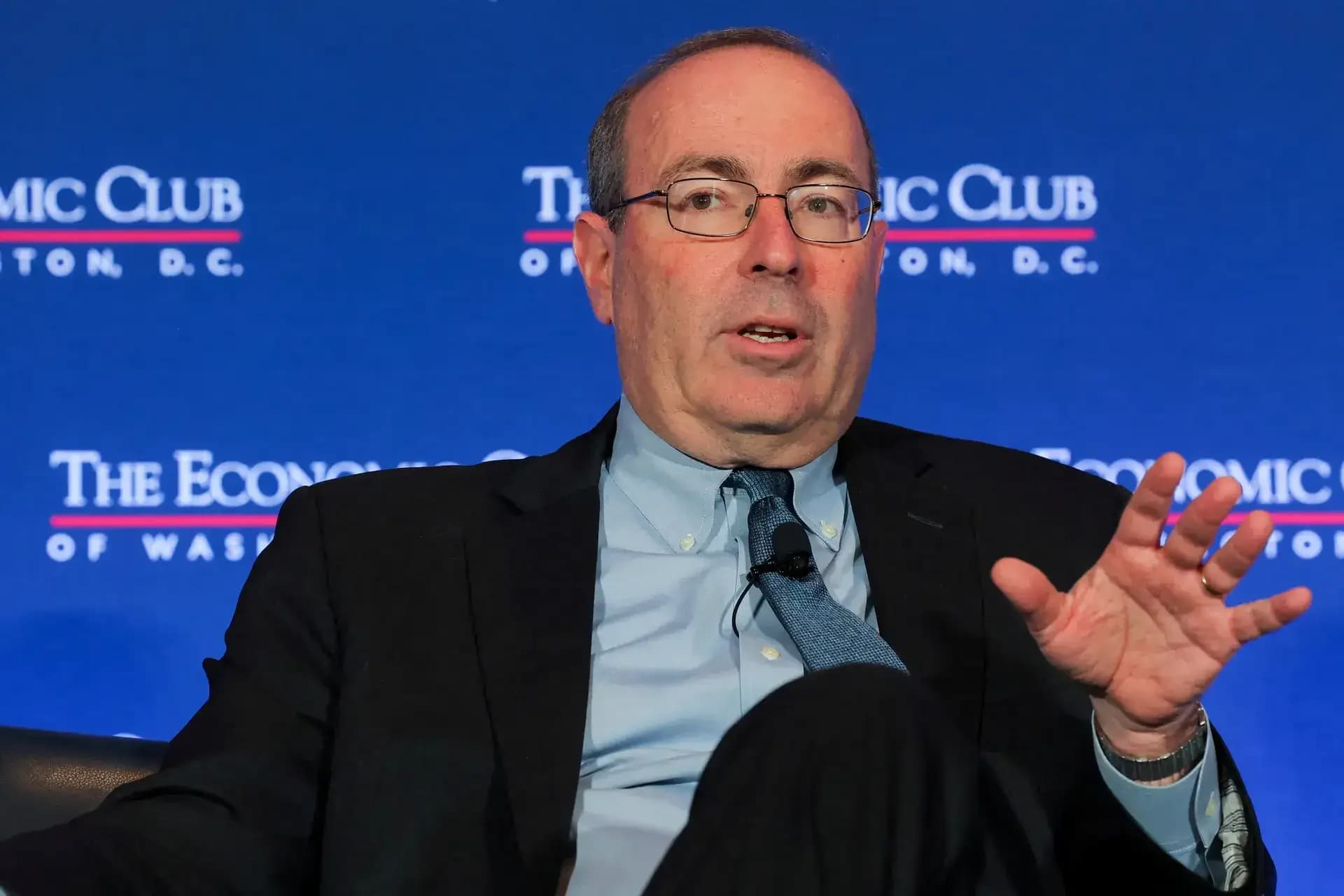
Chicago Federal Reserve President Austan Goolsbee provided encouraging news on Thursday, stating that latest U.S. inflation data shows some improvement in services inflation, according to Reuters. Speaking in an interview with CNBC, Goolsbee emphasized that while this development is positive, underlying price pressures remain too high and continue to move in the wrong direction. The Federal Reserve President noted that core inflation remains well above the Federal Reserve's target, making inflation the central bank's primary concern at present. Despite the U.S. labor market showing resilience, inflation remains the bigger challenge among the Fed's dual mandates of price stability and maximum employment.

Chicago Federal Reserve President Austan Goolsbee identified the central bank's primary challenge as determining whether elevated inflation will prove temporary or remain persistent. According to reports from Reuters, Goolsbee emphasized that policymakers are scrutinizing factors including tariffs, geopolitical tensions, and underlying price pressures as they navigate the inflation outlook. The Federal Reserve's focus on inflation assessment is enabled by the stable U.S. labor market, which allows the central bank to concentrate on price pressures rather than employment concerns. Goolsbee reiterated that his approach remains firmly data-dependent, stating that the key challenge is determining whether persistent factors or temporary developments drive the recent rise in inflation.
Inflation remains significantly above the Fed's 2% target, with recent readings showing minimal progress toward the central bank's goal. As reported by Reuters, the consumer price index rose 4.2% in May from a year earlier, while the personal consumption expenditures (PCE) price index was up 3.8% in April. Goolsbee noted that inflation is currently running in the 3% to 4% range, representing a key concern for policymakers as they evaluate whether these elevated levels will persist or gradually decline due to temporary factors. However, he warned that services inflation remains stubbornly high and expressed hope that wage growth has moderated, though there is no assurance that inflation will slow sufficiently in the coming months.
Goolsbee refrained from indicating whether he favoured another interest rate hike or a continued pause, saying he preferred to avoid fuelling speculation about the future path of monetary policy. His assessment would continue to depend on incoming economic data rather than any predetermined policy stance. His remarks came after Federal Reserve Chair Kevin Warsh said no policymakers had advocated a rate hike during the Fed's June 16-17 policy meeting. However, the central bank's updated projections showed that nine of the 18 policymakers who submitted interest-rate forecasts expected at least one rate increase before the end of the year. Warsh did not submit a projection for the Fed's closely watched "dot plot," noting that the forecasts are subject to change as fresh economic data becomes available.
Goolsbee highlighted specific short-term influences driving current inflation, including higher goods prices linked to tariffs and a spike in fuel-related costs following the conflict involving the United States, Israel and Iran. He also pointed to elevated oil prices as a potential temporary source of inflationary pressure. Among the factors he identified as temporary, Goolsbee expressed hope that energy costs could ease quickly. However, he stressed that services inflation remains a persistent concern and warned that while some inflationary pressures may be temporary, the overall trajectory of price pressures continues to move in the wrong direction, requiring continued vigilance from policymakers.