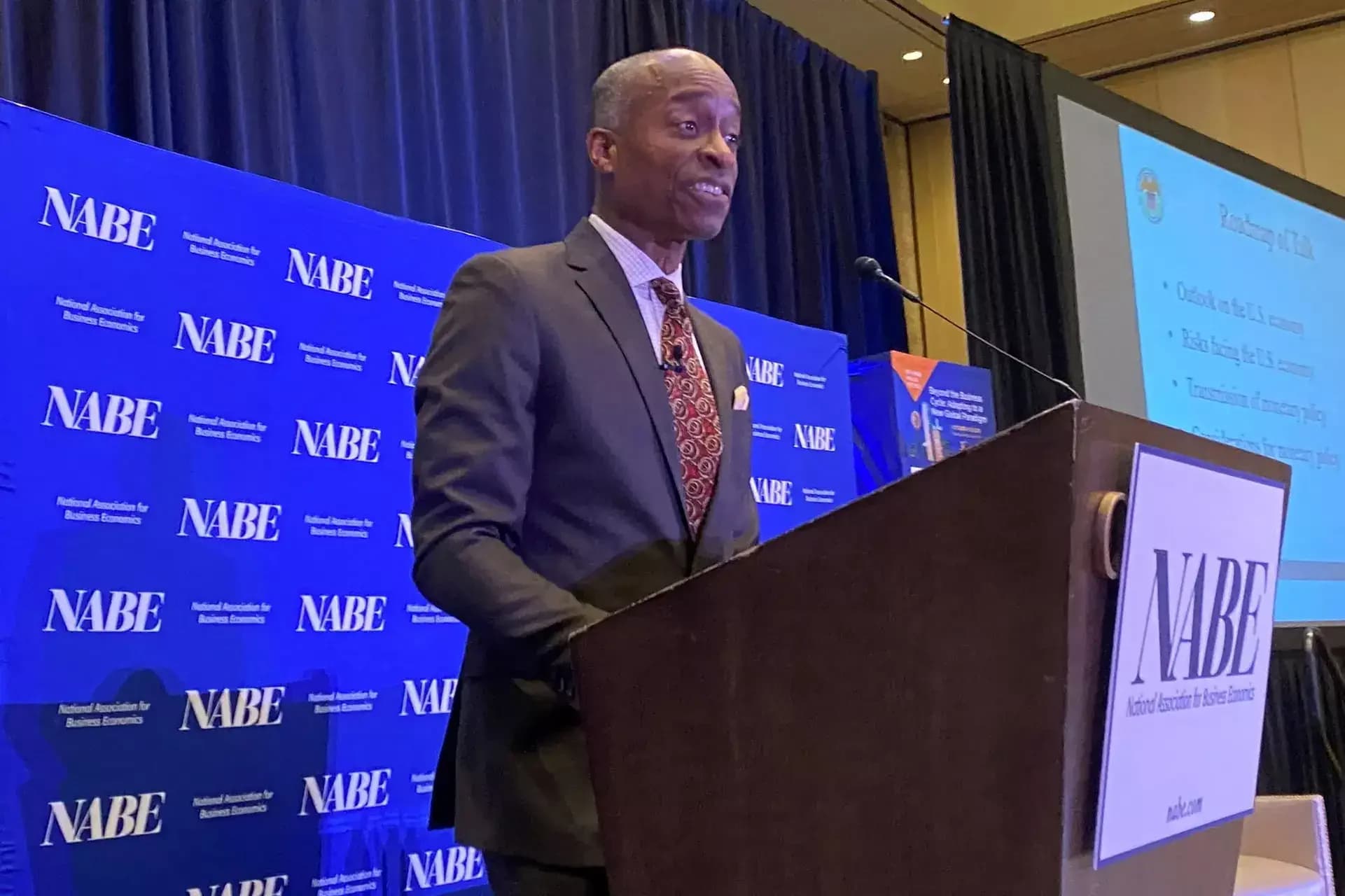
Three Federal Reserve officials used Thursday's opening of the annual Jackson Hole economic symposium to warn that inflation remains too high, with at least one calling for a rate increase and others leaving the door open to one before year's end. Chicago Fed President Austan Goolsbee said the question of whether inflation has truly been tamed remains his most pressing worry, telling the Rapid Response podcast that 'Everybody should be on edge,' noting that if inflation starts going up again, it's very hard to get rid of it. The remarks came a day after the government reported that the Personal Consumption Expenditures Price Index, the Fed's preferred inflation gauge, stood at 3.7% in the 12 months through July, with core reading climbing 3.3% over the past year when stripping out food and energy. Kansas City Fed President Jeffrey Schmid described inflation as persistently resistant to the Fed's efforts and warned that bringing it to heel would not be easy, while Cleveland's Beth Hammack said 'now is the time to act'.
Kevin Warsh faces mounting pressure as Fed Chair to address the central question: Is current inflation a problem or not, and what should be done about it. Speaking at the Kansas Hole symposium, Warsh is under scrutiny for his communication strategy and independence from political pressures. According to Reuters, analysts and investors view this event as an early test of his willingness to adapt to a world growing more edgy about his plans. The pressure intensifies as people are concerned about independence, with concerns that Warsh may be reluctant to discuss possible rate hikes to avoid angering Trump or upsetting Treasury Secretary Scott Bessent's efforts to orchestrate lower borrowing costs.
Stephen Miran, a former Federal Reserve governor, said a rate hike right now would be a mistake ahead of the Fed's September meeting. Speaking on CNBC's Squawk Box, Miran argued that recent inflation data are distorted, not genuinely elevated. He emphasized that there's no reaction function that gives you both a hold in June and July and a hike in September, highlighting the inconsistency in the Fed's policy approach. The opposition comes as Warsh has repeated pledges about meeting the Fed's inflation target without saying how, while instead highlighting longer-term issues now under study by several Fed task forces.
The latest inflation data has intensified the pressure on Warsh, with U.S. auto prices rising at a roughly 5% annualized pace in July, housing and utility costs increasing at more than a 3.5% rate, and recreational goods prices soaring by a double-digit pace as households swallowed a 3.7% jump in the cost of living. Cleveland Fed President Beth Hammack cited conversations with workers in Erie, Pennsylvania, who said they 'can't make ends meet' despite holding steady jobs, highlighting the real-world impact of persistent price pressures. As reported by Reuters, the Fed has now missed its inflation target for 65 straight months, from the moment prices began escalating to a 40-year-high in 2021 during the COVID-19 pandemic through a near-return to the target in 2024 and on to a new surge after President Trump took office. Boston Fed President Susan Collins said on Wednesday that today's data doesn't meet the test for continued rate holds, with further tightening appropriate if sustained inflation progress doesn't materialize.
Futures markets lean against an increase at the September 15-16 meeting but assign strong odds to one by year's end, following the release of July inflation data. At the July 28-29 session, the FOMC voted 9-3 to hold rates steady, with Cleveland's Beth Hammack among the three dissenters who favored a quarter-point increase. The Federal Reserve Act gives the Fed two goals, maximum employment and stable prices, and raising rates to fight overstated inflation risks unnecessary job losses. Kansas City Fed President Jeffrey Schmid said he was still working to understand the demand-side forces behind current growth and price pressures before taking a stand on a September hike. Miran noted that policy set today should target inflation in late 2027, with rate changes taking 12 to 18 months to reach the economy, and he does not expect current distortions to persist that long.