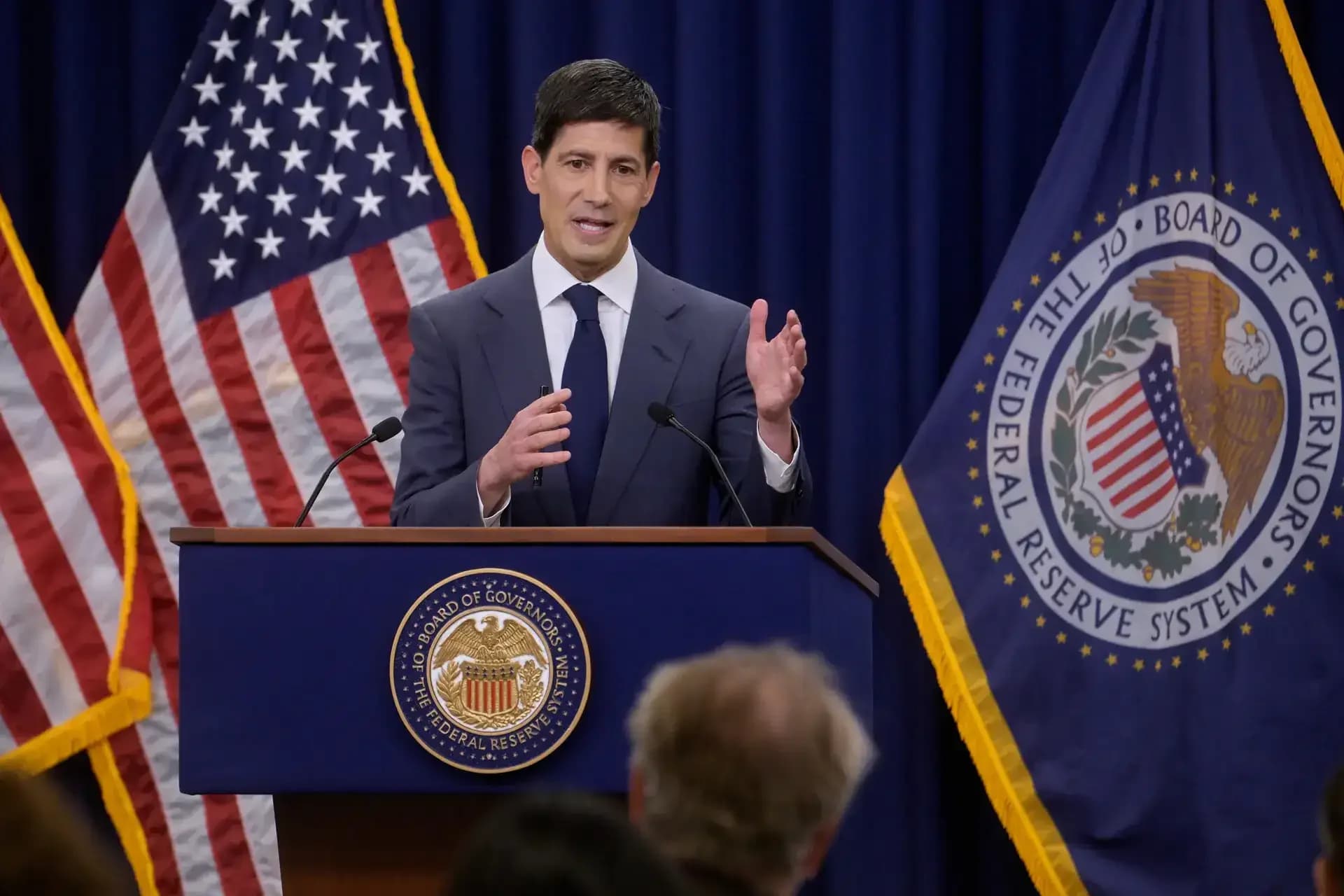
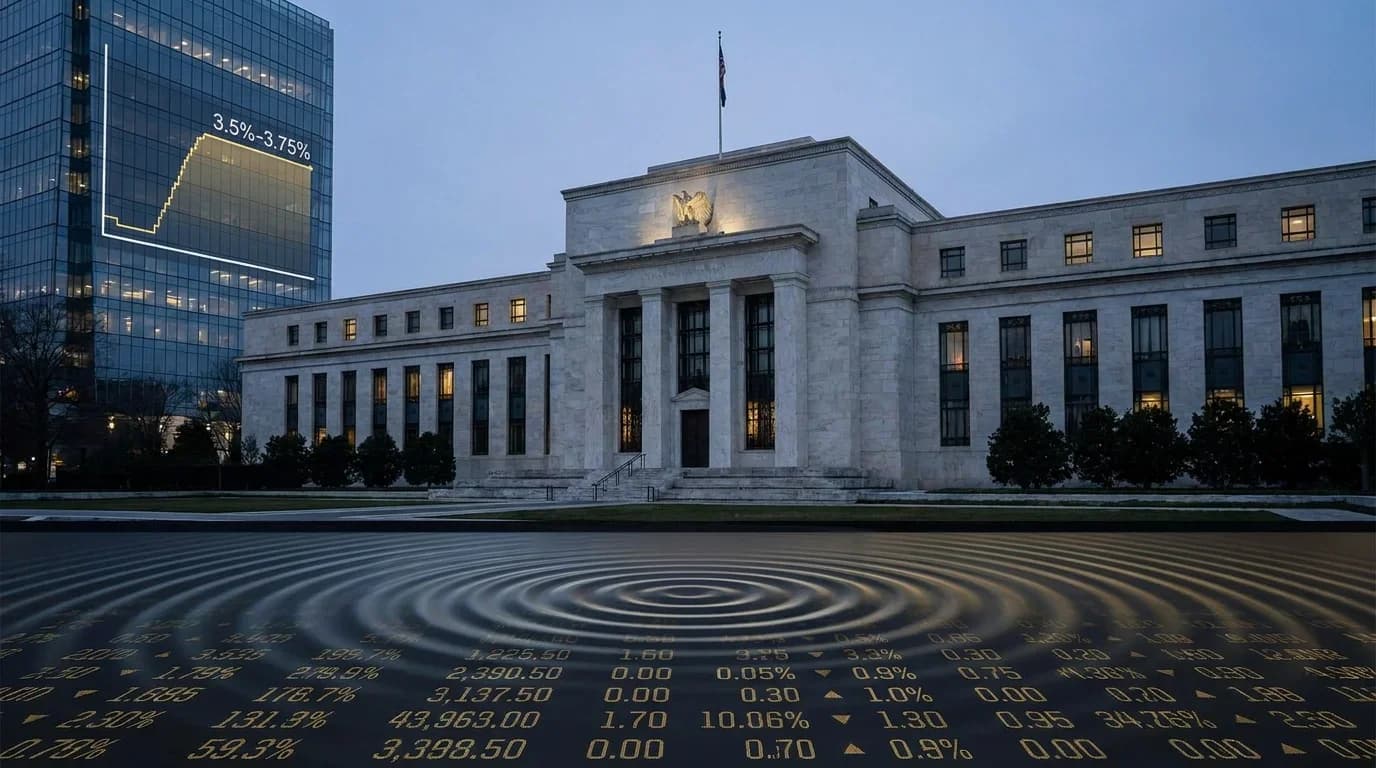
The Federal Reserve's rate-setting committee agreed to keep its key rate unchanged at its June 16-17 meeting, with officials deeply divided over inflation's future path. As reported by Associated Press, many of the Fed's 19 officials said the key rate would remain unchanged from or slightly below its current level of 3.6% by the end of this year, while many also said it would likely be higher by year-end. The decision was approved by a unanimous vote, though the minutes don't disclose which officials supported which outcomes. Fed Chair Kevin Warsh did not submit a forecast, reflecting his view that doing so can lock policymakers into a specific approach that's harder to change if the economy shifts direction. During his post-meeting news conference, Warsh described the debate as a 'family fight' that ended with the committee unanimously voting to keep the Fed's benchmark funds rate anchored in a range between 3.5%-3.75%, where it has been for all of 2026.
New York Fed President John Williams expects energy prices to gradually decline over the coming months despite renewed Middle East tensions, while emphasizing it's too early to determine the Fed's next interest rate move. Speaking at an event hosted by the New York Fed on Thursday, Williams said market expectations for oil prices continue to point toward moderation over the next six to 12 months, according to Reuters. He noted this remains a reasonable baseline despite the resurgence of geopolitical tensions that have raised concerns over global energy supplies. However, renewed fighting has complicated the inflation outlook by increasing the risk of disruptions to energy supplies and global trade flows. The renewed tensions have heightened concerns that sustained increases in oil prices could keep inflation elevated and potentially require tighter monetary policy if price pressures intensify.
Fed officials remain deeply divided over whether inflation will stay elevated or cool once the Iran war winds down, with many policymakers worried that massive investment in AI infrastructure will keep prices elevated. According to the minutes, many participants noted that ongoing strong demand for AI infrastructure would likely sustain upward pressure on prices for technology products and electricity. This concern is particularly significant as Apple recently announced it would increase prices of laptops and iPads due to higher costs. The Federal Reserve Bank of New York reported that its measure of consumer expectations for inflation one year from now rose to 3.7%, the highest in nearly three years. Expectations for inflation in three years rose to 3.3%, a four-year high. Most Fed officials closely monitor these expectations, though many put more weight on financial market measures, which have been lower and more stable than consumer survey-based measures. As inflation has worsened since the US and Israel attacked Iran in late February, reaching a peak in May, it's expected to cool when June's figures are reported next week as the conflict has eased and gas prices have fallen back.
Fed officials debated Chair Kevin Warsh's proposal to end forward guidance and provide less commentary on upcoming rate decisions. As reported by The Economic Times, a majority of participants remarked that they saw advantages in shortening the statement, while most supported removing language indicating the Fed's next policy move would likely be a rate cut. The revised statement adopted at the June meeting removed all forward guidance on interest rates, reflecting Warsh's preference to avoid signalling future policy actions in advance. The dot-plot grid of individual members' expectations, in which Warsh did not participate, narrowly tilted toward one rate hike this year, then a cut in each of the following two years. The post-meeting statement eliminated boilerplate language to describe economic conditions and the committee's approach to achieving its twin goals of low inflation and full employment, with 'most participants emphasized that they preferred not to repeat the Language'. Williams reiterated that policymakers will remain guided by incoming economic data amid persistent inflation uncertainty.
Markets reacted little to the minutes release, with stock market futures holding negative and Treasury yields rising. Jeffrey Roach, chief economist at LPL Financial, noted there's 'some ambiguity in the minutes, suggesting several competing views on policy'. He added that if forward guidance can be extracted from the minutes, 'it would be the committee is working through a wide range of scenarios and will not commit to a specific scenario until the incoming data provides necessary clarity'. The meeting summary, which at 14 pages was somewhat shorter than typical releases, followed Warsh's repeated statements that Fed officials should communicate less about their future intentions. Warsh has pledged to revamp the Fed's operations in various manners since taking the reins, with five task forces addressing individual topics including communication. Since taking office, Warsh has made only one public appearance at a European Central Bank forum in Portugal, where he was largely circumspect about policy direction.